
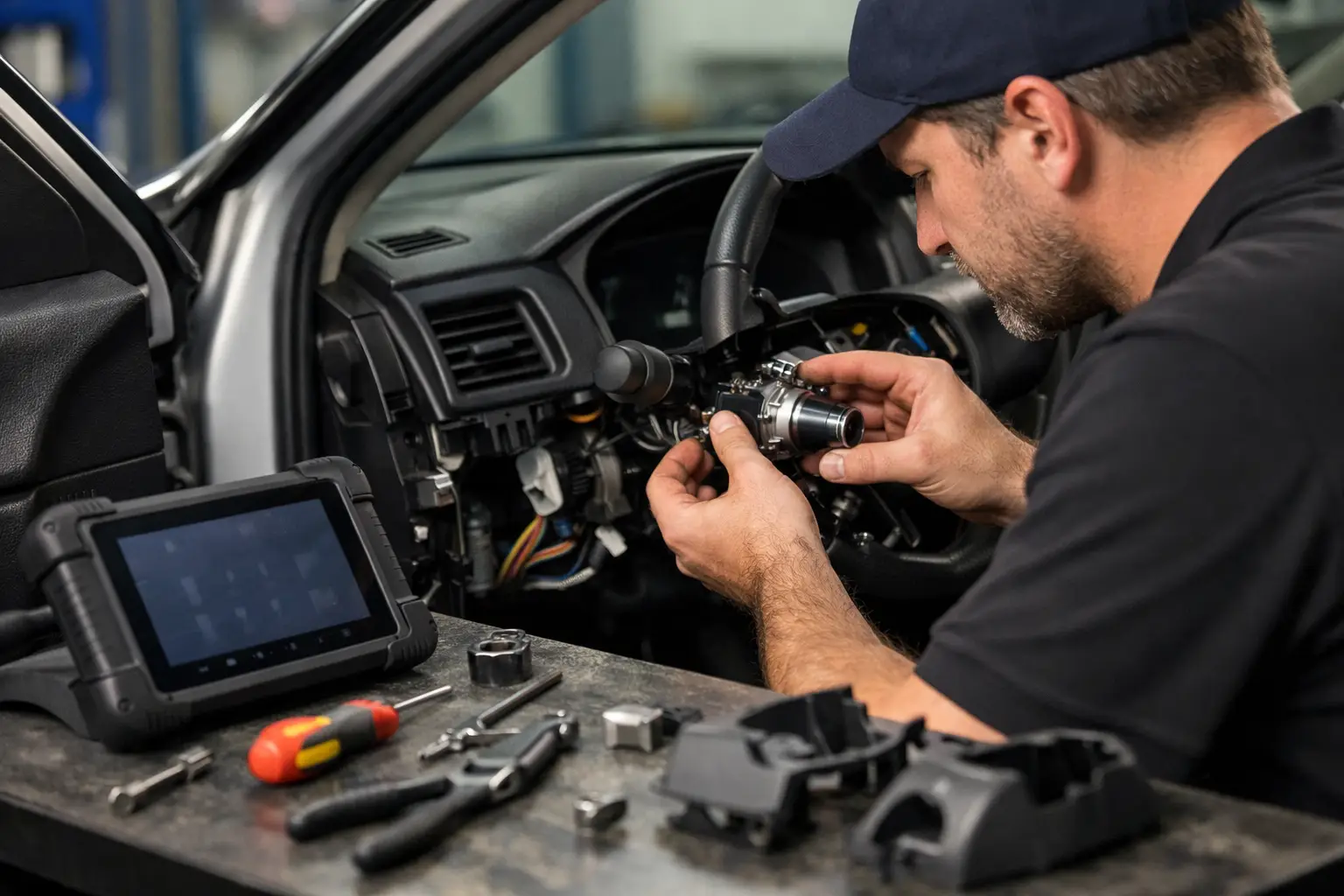
When your key turns halfway, sticks, or will not turn at all, the problem is often deeper than a worn key. In many cases, car ignition barrel replacement is the fix that gets the vehicle starting again without the delays and cost that come with a dealership visit.
A faulty ignition barrel can stop your day fast. You might be heading to work, picking up the kids, or trying to finish a job, and suddenly the car will not start because the key will not rotate properly. For most drivers, that is not just inconvenient. It is urgent.
What is a car ignition barrel?
The ignition barrel is the mechanical part inside the ignition system where you insert the key. It reads the cut pattern of the key and allows the ignition to turn through its positions – off, accessory, on, and start. If the barrel is worn, damaged, jammed, or forced, the key may stop working smoothly or fail altogether.
People sometimes confuse the barrel with the full ignition switch. They are related, but not always the same fault. The barrel is usually the key-entry and turning mechanism, while the switch behind it handles the electrical side. That matters because some vehicles need only the barrel replaced, while others need more extensive ignition repair.
Signs you may need car ignition barrel replacement
The earliest warning sign is usually a key that feels rough when turning. It may go in normally but need extra pressure to rotate. Some drivers notice they have to jiggle the steering wheel and key more often than before. Others find the key gets stuck in the ignition or only works after several attempts.
A broken key inside the ignition can also damage the barrel, especially if pieces have been removed roughly. If the ignition has been tampered with after an attempted theft, replacement is often the safest option. In older vehicles, general wear inside the barrel can stop the internal wafers from aligning with the key correctly.
Here are the common signs technicians look for:
- The key will not turn or only turns intermittently
- The key gets stuck in the ignition
- The ignition feels loose, rough, or jammed
- The key has snapped off inside the barrel
- The vehicle has ignition damage after theft or forced entry
Not every ignition issue means the barrel must be replaced. Sometimes the key is badly worn, or the steering lock is under tension. But if the problem keeps returning, it usually points to internal wear that will not solve itself.
Why ignition barrels fail
Most ignition barrels fail from simple wear. Every turn of the key creates friction inside the mechanism, and over time the internal pins or wafers lose accuracy. If the key itself is worn down, that wear speeds up because it no longer engages the barrel cleanly.
Damage is another common cause. A heavy keychain can put extra strain on the ignition over time. Forcing a stiff key, using the wrong key, or trying DIY extraction after a key snaps can also make things worse. In some cases, the problem starts after an attempted theft, where the barrel has been drilled, twisted, or otherwise compromised.
Weather and age can play a part too. Dirt, corrosion, and dried internal lubrication can make an ignition feel tight long before it completely fails.
Can you repair it or does it need replacing?
It depends on the fault. If the issue is minor contamination or an early-stage sticking problem, a technician may be able to service the ignition and restore normal movement. If the key is worn, cutting a fresh key to code can sometimes solve the problem without touching the barrel.
But if the barrel is physically damaged, badly worn, or has been forced, replacement is normally the more reliable choice. Temporary fixes tend to fail at the worst time. For drivers who depend on the car every day, reliability matters more than stretching out a failing part for a few extra weeks.
How car ignition barrel replacement works
The replacement process step by step
A proper car ignition barrel replacement starts with diagnosing the fault. A skilled automotive locksmith will check whether the issue is with the key, the barrel, the steering lock, or the electrical ignition switch. That first step matters because replacing the wrong part wastes time and money.
If the barrel is confirmed as the problem, the technician gains access to the ignition assembly by removing the necessary trim around the steering column. The faulty barrel is then released and removed using the correct method for the vehicle. On some cars this is straightforward. On others, anti-tamper fittings and built-in security features make the job more involved.
The replacement barrel must then be matched correctly. Depending on the vehicle and the parts available, the new barrel may be built to match your existing key, supplied with a new key, or installed alongside key cutting and programming work if the vehicle uses a transponder or remote system. Modern vehicles often need both mechanical and electronic setup before the job is complete.
Once fitted, the ignition is tested through every position to make sure the key turns smoothly, starts the vehicle correctly, and does not stick on removal. A professional will also check that the steering lock and related functions still operate as they should.
How long does it take?
The time can vary depending on the make, model, and cause of failure. Some ignition barrel jobs are relatively quick. Others take longer because trim must be removed carefully, parts need coding, or the damage is more extensive than it first appeared.
That is one reason mobile service is useful. Instead of arranging recovery and waiting days for a workshop slot, many drivers can have the issue handled where the vehicle is parked. For people stuck at home, at work, or roadside, that convenience saves both time and stress.
What affects the cost?
There is no single price for ignition barrel replacement because vehicles vary so much. Older manual-key systems are usually simpler and cheaper to deal with than newer cars with integrated immobilizer systems. The condition of the existing ignition also matters. A clean replacement is different from a barrel damaged by theft or a snapped key extraction gone wrong.
Parts availability affects price as well. Some barrels are easy to source, while others are vehicle-specific and more expensive. If key programming or additional lock work is needed, that will also change the final cost.
The most useful approach is straightforward pricing after diagnosis. That way you know whether the issue is a basic barrel replacement or part of a wider ignition problem.
Why a specialist locksmith is often better than a dealership
For ignition problems, many drivers assume the dealership is the only option. In reality, an experienced automotive locksmith can often complete the work faster and more conveniently, especially if the car will not start.
A mobile specialist comes to the vehicle, diagnoses the fault on-site, and handles the mechanical lock work without the need for towing in many cases. That can be a major advantage when time matters. It is also often more cost-effective than going through dealership parts, booking delays, and separate recovery charges.
The key point is specialist experience. Ignition barrels are not general hardware. They are vehicle-specific security components, and they need to be handled by someone who understands both lock mechanisms and modern vehicle key systems.
When to call for help
If your key is becoming harder to turn, do not wait for a full failure. Ignition barrels rarely improve with time. What starts as an occasional sticking issue can become a non-start on a busy morning.
The same applies if your key has snapped, the ignition has been forced, or the barrel feels loose or jammed. Trying to force it further can increase the damage and limit the repair options. Getting it checked early usually gives you a better chance of a cleaner, faster fix.
For drivers who need a practical solution without dealership delays, Auto Tech Car Keys provides mobile help for ignition and key issues with experienced technicians and clear pricing. The goal is simple – get you back in control of your vehicle with as little disruption as possible.
If your ignition is warning you that something is wrong, listen to it before it leaves you stranded.