
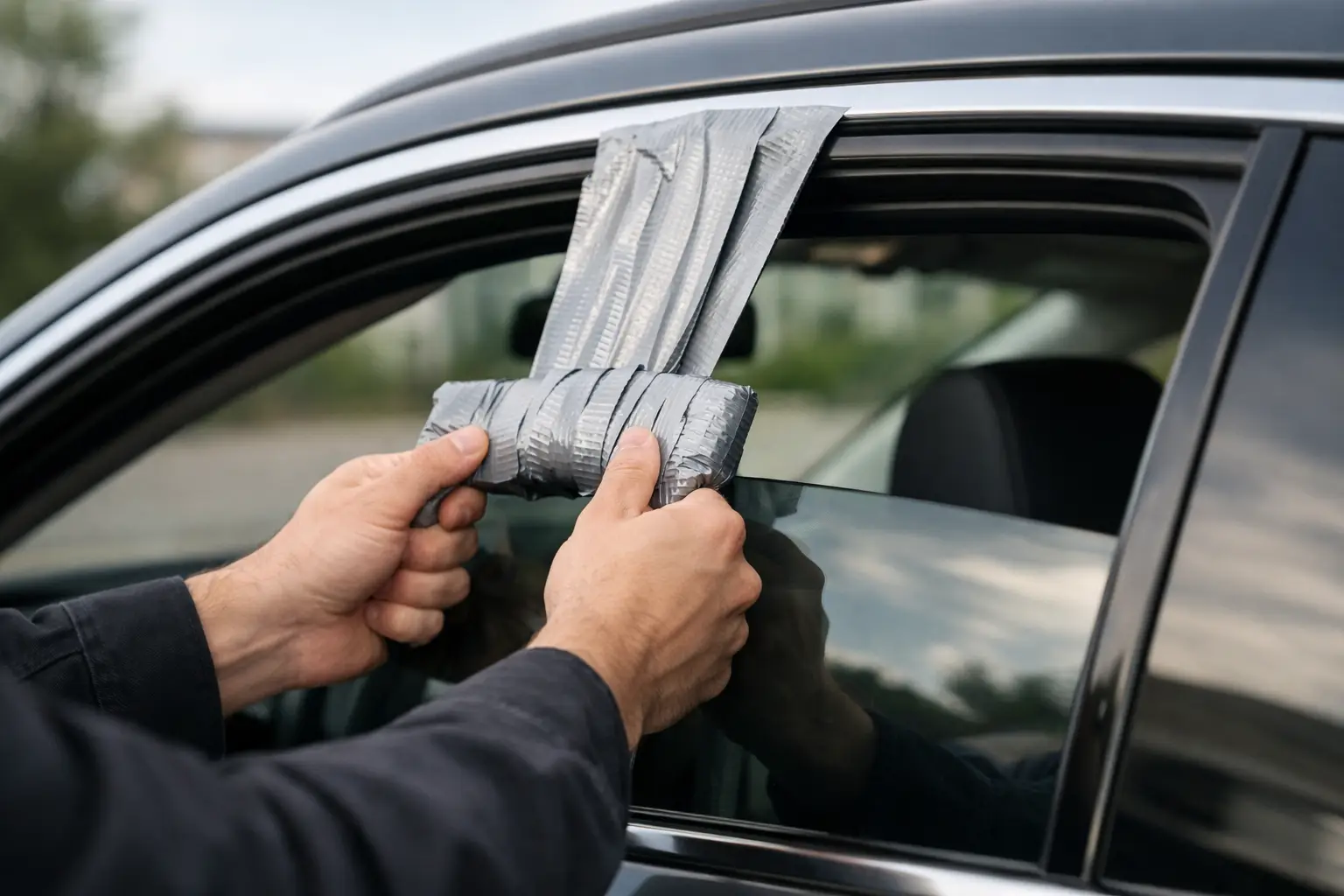
Most drivers first hear this trick in a moment of panic – keys locked in the car, rain starting, schedule blown, and a video online claiming duct tape can pull a car window down. So, can duct tape really open car windows? In most real-world lockout situations, no. It is not a reliable entry method, it often does nothing at all, and on modern vehicles it can leave you with more damage and a more expensive problem than the lockout you started with.
That short answer matters because car access myths spread fast. A trick that looks easy on video can be completely different on an actual vehicle parked on a London street, with tight weather seals, auto glass, and a powered window system that is designed not to move just because something sticky is attached to it.
Can duct tape really open car windows on modern cars?
The idea sounds simple enough. You stick several strips of duct tape to the window, press firmly, and pull downward or upward depending on the video you watched. The claim is that the tape gives enough grip to drag the glass through the window channel so you can create an opening.
That might sound plausible if you imagine a loose manual window in an old car with worn seals. But most vehicles on the road today do not work that way. The glass sits tightly in guided channels, the regulator holds the window in place, and the friction involved is far greater than most tape adhesive can overcome.
On electric windows, the regulator and motor assembly are designed to move the glass only when the switch activates the mechanism. If the window is fully closed and the system is functioning normally, sticking tape to the outer surface does not bypass the motor. It just adds force to the glass surface. Usually, the tape peels off first.
Even on older cars, success is far from guaranteed. Dirt, moisture, window tint, cold temperatures, and the quality of the tape all reduce grip. A video may show a result under perfect conditions, but that is not the same as a dependable method you should trust in an emergency.
Why the tape trick usually fails
The main reason is basic mechanics. Tape sticks to the surface of the glass. It does not connect to the part that actually raises and lowers the window with enough control to overcome the regulator’s resistance.
There is also the issue of leverage. A car window does not slide freely like a piece of glass in a frame. It is held in alignment, often tightly, to prevent rattling, wind noise, and water leaks. That resistance is deliberate. If a few strips of tape could move the window from outside, vehicle security and weather sealing would be poor by design.
Then there is adhesive failure. Duct tape is strong for many household jobs, but car glass brings its own problems. If the glass is wet, dusty, hot, cold, or treated with any coating, adhesion drops quickly. Pull hard enough and you are more likely to stretch the tape, leave residue, or snap it free than move the glass itself.
A final problem is misinformation. Some clips online show partially lowered windows, damaged regulators, or already-faulty glass channels. In those cases, the tape is not proving that the method works on a normal locked car. It is just taking advantage of an existing fault.
When it might appear to work
There are edge cases. If a window regulator is already broken, if the glass is loose in the channel, or if the window is not fully seated, tape might shift the glass slightly. But that is not the same as a reliable unlocking method.
In fact, if the window moves unusually easily from outside, that points to a fault. A loose pane can drop into the door, crack, or leave the car unsecured. What looks like a lucky break in a lockout can quickly turn into a repair job for the window mechanism, the glass, or the door internals.
That trade-off is why professionals do not treat the tape trick as a serious solution. If your goal is clean, safe vehicle entry, gambling on an internet hack is a poor substitute for the right tools and the right technique.
The real risks of trying it
The first risk is damage to the window or tint. Repeated pulling can stress the glass unevenly, especially if you start tugging at an angle. While modern side glass is tough, it is not meant to be forced through the channel by hand from the outside.
The second risk is damage to the seals. The rubber around the window helps keep out water and road noise. If you keep yanking on taped glass or wedge objects into the gap to help the process, you can distort or tear those seals. That can leave you with leaks and wind noise long after the lockout is over.
The third risk is wasted time. In a lockout, time matters. If a child, pet, or vulnerable passenger is inside, trying random internet fixes can delay the proper response. If there is immediate danger, call emergency services right away. If it is a standard lockout with no medical risk, a specialist automotive locksmith is usually the fastest and safest route.
There is also the cost factor. A straightforward entry job is usually far cheaper than replacing damaged glass, reattaching loose tint film, or repairing a bent seal and scratched trim.
What actually works in a car lockout
Professional vehicle entry is not based on force and guesswork. It is based on vehicle-specific methods, proper tools, and an understanding of how different locks, deadlocks, and interior access points work.
On many cars, non-destructive entry involves creating a controlled gap with the correct tools, protecting the frame and seals, and using long-reach equipment to operate the interior handle, button, or switch where appropriate. On others, the method changes because the locking system, double-lock feature, or keyless setup makes that approach unsuitable.
That is why experience matters. The wrong approach can trigger anti-theft features, damage trim, or leave marks around the door frame. The right approach gets the car open with minimal risk and without turning a lockout into bodywork or electrical repair.
What to do instead of trying duct tape
If you are locked out, take a minute before doing anything that could make the problem worse. Check whether another door or the boot is unlocked. If your car uses an app or remote feature, see whether you can access it safely. If you have roadside assistance, compare response times. Then think practically.
If the keys are visible inside but the car is fully secured, the safest option is usually a mobile automotive locksmith. A specialist can assess the make, model, and locking setup on-site and choose the least invasive method. That matters even more on newer vehicles with sensitive trim, advanced locking systems, and expensive glass.
If the key is not just locked in but also lost, broken, or stuck in the lock or ignition, a general lockout trick will not solve the wider problem anyway. That is where proper key cutting, programming, extraction, or barrel repair becomes part of the job.
For drivers in South London dealing with this kind of problem, a local automotive locksmith service is often the quickest way back into the vehicle without dealership delays or risky DIY attempts.
Why online car hacks spread so easily
They spread because they offer hope in a stressful moment. A locked car creates pressure, and a simple trick feels better than waiting for help. But easy-to-share advice is not always good advice.
Most viral car entry hacks leave out key details. They do not show failed attempts. They do not mention existing damage. They do not explain whether the car was already compromised. And they rarely mention what happens if the trick goes wrong.
For everyday drivers, the better rule is simple: if a method sounds too easy to defeat a car’s locking or window system, it probably is. Vehicles are designed to resist casual entry. Reliable access usually requires either the proper key, the correct programming, or specialist opening tools used by someone who knows the vehicle.
A better way to think about lockouts
A lockout is frustrating, but it is usually a technical problem, not a social media challenge. The goal is not to prove you can outsmart the car with tape, string, or a coat hanger. The goal is to regain access quickly, safely, and without adding repair costs.
That is why the duct tape question matters. Not because nobody has ever moved a loose window with adhesive, but because drivers need a realistic answer when they are under pressure. In normal conditions, duct tape is not a dependable way to open a car window or unlock a vehicle. If your car is locked and you need entry without damage, the smart move is to stop experimenting early and get help from someone equipped to do the job properly.