
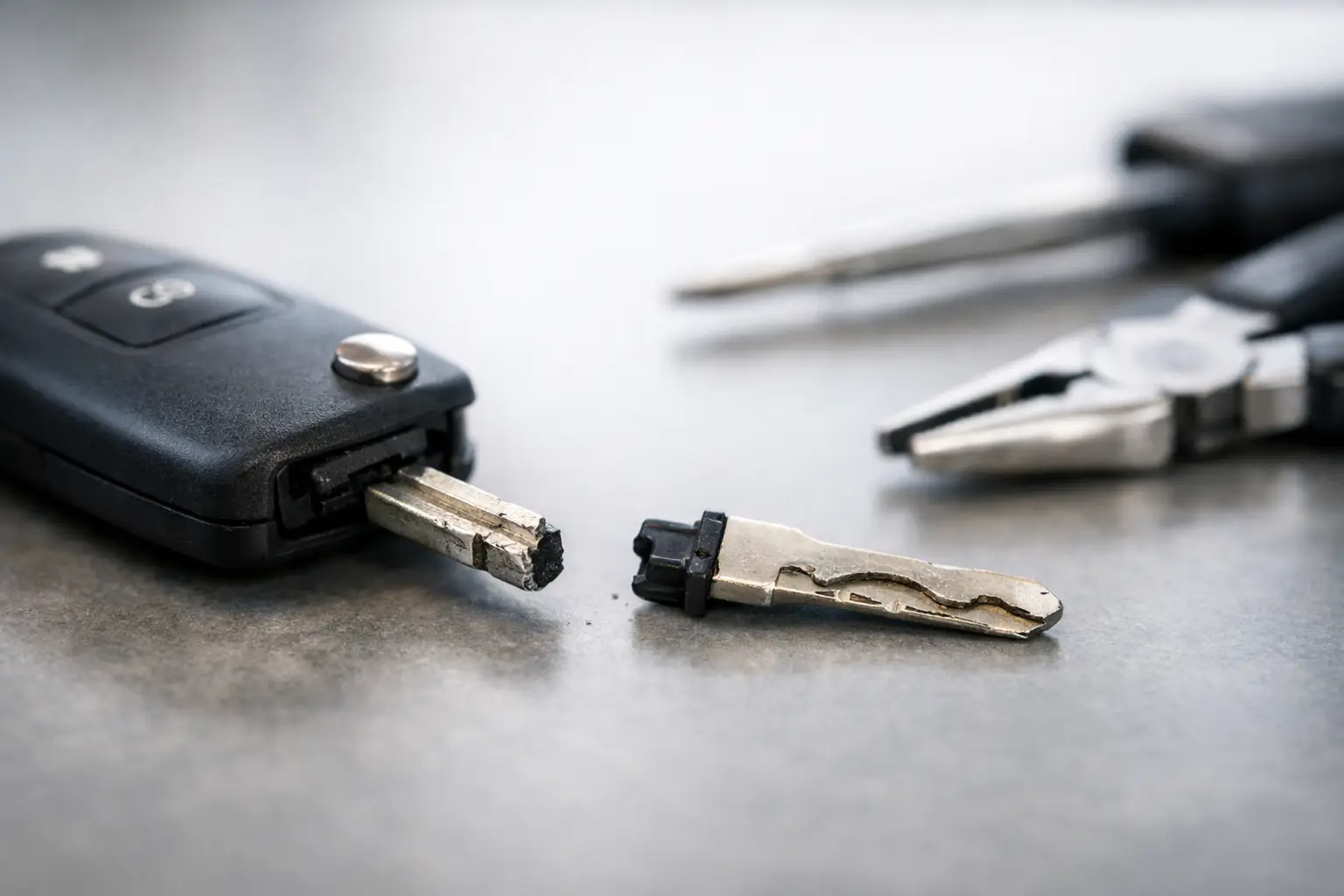
A car key rarely breaks at a convenient time. It happens in a parking lot before work, outside school pickup, or when you’re already running late. If you need broken car key repair, the first thing to know is this – not every damaged key needs a full replacement, but waiting too long can turn a small issue into a lock, ignition, or programming problem.
Modern car keys are more than cut metal. Many include a transponder chip, remote buttons, a flip mechanism, or smart key electronics. That means the right fix depends on what actually failed. A cracked shell is different from a snapped blade. A loose button is different from water-damaged circuitry. Good repair work starts with identifying the fault quickly and choosing the safest option for the vehicle.
When broken car key repair is possible
Some keys can be repaired on the spot without replacing everything. If the metal blade is worn but still readable, it may be possible to cut a fresh blade and transfer the electronics into a new shell. If the flip key housing has cracked or the buttons have failed, the internal chip can often be moved into a replacement case. In these situations, repair is usually faster and more affordable than starting over from scratch.
Repair also makes sense when the key still starts the car but feels weak, bent, or loose. That kind of damage tends to get worse. A key that barely works today may snap in the door or ignition tomorrow. Fixing it early can prevent a more expensive callout for extraction or ignition repair later.
The main limit is the condition of the internal components. If the transponder chip is damaged, the circuit board has failed, or the key has been crushed or badly exposed to water, repair may not be reliable. In those cases, replacement and programming are usually the better route.
What causes car keys to break
Most broken keys are the result of repeated wear, not one sudden event. Over time, blades thin down, plastic casings split, and flip mechanisms loosen. Drivers often keep using a key long after the first warning signs show up because it still works most of the time.
The problem is that car locks and ignitions do not respond well to force. Twisting a bent key, pushing a damaged blade into a stiff ignition, or folding a loose flip key shut too aggressively can cause a full break. Once part of the key snaps off inside the lock or ignition, the job becomes more complicated.
Heavy keychains are another common cause. They add constant strain to the ignition and key head, especially on older style turn-key systems. If your key already has a hairline crack near the blade, that extra weight can finish the job.
Signs your key needs attention before it fails
A lot of emergency callouts could be avoided if the key was checked earlier. If the blade looks bent, the plastic head is separating, the remote buttons only work sometimes, or the key sticks when turning, treat that as a warning. The same goes for a flip key that no longer locks firmly into place.
These issues do not always mean the key will break immediately, but they tell you the key is under stress. A quick assessment can often confirm whether a repair is still practical or whether a replacement key would be the safer choice.
Repair or replacement – which is better?
It depends on the damage, the vehicle, and how urgently you need a dependable fix. Repair is often the best option when the electronics still work and the damage is limited to the shell, blade, or button components. It saves time, keeps costs down, and can usually be done without changing the car’s programming.
Replacement is the better choice when the key is missing pieces, the chip is faulty, the remote board has failed, or the original key is so worn that duplicating it accurately would be risky. Some vehicles also have security systems that make partial repairs less worthwhile. In those cases, a new key cut and programmed to the car is the cleaner long-term solution.
A professional locksmith should be honest about that trade-off. Repair should only be recommended when it will hold up in real use, not just get the car started once.
Broken key in the lock or ignition
If part of the key is stuck in the door lock or ignition, stop trying to force it out. Tweezers, glue, and makeshift tools often push the fragment deeper or damage the lock wafers. That can turn a straightforward extraction into a lock rebuild or ignition repair.
A proper extraction uses specialist tools designed to remove the broken piece without harming the lock body. Once the fragment is out, the next step is checking why it broke. If the lock is stiff or worn, simply cutting another key may not solve the problem. If the ignition barrel is binding, a fresh key can break again under the same pressure.
That is why diagnosis matters. The key may be the visible problem, but sometimes the lock or ignition caused the failure.
Why mobile service makes sense
When your key breaks, getting the car to a dealership is often the hardest part. If the vehicle will not start or the key is stuck in the ignition, towing adds cost and delay. A mobile automotive locksmith can come to the vehicle, assess the damage on site, and carry out the right work there and then in many cases.
That matters when time is tight. Commuters need to get moving. Parents need the school run back on track. Tradespeople cannot afford to lose half a day waiting around. On-site broken car key repair removes a lot of that friction because the tools, cutting equipment, and programming capability come to you.
For drivers in and around London, that local response can make a big difference. Auto Tech Car Keys focuses on exactly these urgent situations, with practical solutions designed to get drivers back on the road without dealership delays.
What a professional repair visit should include
A proper service should begin with a clear inspection of the key and, where relevant, the door lock or ignition. The technician should explain whether the issue is cosmetic, mechanical, or electronic. From there, the repair might involve replacing the shell, cutting a new blade, transferring chips and circuit boards, repairing button contacts, extracting a broken piece, or programming a replacement key.
Pricing should also be straightforward. Customers dealing with a broken key are already under pressure. They do not need vague promises or unclear add-ons. A dependable locksmith explains what can be repaired, what needs replacing, and what the cost will be before the work goes ahead.
Speed matters, but so does accuracy. A quick fix that leaves you with a weak blade, unreliable remote, or poorly fitted shell is not much of a fix at all.
How to avoid another broken key
Once a key has been repaired or replaced, a few simple habits can help it last longer. Keep it off a heavy keychain. Do not ignore stiffness in the door or ignition. Replace cracked shells before the blade loosens. If a remote case starts separating, get it rebuilt before the electronics fall out or the chip is lost.
It is also worth having a spare made while you still have a working key. That takes pressure off your main key and gives you a backup if damage happens again. It is usually faster and less expensive to make a spare from an existing key than to sort everything out after a complete failure.
Choosing the right help
Not every locksmith handles automotive key work at the same level. Broken car keys often involve more than cutting metal. You may need chip transfer, remote repair, programming, extraction, or ignition fault diagnosis. That is why specialist automotive experience matters.
The best help is practical help. You want someone who can tell the difference between a repairable key and one that should be replaced, someone who works on site, uses proper equipment, and keeps the process clear from the start.
If your key is cracked, bent, snapped, or stuck, do not keep testing your luck with one more turn. Getting it checked early is usually the fastest way to avoid a bigger problem and get back to your day with less disruption.