
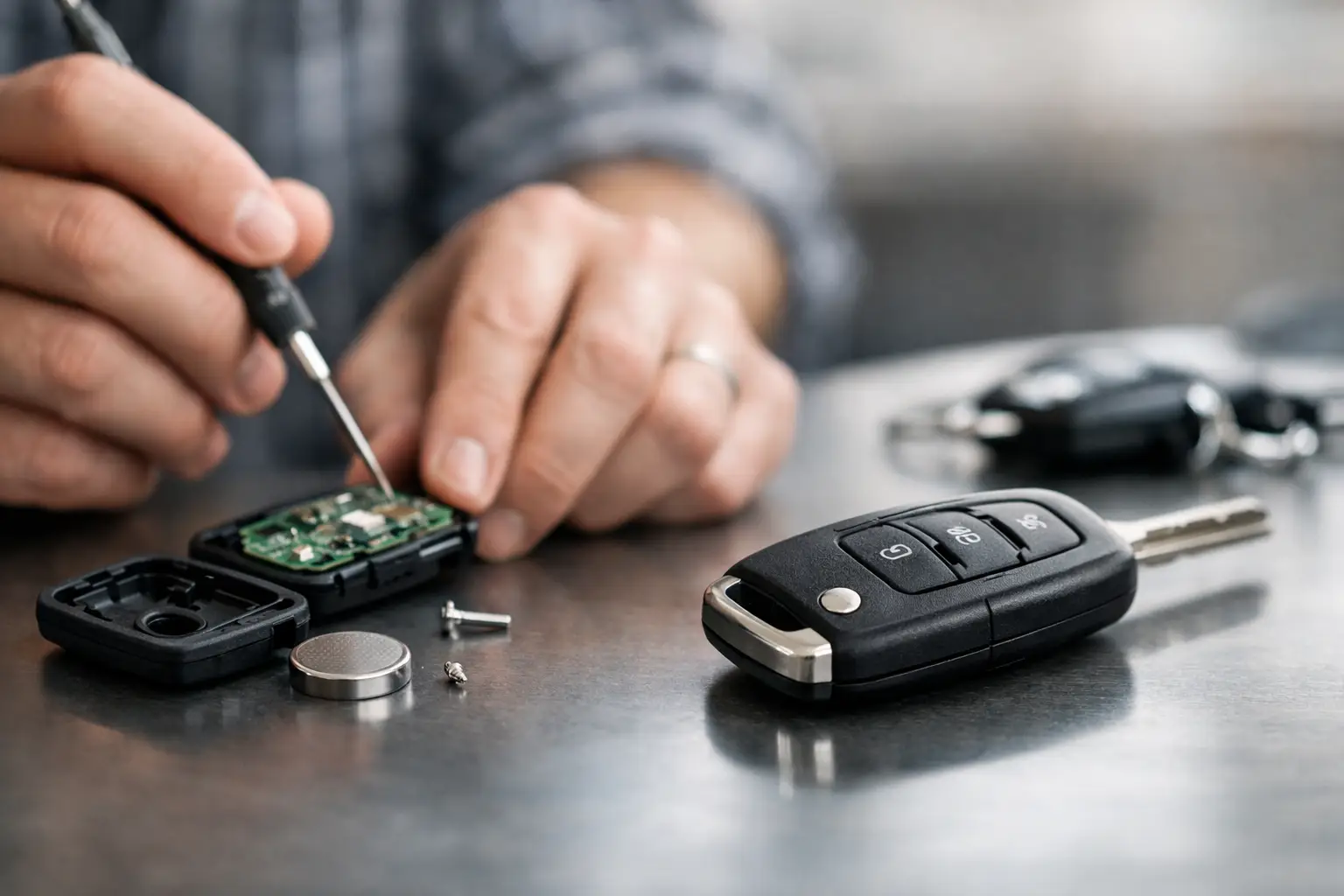
Your car key stops working at the worst possible time. You press the button in the rain, outside work, or with kids waiting in the back seat, and nothing happens. That is usually when car key fob repair goes from a minor annoyance to an urgent problem.
A faulty fob does not always mean you need a brand-new key. In many cases, the issue is a dead battery, damaged casing, worn buttons, failed solder joints, or a programming fault. In others, replacement is the smarter and more cost-effective move. The key is knowing which problem you are dealing with before you waste time or money.
What goes wrong with a car key fob
Most key fobs fail in predictable ways. The battery is the obvious one, but it is far from the only cause. Daily use, drops onto hard pavement, moisture, crushed pockets, and general wear all take a toll on the casing and internal electronics.
Sometimes the symptoms are clear. If the range keeps getting shorter and shorter before the fob stops responding, the battery is often the culprit. If one button works but another does not, the issue may be with the rubber pad, the outer shell, or the contact beneath the button. If the key has split open or been bent, internal board damage becomes more likely.
There are also cases where the fob itself is fine, but the programming is not. After a battery change, electrical issue, or previous incorrect repair attempt, the vehicle may stop recognizing the key properly. That is why guessing can get expensive. A proper inspection saves time.
When car key fob repair makes sense
Car key fob repair is usually the right choice when the main electronic board is still recoverable and the damage is limited. A battery replacement is the simplest example, but repair can also include fitting a new shell, replacing worn button pads, repairing battery terminals, or correcting damage on the circuit board.
This is often the best route when your key blade is still correct for the vehicle, the chip is present, and the problem developed gradually rather than all at once. If the fob has sentimental value as your original key, or if you want to avoid the higher cost of a full replacement and programming job, repair can be a practical option.
There is a trade-off, though. Not every damaged fob is worth saving. If the board has severe water damage, major breakage, or a missing transponder chip, repair may be less reliable than replacing the unit altogether. A quick fix that fails again a week later is not a good deal.
Common repairs that can often be done
A lot of fobs can be brought back to life with straightforward work. Replacing the outer shell is common when the case cracks but the internal electronics still function. Button repair is another frequent job, especially when drivers have to press harder and harder to get a response.
Battery contact repair is also common. If the fob has been dropped, the battery clips can loosen or detach from the board. In some cases, the board needs careful soldering work. That is specialist work, not something every hardware store or general key cutter can handle.
If the remote functions have failed but the immobilizer chip is still working, you may still be able to start the car even if you cannot lock or unlock it remotely. That points to a different repair path than a key that will not start the vehicle at all.
When replacement is the better option
Sometimes replacement is the cleaner, faster answer. If the key is missing, stolen, crushed, heavily water-damaged, or has multiple faults, replacing it can save repeat visits and uncertainty. The same applies if the board is beyond repair or if previous DIY attempts have made the damage worse.
Replacement also makes sense if you only have one unreliable key left. A lot of drivers wait until that last key fails completely, then face more stress, more urgency, and often higher cost. If your only fob is clearly on its way out, acting early gives you more options.
The make and model matter here. Some vehicles allow relatively straightforward replacement and programming. Others require specialist diagnostic equipment, security procedures, and correctly matched components. That is one reason dealership pricing can be high and lead times can be frustrating.
DIY car key fob repair vs professional help
It is tempting to try fixing the fob yourself, especially if a replacement battery or shell is easy to find. For very basic issues, that can work. If the only problem is a dead battery and you know the correct type, changing it carefully may solve everything.
But DIY car key fob repair has limits. Opening the casing the wrong way can crack it further. Touching or damaging the small transponder chip can turn a minor issue into a no-start situation. Fitting cheap aftermarket shells or parts can also lead to poor button alignment, weak battery contact, or reduced durability.
Programming is another area where DIY often falls short. Some online advice makes it sound simple, but many modern vehicles need specialist tools and experience. If the car still does not recognize the key after your repair attempt, you may end up paying for both the failed attempt and the proper fix.
For drivers who need the car for work, school runs, or daily commuting, reliability matters more than experimenting. A proper diagnosis usually costs less than the disruption caused by getting stranded.
Signs your key fob needs attention now
A failing fob usually gives warning signs before it stops completely. If you need to stand closer to the car than usual, the battery may be weakening or the internal board may be starting to fail. If the buttons feel soft, split, or unresponsive, the outer wear is already affecting function.
Intermittent performance is another red flag. If the key works in the morning but not later in the day, or only after repeated presses, do not assume it will sort itself out. Electronic faults rarely improve with time.
Physical damage matters too. A cracked shell can let in dirt and moisture. Once that reaches the circuit board, a simple repair can turn into a full replacement job. Acting early usually means a cheaper solution.
What to expect from a proper repair service
A good service starts by identifying whether the problem is the battery, the casing, the board, the transponder, the programming, or the vehicle itself. That sounds basic, but it is where a lot of time gets wasted when people go to the wrong place.
From there, the repair should be explained in plain terms. If a fob can be repaired reliably, you should be told that. If replacement is the better route, you should be told that too. Straight answers matter when you are already dealing with the inconvenience of a key issue.
Mobile service can make a big difference as well. If the car will not start or you are stuck away from home, having an experienced technician come to you is often the fastest way to get back on the road. For many drivers, that is far more practical than arranging recovery or waiting on a dealership appointment. That is why businesses like Auto Tech Car Keys focus on on-site diagnostics, repair, and programming for urgent situations.
How to avoid future key fob problems
Key fobs are small, but they are not disposable. A little care goes a long way. Keep the key dry, avoid overloading your keychain, and do not ignore a cracked shell or weakening buttons. If your spare key has been sitting unused for years, test it before you actually need it.
It is also worth replacing a dying battery before total failure. Many drivers put this off until the fob stops responding entirely, which tends to happen at the least convenient time. If you already know your only key is worn or unreliable, getting it checked now is usually cheaper than dealing with an emergency later.
The right fix depends on the fault, the vehicle, and how urgent the situation is. But one thing is consistent – if your key fob has started acting up, early action gives you the best chance of a simple repair instead of a bigger problem.