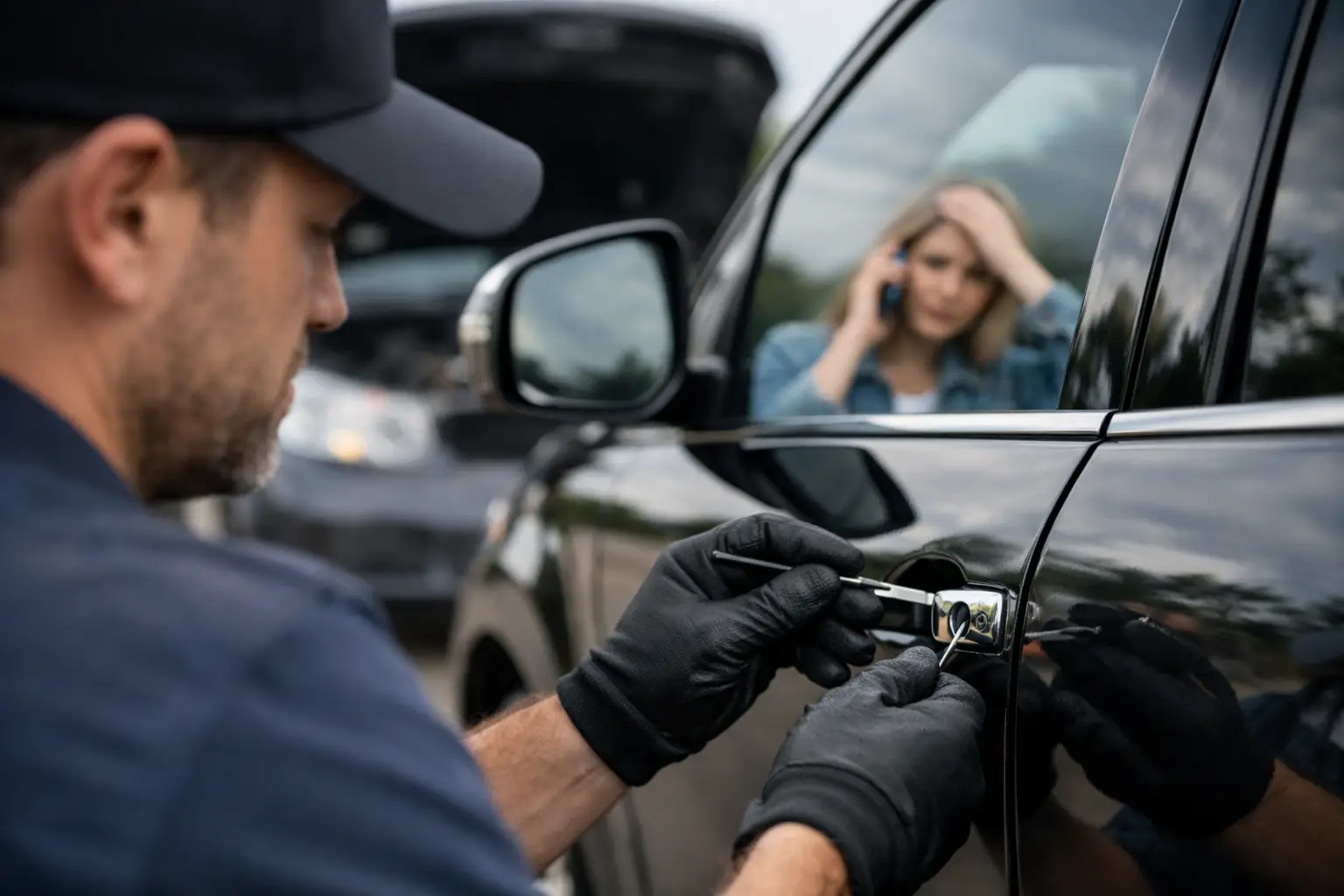
You notice the problem at the worst possible moment. The keys are sitting on the driver’s seat, the fob has stopped responding, or the key has snapped in the ignition when you were already late. That is exactly when an emergency car locksmith service matters – not as a nice extra, but as the fastest way to get back into your vehicle and moving again.
For most drivers, the main issue is not just access to the car. It is the chain reaction that starts right away. You miss work, school pickup gets complicated, tools are stuck in the trunk, or your car is left in a place where you cannot safely leave it for long. In those situations, you need a specialist who can come to you, diagnose the problem quickly, and fix the issue on-site without sending you through a long dealership process.
What an emergency car locksmith service actually covers
Many people assume a locksmith only opens locked doors. In reality, a proper automotive specialist handles a wider range of urgent problems. Lockouts are the most common call, but they are far from the only one.
A mobile technician may be able to unlock the vehicle, cut and program a replacement key, repair a damaged fob, extract a broken key from a door lock or ignition, or assess whether the lock or ignition barrel itself has failed. The value is not just that someone arrives fast. It is that the person arriving has the tools and vehicle-specific knowledge to solve the problem without turning one issue into two.
That distinction matters. Modern vehicles are not built like older models. Opening a car without damage, programming a transponder key, or matching a smart key system requires the right equipment and up-to-date experience. A general locksmith may help in some cases, but automotive work often needs a more specialized approach.
When to call an emergency car locksmith service
The obvious time to call is when your keys are locked inside the car. But there are several other situations where emergency help is the right move.
Lost or stolen car keys
If your only key is missing, speed matters. You may need more than a new key cut. In some cases, the vehicle’s system should be reprogrammed so the missing key no longer works. That depends on the car, the key type, and whether theft is a concern rather than simple loss.
Broken key or damaged fob
A worn key can suddenly stop turning, snap in the lock, or fail to communicate with the immobilizer. Sometimes the fix is straightforward. Sometimes the shell, blade, chip, or battery is only part of the problem. A good technician checks the full system before deciding whether repair or replacement makes more sense.
Faulty locks or ignition issues
If the key is fine but the door lock or ignition barrel is not responding properly, forcing it can cause more damage. That usually leads to a more expensive repair. An emergency callout can help you find out whether the issue is key-related, lock-related, or an ignition problem before it gets worse.
Keys locked in the trunk or car
This is still one of the most common callouts because it happens fast and usually when people are distracted. Parents loading bags, tradespeople unloading tools, and commuters rushing between stops all run into it. The best response is simple – do not try to pry a door, bend a frame, or force a window seal.
What to expect when help arrives
A reliable emergency car locksmith service should make the process feel clear, not confusing. First, you should expect a few basic questions over the phone. The make, model, year, your location, and the exact issue help the technician bring the right tools and key data.
Once on-site, the technician should confirm ownership or access rights before starting work. That protects you and the vehicle. After that, the job usually begins with diagnosis rather than guesswork. If the car is locked, the goal is non-destructive entry whenever possible. If the issue is a lost key or failed fob, the technician may cut a new key, program it, and test it before leaving.
The right service is practical and transparent. You should know what the issue appears to be, what the likely fix is, how long it may take, and what affects the cost. In a stressful moment, plain answers matter.
Why mobile service is often better than the dealership
For urgent situations, the biggest advantage of mobile locksmith service is simple: your problem gets handled where the car is. If your only key is gone or the vehicle will not start, arranging a tow to a dealership adds delay and extra cost.
A dealership can be the right option in some cases, especially for very new vehicles, unusual security systems, or warranty-related work. But for many lockouts, key replacements, key programming jobs, and broken key problems, a qualified mobile automotive locksmith is the faster and more practical choice.
There is also the issue of timing. Dealerships usually work on scheduled service timelines. Emergencies do not. If you are stranded in a parking lot, at home before work, or outside your vehicle late in the evening, waiting several days is not a real solution.
What affects the price
Drivers often want one straight answer on cost, but the truth is that pricing depends on the job. A basic lockout is different from generating and programming a new proximity key for a late-model vehicle.
The biggest factors are usually the vehicle make and model, the key type, whether all keys are lost, whether programming is required, and whether there is damage to the lock or ignition. Time of day and location can also affect emergency callout pricing. That does not mean the price should be vague. It means a professional service should explain what you are paying for and why.
Cheap service can be expensive if the work is poor. Damage to door seals, lock mechanisms, trim, or ignition parts can quickly wipe out any savings. Fast response matters, but so does having an experienced technician who knows the vehicle system in front of them.
How to choose the right emergency car locksmith service
When you are stuck, it is easy to call the first number you find. A better approach is to look for a few signs of a serious automotive specialist.
Start with whether they focus on vehicle locksmith work, not just general locks. Ask if they handle key programming, replacement keys, broken key extraction, and ignition or lock repairs. If they do, that usually points to stronger automotive capability.
Next, pay attention to how they communicate. Clear arrival estimates, straightforward pricing information, and simple explanations are good signs. So is a willingness to ask detailed questions about the vehicle before dispatch. That usually means they are preparing properly rather than guessing.
Local coverage also matters. A mobile specialist serving your area regularly can usually respond faster and with fewer delays. That is especially important when you are dealing with school runs, work travel, deliveries, or a vehicle parked somewhere it should not stay for long.
The best emergency is the one you avoid
Even people who need an emergency car locksmith service today can lower the chance of needing one again next month. The most practical step is getting a spare key before your only working key fails. Drivers often wait until the key is lost, but by then the job is usually more complicated and more expensive.
It also helps to replace worn key shells, weak fob batteries, and damaged blades early. If your key sticks, only works intermittently, or needs repeated attempts, treat that as a warning sign. The same goes for locks and ignitions that feel rough or inconsistent.
For drivers who depend on their vehicle every day, prevention is not overthinking. It is basic time management. A spare key and a quick repair now can save you from a much bigger disruption later.
When the problem cannot wait, the right help is simple: fast arrival, the right tools, honest answers, and a fix that gets you moving again. That is what drivers should expect from a real emergency response, and it is why specialists like Auto Tech Car Keys are called when timing matters most.