
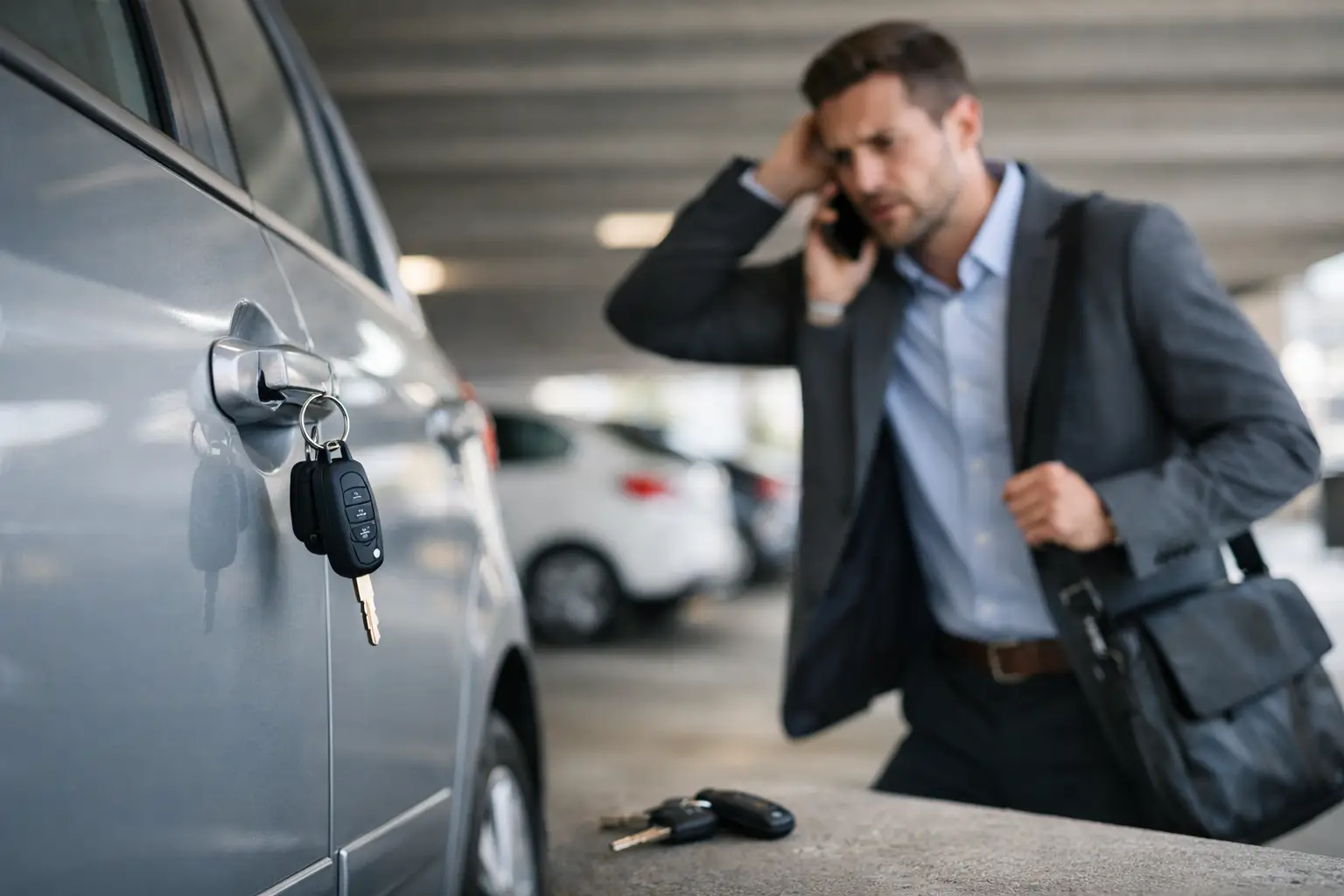
You have finished a long shift, walked into the office car park, and the key is sitting on the driver’s seat. Or the remote has stopped responding, the key blade has snapped, or your car will not recognize the fob. An office car park lockout is more than an inconvenience when you need to collect children, reach a client, get home, or clear a space before the parking area closes.
The right response is not to force the door or wait hours for a dealership appointment. A specialist mobile automotive locksmith can come to the vehicle, confirm ownership, open it without unnecessary damage, and deal with the key issue if needed. Here is what to do when you are locked out at work and how to avoid turning a short delay into an expensive repair.
First steps during an office car park lockout
Take a breath and check the simple possibilities before calling for help. Confirm that every door and the trunk are locked, and check whether another authorized driver has a spare key. If your car uses keyless entry, hold the fob close to the start button or the designated backup detection point described in the vehicle manual. A weak fob battery can sometimes prevent normal keyless entry or starting.
If the keys are visible inside the car, resist the temptation to try a coat hanger, wedge, screwdriver, or a piece of wire. Modern vehicles have side airbags, sensitive window mechanisms, weather seals, and electronic locking systems close to the door frame. A forced entry attempt can bend the frame, damage a window regulator, trigger an alarm, or create a repair bill that is far larger than a professional lockout service.
Let office reception, building security, or the car park operator know what has happened. This matters especially if the lot has timed gates, overnight restrictions, assigned spaces, or security patrols. They may be able to confirm the vehicle can remain there while help is on the way, but they generally cannot open your vehicle or authorize someone else to do so.
Have the right details ready for the locksmith
A quick response depends partly on clear information. Tell the locksmith the vehicle make, model, year, and registration number, along with the type of problem. There is a difference between keys locked in the car, a missing key, a key that turns but will not start the vehicle, and a fob that has stopped working.
Also provide the exact car park location, including the office building name, level or bay number, and any access instructions. Large business parks and underground garages can add time when a technician has to locate a vehicle without clear directions. If the car park has a height restriction, barrier, or security checkpoint, mention it before the technician travels.
Be prepared to show proof that you own or are authorized to use the vehicle. A photo ID, vehicle registration document, insurance details, lease paperwork, or company vehicle authorization may be appropriate depending on the circumstances. A reputable automotive locksmith should take this seriously. Vehicle security protects everyone, not just the owner in front of them.
Why car park lockouts need specialist help
Office parking areas often add complications that do not apply to a driveway. Your car may be in a tight bay, beneath poor lighting, behind a barrier, or in a garage where mobile reception is limited. You may also be under pressure because the building is closing or the vehicle needs to be moved before a parking deadline.
A mobile automotive locksmith is equipped to work at the vehicle rather than asking you to arrange recovery to a dealer. Professional non-destructive entry techniques are designed to gain access while protecting the lock, door seal, glass, and vehicle electronics. The exact method depends on the vehicle, because locking systems vary widely between makes and model years.
The job does not always end when the door is open. If the key is lost, broken, or has failed electronically, you may need a replacement key cut and programmed on-site. For a key that has snapped in the door or ignition, extraction should be handled carefully so the lock or ignition barrel is not damaged further. If the ignition itself is worn or sticking, a technician can assess whether repair or replacement is the sensible next step.
Common causes of office parking lockouts
Many workday lockouts start with routine distractions. A call from a manager, a rushed departure, a laptop bag, groceries, gym gear, or a child pickup can leave a key in the cabin or trunk. That can happen to any driver, particularly at the end of a demanding day.
Other cases come down to equipment failure. Key fobs take daily knocks, buttons wear out, batteries run down, and internal circuit boards can fail after moisture exposure or impact. A metal key blade may bend, crack, or break after years of use. Central locking faults and damaged door locks are less common, but they can leave a working key unable to open the vehicle.
Company cars create another layer of risk. Shared keys can go missing between drivers, and an employee may not have access to the spare key when it is stored at a different site. If you manage fleet vehicles, keeping an up-to-date key handover record and arranging replacement keys before the last working key fails can prevent a costly interruption.
What not to do while waiting for help
Do not leave a window slightly open and attempt to reach the lock through the gap. Do not strike the window, pull hard on the handle, or repeatedly press a failing fob in the hope it will reset. These actions can damage parts that were not originally faulty.
Avoid leaving the vehicle unsecured if you have managed to gain partial access but cannot lock it properly afterward. Tell security if you need to step away, particularly in a public or underground car park. If a child, pet, or vulnerable person is locked inside the vehicle, tell emergency services immediately. That is a safety emergency, not a standard locksmith callout.
It is also worth being cautious with generic roadside services. Some providers can assist with basic access, but they may not have the specialist machinery or programming capability required for modern vehicle keys. When the lockout is tied to a lost transponder key, a damaged smart key, or an immobilizer issue, an automotive locksmith is usually the more direct option.
Choosing the right mobile locksmith
Ask whether the locksmith works with your vehicle type and whether they can provide the service at the car park. A clear explanation of likely costs, callout arrangements, and what may affect the final price is a good sign. The price can vary based on the make and model, the key type, the time of day, the level of programming required, and whether the vehicle has an existing lock or ignition fault.
Fast service should not mean vague service. A professional should explain whether the immediate goal is vehicle entry, key repair, key extraction, or a replacement key. If you have lost every key, the process may take longer than a simple keys-locked-inside job because a new key may need cutting and programming to the vehicle.
For drivers across South London, Auto Tech Car Keys provides mobile help for vehicle lockouts, replacement keys, key repairs, extraction, and lock or ignition issues. The aim is straightforward: get to the vehicle, verify authorization, assess the fault, and provide the most practical solution without dealership delays where possible.
Preventing the next workday lockout
A spare key is the most useful safeguard for most drivers. Keep it somewhere secure and separate from the main key, not in the glove box or hidden on the vehicle. If you use a keyless fob, replace its battery before it becomes unreliable and protect it from water and heavy impact.
For a family vehicle, decide who has the spare and how it can be accessed quickly. For a work vehicle, make key responsibility part of the handover process. A small amount of preparation is especially valuable when your car is essential for commuting, site visits, school runs, or trade work.
The best time to arrange a spare or repair a worn key is before the office parking lot becomes the place where it finally fails. A planned visit is usually less stressful than an emergency callout, and it leaves you with a practical backup when the next busy day does not go to plan.