
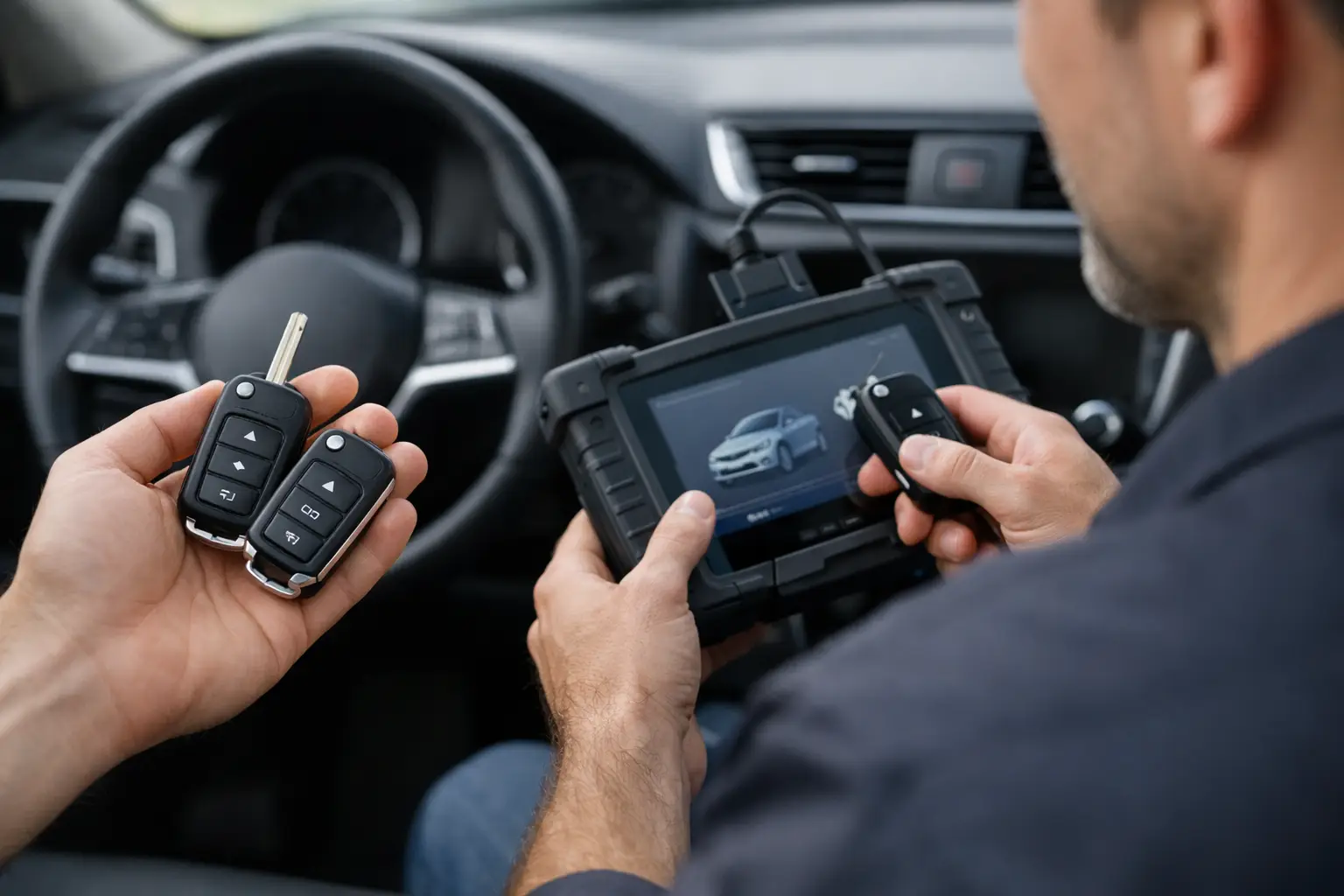
That second key usually becomes urgent the day the first one goes missing, stops working, or gets locked in the car. Spare car key programming is what turns a cut key or replacement fob into something your vehicle will actually recognize, and for most drivers, that is the difference between a backup plan and a useless piece of plastic.
If you rely on your car for work, school runs, appointments, or daily commuting, having only one working key is a gamble. Many drivers put it off because they assume it will be expensive, time-consuming, or dealer-only. In reality, it depends on the vehicle, the type of key, and whether the programming can be done on-site by an automotive locksmith with the right equipment.
What spare car key programming actually means
Modern car keys do more than unlock doors. Most contain a transponder chip, remote electronics, or proximity functions that communicate with the vehicle’s immobilizer and security system. Cutting the blade is only one part of the job. Programming is the process of matching the key or fob to the vehicle so the engine starts and the remote features work properly.
On older vehicles, the process can be fairly simple. On newer models, it often involves diagnostic tools, security access, and vehicle-specific programming steps. That is why two keys that look almost identical can require very different work behind the scenes.
For some cars, the remote locking functions and the starting function are programmed separately. In other cases, one procedure covers both. If a customer says, “I just need a spare,” the right first step is always identifying exactly what type of key the vehicle uses.
Why getting a spare key early saves money and stress
The best time to arrange spare car key programming is when you still have one working key. That is usually the quickest and most affordable scenario. The existing key helps confirm the correct key type, and many vehicles are easier to add a spare to than to recover from an all-keys-lost situation.
Once every key is gone, the job often becomes more involved. The technician may need to decode locks, cut a fresh key from the vehicle, access security data, and erase missing keys from the system if needed. That means more time, more labor, and in some cases more cost.
There is also the practical side. One key means one point of failure. If it snaps in the ignition, stops transmitting, gets water damaged, or disappears during a busy day, your plans stop with it. A spare key costs far less than the disruption of missing work, rearranging childcare, or waiting days for a dealership appointment.
Which vehicles need spare car key programming
Most vehicles built in the last couple of decades need some level of programming. Basic mechanical keys without chips are now the exception rather than the rule. If your car uses a remote fob, push-button start, flip key, or chipped ignition key, programming is likely part of the process.
That said, not every key job is identical. A standard transponder key is usually more straightforward than a smart proximity key. Luxury brands and newer models often have tighter security systems. Some makes require PIN codes or specialized tools. Others allow faster onboard procedures. This is why accurate pricing usually starts with the vehicle make, model, year, and whether you still have a working key.
Can you program a spare key yourself?
Sometimes, but not as often as people hope.
A small number of vehicles allow owner programming when you already have one or two working keys. In those cases, the steps might involve cycling the ignition, pressing certain buttons, or following a timing sequence. But many modern vehicles do not allow full self-programming, especially when immobilizer coding is involved.
There is also the risk of buying the wrong key or fob online. Even if it looks right, the frequency, chip type, emergency blade, and internal board may not match your vehicle. Some aftermarket keys work well. Some do not. Some can be cut but never successfully programmed. That is where a cheap purchase can turn into wasted time and extra cost.
For drivers who want a reliable spare without trial and error, professional programming is usually the safer route.
Mobile locksmith vs dealer
This is where a lot of drivers assume they only have one option. In many cases, they do not.
A dealership may be the right fit for certain high-security vehicles or warranty-related concerns, but dealerships are often slower, less convenient, and more expensive for spare key work. You may need to tow the vehicle, wait for an appointment, and deal with parts ordering delays.
A mobile automotive locksmith can often cut and program the spare at your location, whether you are at home, at work, or stranded in a parking lot. That matters when time is tight or the car cannot be moved. For many common makes and models, a skilled mobile technician has the same level of practical capability needed to produce and program a working spare key without the dealership process.
The trade-off is simple. Not every locksmith handles every make, and not every vehicle can be done the same day. But for a large number of everyday vehicles, mobile service is the faster and more practical option.
What affects the cost
Drivers usually want a number first, which is understandable, but the real answer depends on a few details.
The type of key is the biggest factor. A basic chipped key generally costs less than a remote flip key, and both are usually less than a smart proximity key for push-button start vehicles. The vehicle brand matters too. Some systems are easier to access and program than others.
Whether you still have a working key also changes the job. Adding a spare is often simpler than replacing every key from scratch. Time of day, emergency callout requirements, and whether the blade needs cutting all play a part as well.
A good locksmith should explain what the price includes. That usually means the key itself, cutting, programming, and testing. Clear pricing matters because customers are not just buying a key. They are paying for the correct equipment, the right technical process, and a result that works when they turn the ignition or press start.
Signs your current key may already be failing
Sometimes people ask for a spare because their main key is becoming unreliable. That is smart, because key problems tend to get worse rather than better.
If the remote only works intermittently, the buttons feel worn, the blade is bent, the casing is cracked, or the car struggles to recognize the key, it is worth getting it checked before it fully fails. A weak battery can be a simple fix, but damaged internals, a failing transponder, or water exposure may mean repair or replacement is the better option.
A spare key also gives you breathing room while the original is being repaired. You are not forced into a same-day emergency just because the only key stopped responding.
What to expect from the programming process
A proper job should be straightforward for the customer. The technician confirms the vehicle details, identifies the correct key type, cuts the blade if needed, programs the key to the vehicle, and tests all functions. That includes locking, unlocking, trunk access where applicable, and most importantly, starting the car.
If security requires old keys to be removed from memory, that should be explained clearly. This can matter when a key has been lost or stolen. In those cases, keeping the missing key active can be a risk.
The goal is not just to hand over a new key. The goal is to leave you with a spare that works properly and gives you confidence the next time your main key is not available.
Choosing the right company for spare car key programming
This is one of those jobs where experience matters. A general locksmith may be fine for house locks, but automotive key systems are more specialized. Look for a company that regularly handles vehicle keys, explains pricing upfront, and has the tools to program on-site for a wide range of makes and models.
Fast response matters, but so does accuracy. A rushed job with the wrong key profile or incomplete programming only creates another problem. Professional technicians should be able to tell you quickly what is possible, what the timeline looks like, and whether your car has any special requirements.
For drivers who want to avoid dealer delays, Auto Tech Car Keys focuses on exactly this kind of practical, on-location help – getting a working spare made and programmed without making the process harder than it needs to be.
A spare key rarely feels urgent until the day you need it. Getting it sorted while you still have time is one of the simplest ways to avoid a bigger, more expensive problem later.