
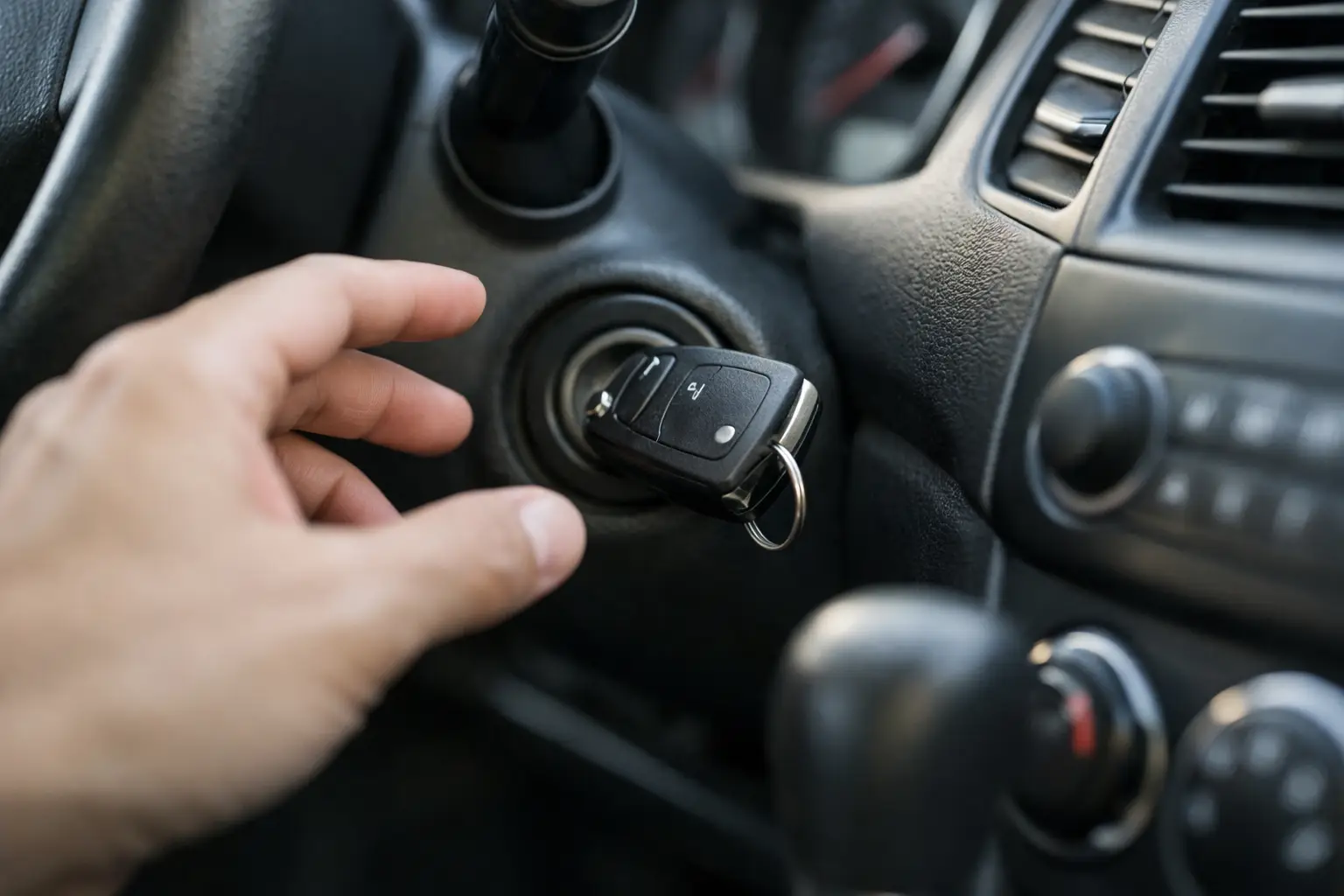
You turn the key, try to take it out, and nothing happens. If you are asking, why is my car key stuck, the cause is usually something mechanical, electrical, or simply out of position – and forcing it can turn a small problem into an expensive one.
A stuck key can mean the steering lock is under tension, the gear selector is not fully in Park, the battery is weak, the ignition cylinder is worn, or the key itself is damaged. Some causes are simple enough to check yourself. Others need a proper automotive locksmith because the wrong move can snap the key, damage the ignition, or leave you unable to start the car at all.
Why is my car key stuck in the ignition?
The most common reason is that the car does not believe it is safe to release the key. On many vehicles, the key will not come out unless the transmission is fully in Park. If the shifter is slightly off position, the ignition can stay locked even though the engine is off.
Another frequent cause is steering wheel pressure. If the wheels were turned when the engine was shut off, the steering lock can bind against the ignition. That creates tension inside the mechanism, and the key feels jammed even though nothing is actually broken.
Wear is another big factor. Keys wear down over time, especially if they are used every day, carried loose with other metal items, or already slightly bent. Ignition cylinders also wear internally. When the grooves of the key and the internal wafers stop lining up cleanly, the key can stick on the way in, on the way out, or while turning.
Modern cars add one more variable: electronics. Some vehicles use a shift interlock, ignition solenoid, or battery-powered release system. If there is a battery issue, a blown fuse, or a fault in the interlock system, the key may not release as it should.
What you can safely check first
Start with the basics and stay gentle. If the key is stuck, do not twist it hard and do not yank it out. That is how keys snap inside ignitions.
First, make sure the car is fully in Park. Move the shifter into Drive and back into Park firmly, then try the key again. In some cars, you may need to press the brake pedal while doing this. If the shifter feels loose or does not click cleanly into position, that points to a gear selector or interlock issue rather than the key itself.
Next, look at the steering wheel. If it is locked tight to one side, place one hand on the wheel and gently move it left and right while lightly turning the key toward the off position. The goal is to release the pressure, not force the mechanism.
If the battery seems weak, that matters too. Dim dashboard lights, slow cranking, or no electrical response can all affect key release on certain vehicles. A dead battery does not always cause a stuck key, but on some models it absolutely can.
Finally, inspect the key. If it is visibly bent, cracked, badly worn, or has rough edges, stop using force immediately. A damaged key can still turn enough to trap itself in a worn ignition, and once it breaks, extraction becomes the next job.
When the key is stuck because of the steering lock
This is one of the better-case scenarios because it often looks worse than it is. The steering lock is designed to prevent movement when the key is removed, but if the wheel rests under pressure against the curb or turned tires, it can hold tension against the ignition.
The fix is usually simple. Apply light turning pressure to the key while gently rocking the steering wheel. You may only have a small amount of movement in one direction. That is normal. If the pressure releases, the key will usually turn and come out.
What you should not do is use both hands to wrench the key. If the wheel does not free up with gentle movement, the issue may be elsewhere.
When Park is the real problem
Drivers often assume the ignition is faulty when the real issue is the shifter. Automatic vehicles rely on the gear selector telling the ignition system that the car is safely in Park. If that signal is off, even by a little, the key may stay trapped.
You might notice the shifter feels sloppy, the dashboard does not correctly show the gear, or the key only comes out if you jiggle the selector. In that case, the ignition may not need replacement at all. The root cause could be the shifter assembly, the brake-shift interlock, or the linkage adjustment.
This is where guessing can cost money. Replacing the wrong part is common when people assume every stuck key means a bad ignition barrel.
A worn key or worn ignition cylinder
Keys and ignitions wear together. If you have been using the same key for years and it only works after a wiggle, takes several tries to turn, or sometimes sticks in the door as well, wear is a strong possibility.
A worn key can sometimes be copied badly too. If the problem started after using a duplicate, the cut may not match the original closely enough. A low-quality copy can work just enough to create a bigger issue later.
A worn ignition cylinder is more serious. Internal wafers can stick, springs can weaken, and debris can build up. Sometimes the key will turn but not release. Other times it will not turn back fully to the removal position. In those cases, lubrication is not always the answer. In fact, using the wrong product can attract dirt and make the problem worse.
A proper automotive locksmith can usually tell whether the issue is the key, the cylinder, or both. That matters because the right fix may be key repair, a correctly cut replacement, ignition repair, or full cylinder replacement.
Can cold weather, dirt, or damage cause a stuck key?
Yes, but it depends on the condition of the lock before the weather changed. Cold can make an already stiff ignition behave worse. Dirt, pocket lint, and metal particles can also interfere with the internal parts over time. If something was already worn, winter or contamination may be what pushed it from annoying to unusable.
Accidental damage is another common cause. Heavy keychains put extra weight on the ignition while driving, which can speed up wear inside the cylinder. A key that has been dropped, stepped on, or slightly bent may still look usable but no longer align properly.
The trade-off here is that a quick temporary fix does not always mean the problem is solved. Even if you manage to remove the key once, the fault usually comes back unless the worn part is addressed.
What not to do if your car key is stuck
The biggest mistake is forcing it. If the key snaps in the ignition, the repair becomes more involved and often more expensive.
Avoid pliers unless a technician specifically advises it. They give you more leverage than the key was designed to handle, which increases the risk of breakage. Avoid random sprays and oils too. Some products can gum up the ignition, trap dirt, or affect electrical components around the steering column.
Do not keep retrying a visibly damaged key. If it is cracked near the head or twisted along the blade, every attempt raises the chance of leaving part of it stuck inside.
When to call an automotive locksmith
If you have checked Park, released steering pressure, and handled the key gently with no result, it is time to stop before the damage gets worse. The same applies if the key is bent, the ignition feels rough, the car battery issue has been ruled out, or the key only comes free after repeated fiddling.
A specialist automotive locksmith can diagnose whether the problem is the key, the ignition cylinder, the interlock system, or a broken internal component. They can also extract jammed or broken keys, cut and program replacements where needed, and repair or replace ignition barrels on-site for many vehicles.
That is often much faster than towing the car and waiting on a dealership process. For drivers in South London, especially when the car is stuck at home, at work, or roadside, mobile help is usually the practical option. Auto Tech Car Keys handles exactly these kinds of issues with fast-response service and straightforward advice.
How to reduce the chance of it happening again
The simplest habit is to stop using a worn or damaged key once it starts acting up. A fresh, properly cut spare is cheaper than an emergency ignition repair. Keep heavy keychains off the ignition, and pay attention if the key starts needing a wiggle, if the shifter feels inconsistent, or if the steering lock regularly binds.
Most stuck-key problems give some warning before they turn into a breakdown. If your key has been sticking occasionally, that is the best time to deal with it – before it gets trapped on a busy morning when you need the car most.
If your car key is stuck, the right approach is simple: stay calm, check the obvious causes, and do not force anything. A careful first step can save the key, the ignition, and a lot of hassle later.