
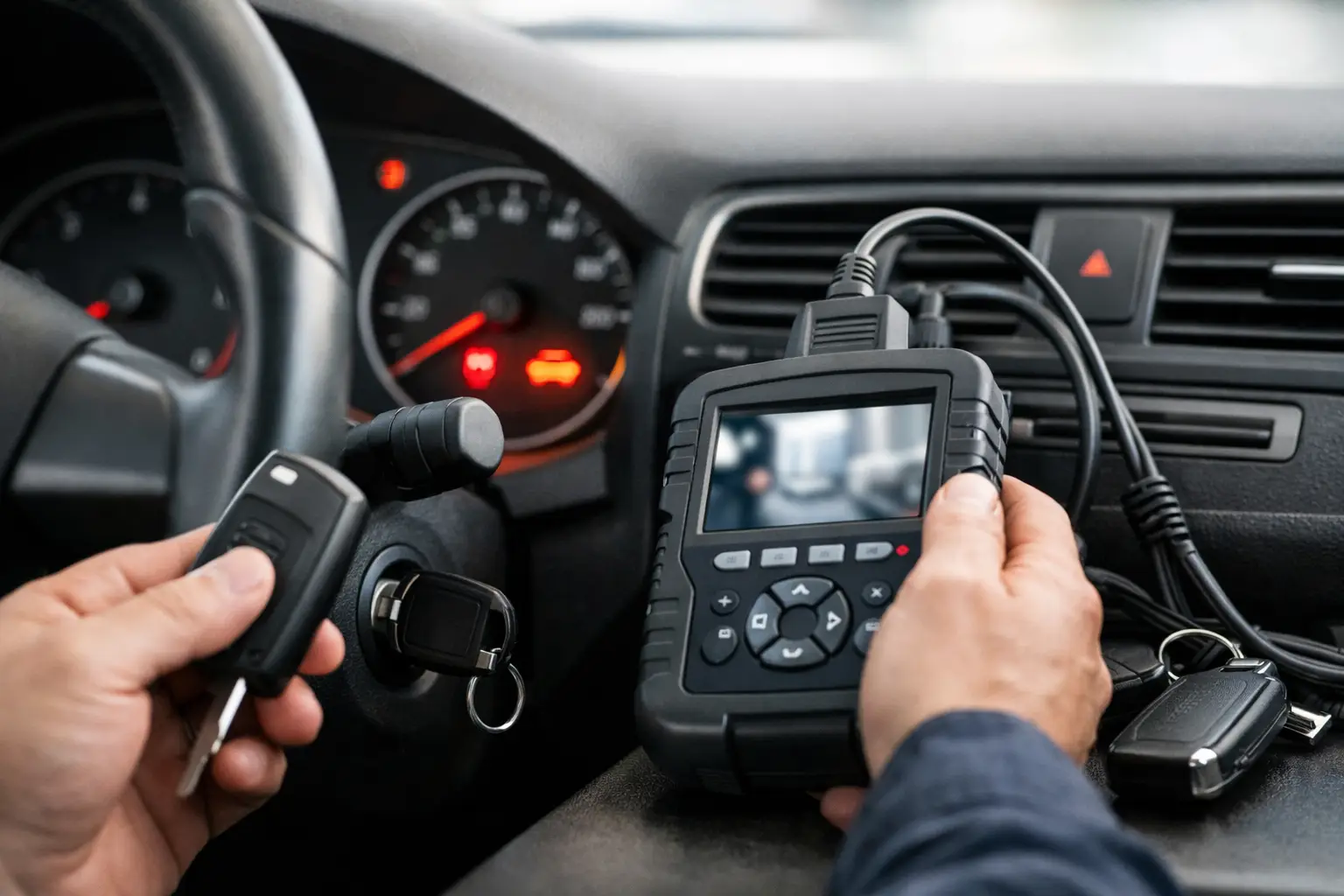
A car that cranks but will not start – or shows a flashing security or key warning light – can quickly turn a normal day into a missed appointment or a stranded commute. This immobiliser reset guide explains the safe checks worth making first, what an immobiliser fault can mean, and when the problem needs an automotive locksmith rather than a guess-and-try fix.
The immobiliser is part of your vehicle’s anti-theft system. It checks for a recognized transponder chip in the key or a valid signal from the smart key before allowing the engine to start. If that communication fails, the car may lock, crank without firing, start and cut out, or display an immobiliser warning.
What an Immobiliser Reset Can and Cannot Do
An immobiliser reset is often described as a quick fix, but the right solution depends on why the system has stopped recognizing the key. On some vehicles, a low car battery, a flat key-fob battery, or a temporary electronic fault can cause a warning that clears once the underlying issue is addressed. On others, the key needs to be tested and programmed again, or there may be a fault in the vehicle’s antenna ring, ignition, wiring, or body control module.
There is no universal button sequence that safely resets every make and model. Advice online can be misleading, especially when it tells drivers to repeatedly cycle the ignition, disconnect the battery, or use procedures intended for a different vehicle. Those steps may do nothing, erase useful fault information, or create additional electrical problems.
A proper reset, when required, is carried out with diagnostic equipment and the correct security procedures for that vehicle. The aim is not to defeat the immobiliser. It is to restore communication between a legitimate key and the car.
Signs Your Car May Have an Immobiliser Problem
A no-start issue is not automatically an immobiliser fault. A weak starter battery, fuel issue, worn ignition switch, or engine-management problem can create similar symptoms. Still, the following signs make the key or immobiliser system more likely:
- A key, padlock, or security warning light stays on or flashes when you try to start.
- The engine cranks normally but will not fire, or starts briefly and then stops.
- A spare key starts the vehicle while the usual key does not.
- The remote functions work inconsistently, or the car reports that no key is detected.
- The problem began after the key was dropped, damaged, wet, repaired, or replaced.
If the warning light is on but the car starts and drives normally, do not ignore it. An intermittent issue can become a complete no-start at the most inconvenient time.
Safe Checks to Make Before Calling for Help
Start with the simple checks that do not interfere with the vehicle’s security system. If you have a spare key, try it once. A working spare is one of the clearest ways to separate a damaged or unprogrammed key from a vehicle-side fault.
For a key fob or smart key, replace the small fob battery if the remote range has become poor or the dashboard says the key is not detected. Use the correct battery type and make sure it is installed the right way around. A flat fob battery does not affect every type of transponder key, so a new battery is not a guaranteed cure, but it is a sensible first step.
Next, check the vehicle’s main battery condition. Modern cars can behave unpredictably when voltage is low, particularly after cold weather, long periods without use, or repeated unsuccessful start attempts. Dim interior lights, slow cranking, clicking, and multiple dashboard warnings point more toward a weak vehicle battery than a key-programming issue.
Keep the key away from other electronic keys, aftermarket trackers, or metal objects while testing, particularly with push-button start systems. Then try starting the car in the normal way. Do not force the key in the ignition, keep cranking the engine, or repeatedly lock and unlock the car in hopes of clearing the warning.
If the key is physically damaged, cracked, bent, water-affected, or has come apart, stop using it. The transponder chip can be small and may sit separately inside the key housing. If it has been lost or damaged, the key may still turn the ignition but will not be accepted by the immobiliser.
When a Key Needs Programming Instead of a Reset
A replacement key is not ready to start a modern vehicle simply because its blade has been cut correctly. It usually needs a correctly matched transponder or smart-key circuit and programming to the vehicle.
This is common after a lost key, a damaged remote shell, a failed attempt to use an inexpensive replacement key, or a battery issue during certain key-learning procedures. It can also happen when someone has had an ignition barrel replaced but the key and immobiliser components were not configured correctly.
A trained automotive locksmith can identify whether the key is transmitting, whether the car is reading it, and whether the vehicle will accept programming. The exact method varies by make, model, year, and security system. Some jobs can be completed at the vehicle with specialist equipment. Others require more detailed diagnosis before any new key is supplied.
Why DIY Immobiliser Bypass Advice Is a Bad Bet
Immobiliser systems exist to protect the vehicle, so they are intentionally not designed around simple workarounds. Trying to bypass them can damage the car, compromise security, invalidate insurance, or leave you with a more expensive repair.
Battery disconnection is a common example. Although it may clear a temporary electrical glitch in limited cases, it can also reset radio settings, window calibrations, fault codes, and other learned functions. On some vehicles, it will not solve the key-recognition issue at all. It should not be used as a substitute for proper fault diagnosis.
The same applies to social-media videos showing improvised wiring, chip transfers, or generic code-entry methods. A procedure that works on one older vehicle may be irrelevant or harmful on another. If you own the car and have proof of ownership, professional help is the fastest route to a secure repair.
What a Professional Immobiliser Diagnosis Involves
A good diagnosis starts by checking the symptom rather than assuming the key is at fault. The technician may test the existing key, inspect physical damage, check the vehicle battery voltage, read relevant fault codes, and confirm whether the immobiliser control unit is recognizing a valid key signal.
From there, the remedy may be key repair, replacement-key cutting and programming, remote repair, ignition-barrel repair, or investigation of an electrical fault. If all keys are lost, the work is more involved, but it can often still be handled on-site by a specialist with the right equipment.
Ask for clear pricing before work begins and be ready to show identification and proof that you own or are authorized to use the vehicle. This protects you and helps ensure security work is completed properly.
Fast Help for Drivers in South London
When your car will not recognize the key, waiting on a dealership can be impractical, especially if the vehicle is blocking a driveway, parked at work, or needed for the school run. A mobile automotive locksmith can come to the car, assess the key and immobiliser issue, and explain the available options before proceeding.
Auto Tech Car Keys provides mobile car key and programming support across South London and nearby areas. Whether the problem is a damaged transponder key, a lost key, a faulty remote, or a suspected immobiliser communication issue, the priority is to get you a clear answer and a reliable way back into your vehicle.
If the security light is flashing and the car will not start, preserve the keys you have, avoid random reset methods, and arrange a proper diagnosis. The right repair is usually quicker and less costly than turning a key problem into an electrical one.