
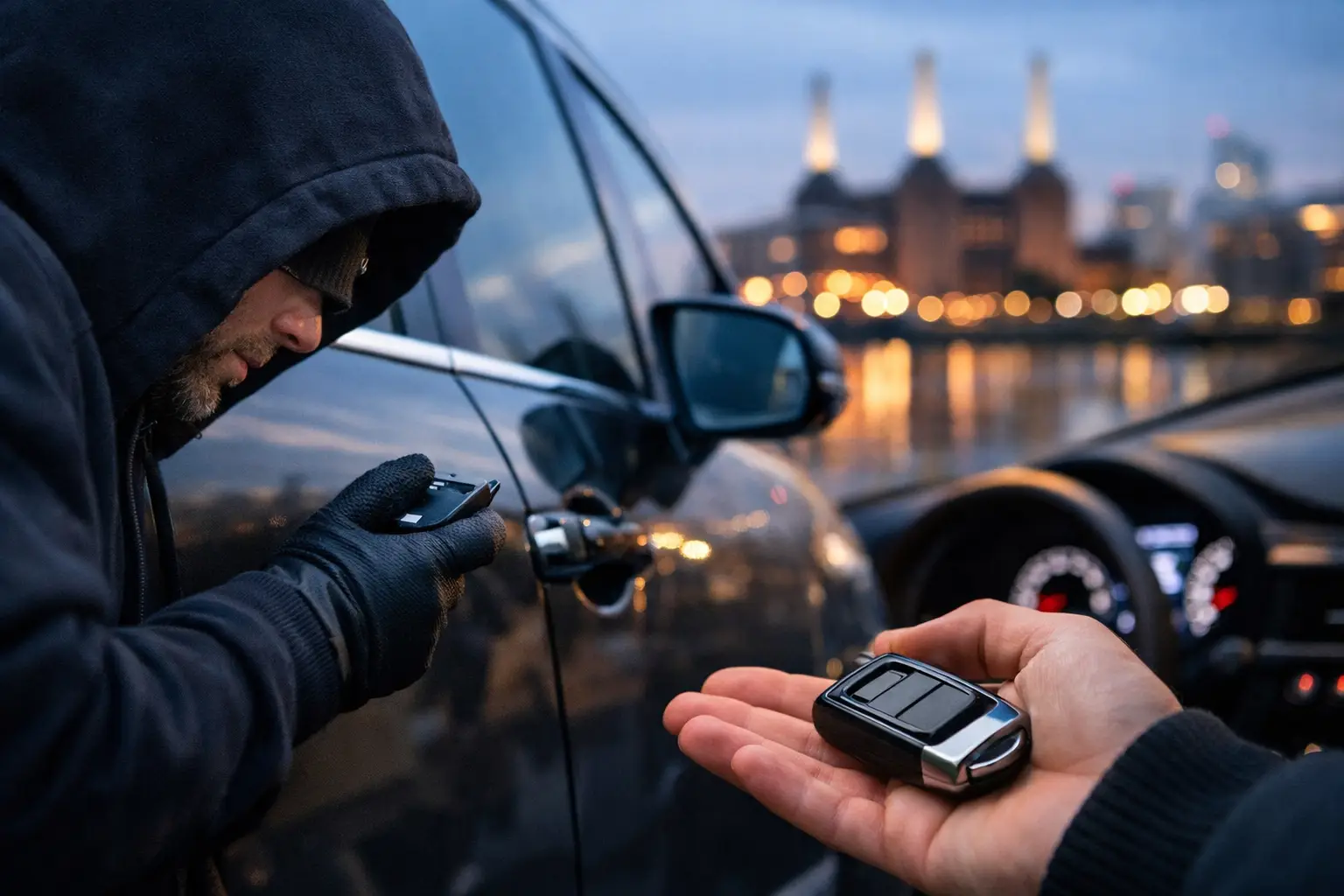
A car can be gone from outside your home, a station parking lot, or a quiet side street without a broken window or an obvious sign of forced entry. That is why South London keyless theft is such a concern for drivers with modern keyless-entry vehicles. The good news is that practical security steps can reduce the opportunity for theft and help you respond quickly if something does go wrong.
Keyless technology is convenient when you are carrying shopping, getting children into the car, or starting an early commute. It also means your key communicates electronically with the vehicle. Criminals target that convenience, but the risk is not the same for every make, model, or model year. Sensible protection should match the vehicle you own, where you park, and how you use it.
What South London Keyless Theft Usually Means
“Keyless theft” is often used to describe several different types of vehicle crime. One commonly reported method involves criminals attempting to extend or capture the signal between a vehicle and a nearby key. Other incidents may involve stolen physical keys, dishonest key programming, or electronic attacks aimed at a vehicle’s security system.
The important point for owners is that a vehicle may be targeted without the usual evidence associated with a forced break-in. A missing car, an unlocked vehicle, or valuables taken from inside can leave drivers unsure what happened. Avoid assuming the cause before it has been checked. Your insurer, the police, dealership, or an experienced automotive locksmith may need specific details to identify the appropriate next step.
Keyless entry itself is not a reason to panic or replace your car. Manufacturers have improved security on newer vehicles, and many models include settings that limit key signals or add extra authentication. However, owners should not rely on factory technology alone, particularly if the car is kept on a driveway, near the front door, or in an area with regular overnight parking.
Why Location and Routine Matter
Car theft is not limited to one neighborhood. Areas with busy roads, commuter parking, residential streets, and predictable vehicle routines can all create opportunities. A car that is left in the same spot every night, with its key hanging near the entrance, is easier to assess than one with a less predictable routine and visible layers of security.
That does not mean you need to make daily life difficult. It means making a thief’s job slower, noisier, and less certain. Criminals generally look for the quickest available opportunity. A visible steering wheel lock, protected key signal, better lighting, and a locked gate may encourage them to move on to an easier target.
If you park on a driveway, consider whether the vehicle is visible from the street and whether the key is stored close to an outside wall or door. If you use street parking, choose a well-lit space where possible and avoid leaving bags, tools, cables, or documents on display. These measures help with more than keyless theft – they also reduce the temptation for opportunistic break-ins.
Practical Ways to Protect a Keyless Vehicle
No single product makes a car theft-proof. The most effective approach is to use several straightforward layers that suit your routine.
A signal-blocking key pouch or box can be useful for keyless fobs, especially overnight. Store every key in it, including the spare. Test the pouch after buying it: stand near the car with the key inside and check that the vehicle does not respond. A worn or poorly made pouch may not provide the protection you expect.
A mechanical steering wheel lock is another worthwhile deterrent. It is visible, takes time to defeat, and makes driving the car away more difficult even if someone gains electronic access. Choose a solid, well-fitted product rather than the cheapest option available.
Check your vehicle handbook or ask a main dealer whether the key fob has a sleep mode or whether keyless entry can be disabled through vehicle settings. Some drivers prefer to turn off passive entry at home while retaining remote locking. The right choice depends on the model and on whether you need keyless access for accessibility or work.
Keep vehicle software current when updates are available. This may require a dealer visit on some cars, while others receive updates remotely. Also consider a professionally installed tracker if your vehicle is a frequent theft target or has a high replacement value. A tracker does not prevent theft, but it can assist with recovery and may support insurance requirements.
For a more complete home parking setup, focus on four areas:
- Store keys away from external doors and in a tested signal-blocking pouch or box.
- Use a visible steering wheel lock whenever the car is parked for an extended period.
- Improve lighting and consider a camera covering the driveway or usual parking position.
- Keep gates, bollards, or other physical barriers locked where they are practical to use.
The trade-off is convenience. A pouch, wheel lock, or bollard adds a minute or two to your journey. For many drivers, that small inconvenience is preferable to the disruption of an insurance claim, missed work, and replacing a vehicle.
Warning Signs Worth Taking Seriously
There is rarely a perfect warning before a theft, but unusual activity around your vehicle should not be ignored. Repeated unknown people walking close to the car, signs that doors have been tested, or unexplained electronic faults may justify extra caution. If a keyless car suddenly behaves differently – for example, it does not lock reliably or repeatedly detects a key that is not present – arrange a proper inspection rather than dismissing it.
Be especially careful if a key has been lost, stolen, borrowed and not returned, or left with someone you do not fully trust. The physical key is only part of the issue. Depending on the vehicle, a lost key may need to be removed from the car’s authorized memory so it can no longer start the engine.
Do not buy used vehicle keys or programming devices from unknown sources. A spare key should be cut and programmed specifically for your car by a legitimate specialist who verifies ownership. It is a security item, not just a convenience purchase.
What to Do If Your Car Is Stolen or a Key Is Compromised
First, make sure the vehicle has not been moved, towed, or borrowed. If it is genuinely missing, report it to the police promptly and obtain the crime reference number. Contact your insurer as soon as you can, following the terms of your policy. Avoid posting detailed information about the vehicle, keys, or your address on social media while the situation is active.
If the car is still present but you believe a key has been stolen or copied, act before the situation becomes an emergency. Ask a qualified automotive locksmith or the dealership whether the missing key can be deleted and replacement keys programmed. The correct process depends on the vehicle’s manufacturer, age, and immobilizer system.
If there has been an attempted break-in, do not overlook damage to door locks, ignition components, or the key blade. A car may still start today but become unreliable later. Having damaged locks, ignition barrels, or broken keys checked early can prevent a roadside problem when you are already late for work or collecting family.
Getting the Right Help Locally
When you need replacement keys, a spare programmed, key extraction, vehicle entry, or repair after an attempted theft, ask whether the technician can work on your specific make and model at your location. You should also expect clear confirmation of ownership before any key programming or vehicle access work begins. That protects both the vehicle owner and the technician.
For drivers across South London, Auto Tech Car Keys provides mobile automotive locksmith support for key replacement, programming, vehicle unlocking, and lock or ignition repairs. Mobile help can be particularly useful when a car cannot be driven or when dealership arrangements would leave you without transport for days.
The best time to improve keyless-car security is before you are dealing with a missing key or an empty parking space. Put simple protections in place, keep a properly programmed spare, and deal with unusual key or lock behavior early.