
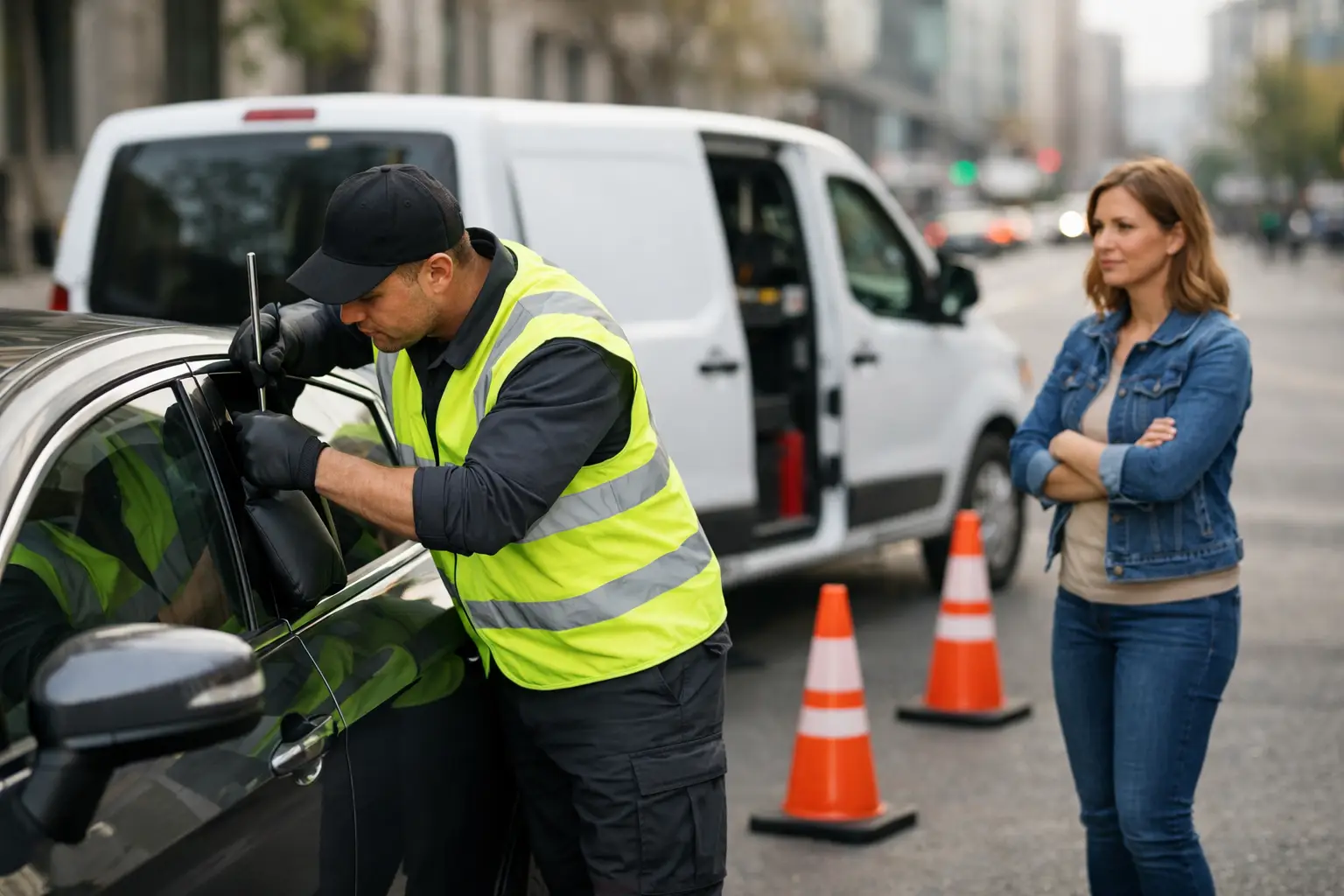
A guide to non destructive car entry starts with one clear priority: get you back into your vehicle without turning a lockout into a damaged door, broken window, or expensive electrical repair. If your keys are locked inside, missing, or no longer communicating with the car, the fastest sensible option is usually a qualified automotive locksmith who can assess the vehicle and use the correct access method.
A locked car is frustrating enough when you are late for work, collecting children, or parked somewhere you do not want to leave the vehicle. It is tempting to force a door, pry back a window frame, or try a trick seen online. Those shortcuts can quickly damage weather seals, door locks, side glass, airbags, wiring, or the paintwork. Professional vehicle entry is about avoiding those risks wherever the vehicle and fault allow.
What Non Destructive Car Entry Means
Non destructive car entry means opening a locked vehicle without causing avoidable damage to the lock, door, window, trim, or security system. It is not a promise that every car can be opened in exactly the same way. Vehicle design, the condition of the locking system, the key type, and the reason for the lockout all affect the safest approach.
Modern vehicles are more complicated than older cars. Many have deadlocks, electronic latches, alarm systems, immobilizers, keyless entry, reinforced door structures, and sensitive wiring inside the door. A method that may have worked on an older vehicle can cause serious problems on a newer one. That is why experienced technicians identify the make, model, year, and symptoms before attempting entry.
The aim is straightforward: restore access while preserving the vehicle’s security and avoiding unnecessary repair bills. A proper automotive locksmith will also check that the door locks, central locking, and key functions are working normally once the vehicle is open.
Why DIY Car Entry Can Cost More
Most damage from lockout attempts is not immediately obvious. A bent upper door frame may still let the door close, but it can create wind noise, water leaks, or poor alignment later. Damaged rubber seals can allow rain into the cabin. A forced lock can lead to a key that will not turn or a barrel that needs replacing.
Breaking a window is usually a last-resort emergency measure, not a standard solution. Aside from the cost and mess, replacing modern vehicle glass may involve sensors, calibration, and time off the road. If there is an immediate safety threat, such as a child or vulnerable person trapped in a dangerously hot or cold vehicle, contact emergency services first. For normal lockouts, professional assistance is the safer route.
Trying to manipulate a lock without training can also trigger an alarm or damage internal components. On keyless vehicles, the problem may not be physical access at all. A flat key fob battery, weak vehicle battery, damaged key, or electronic fault can prevent normal unlocking. The right diagnosis saves time.
How a Professional Vehicle Entry Callout Works
A reputable automotive locksmith begins by confirming that you have authority to access the vehicle. This protects owners and helps ensure the service is used responsibly. Proof may include identification, registration documents, insurance information, or another reasonable form of evidence depending on the circumstances.
The technician then assesses the vehicle from the outside and asks practical questions. Is the key locked in the cabin? Has the fob stopped working? Is the battery flat? Is a child lock engaged? Has the lock or ignition been damaged? These details help determine whether entry alone will solve the problem or whether key repair, battery assistance, key programming, or lock repair may also be needed.
Qualified technicians use specialist automotive equipment and vehicle-specific knowledge rather than improvised household items. The precise method is selected to suit the vehicle and its security features. Good practice means working carefully, protecting contact points, and stopping if the condition of the vehicle suggests a different repair is required.
Once access is restored, the job should not end at the open door. The technician can test the central locking, inspect the key, and explain whether there is an underlying issue likely to cause another lockout. If your only working key has failed or been lost, arranging a replacement or spare while help is already on site can prevent a repeat emergency.
Situations That May Need More Than Entry
Sometimes the door is locked because the car has a larger problem. A dead battery can disable central locking. A snapped key may be stuck in a lock or ignition. Water damage, wear inside the fob, and failed buttons can make a remote key unreliable. In these cases, getting into the car is only the first step.
There are also cases where a lock has already been forced or damaged. A professional may recommend repair or replacement rather than continuing to use a failing barrel. This can cost more than a simple lockout callout, but it is usually less costly than leaving a compromised lock to fail completely at the wrong time.
Choosing Help for a Car Lockout
When you need vehicle access, look for an automotive locksmith rather than relying on a general lock service with limited vehicle experience. Cars have specialized security systems, and the right equipment matters. Ask whether the provider handles your vehicle type, whether they can attend your location, and whether they can help if the issue turns out to be a key or ignition fault.
Clear pricing matters too. A reliable provider should explain callout charges and likely costs before work begins, while being honest that the final price can depend on the vehicle and the fault found on arrival. Be cautious of unusually low advertised prices that do not account for the actual work required.
For drivers across South London, Auto Tech Car Keys provides mobile automotive locksmith assistance for lockouts, replacement keys, damaged keys, and lock or ignition issues. Mobile service is especially useful when your vehicle cannot be moved or you are stranded away from home, work, or a dealership.
Response time is important, but it should not come at the expense of care. The best outcome is not merely an open car door. It is access restored without a bent frame, damaged lock, unexpected alarm problem, or a new repair bill waiting afterward.
Reducing the Chance of Another Lockout
A spare key is one of the simplest safeguards for drivers who rely on their vehicle every day. Keep it somewhere secure and separate from the main key, not hidden inside the car. For keyless vehicles, replace the fob battery when range becomes inconsistent instead of waiting for it to fail completely.
Pay attention to warning signs such as buttons that only work intermittently, a key blade that sticks, a fob case that is cracked, or central locking that behaves unpredictably. Small problems are often easier and less expensive to resolve before they become an emergency callout.
If you have one working key, consider having a spare cut and programmed before it is lost or damaged. A planned spare-key appointment gives you more control over timing and cost than an urgent replacement after the only key has disappeared.
When to Call Right Away
Call for professional help if you are locked out in an unsafe location, your key is inside the vehicle, the key has broken in the lock or ignition, or the central locking will not respond. Avoid forcing the door or using objects that can scratch paint, tear seals, or interfere with the window mechanism.
Keep your vehicle details and proof of ownership available if possible. That small bit of preparation helps a technician verify the job and select the right solution more quickly. When access matters, careful entry is worth more than a quick fix that leaves your car worse than it was before.