A lost car key at a supermarket, a remote that has stopped working before work, or a key snapped in the ignition creates the same immediate question: auto locksmith or dealer? The right answer depends on your vehicle, the fault, and how quickly you need to get moving. A dealer can be the right route for some factory-only parts and warranty matters. For many lockouts, replacement keys, repairs, and programming jobs, a mobile automotive locksmith can solve the problem where the car is parked – often without the delay and inconvenience of arranging recovery.
Auto Locksmith or Dealer: The Main Difference
A dealership works through the manufacturer’s parts, security systems, and service processes. This can be useful when your vehicle needs a part that is unavailable outside the dealer network, or when a new-car warranty issue needs to be recorded and handled by the manufacturer.
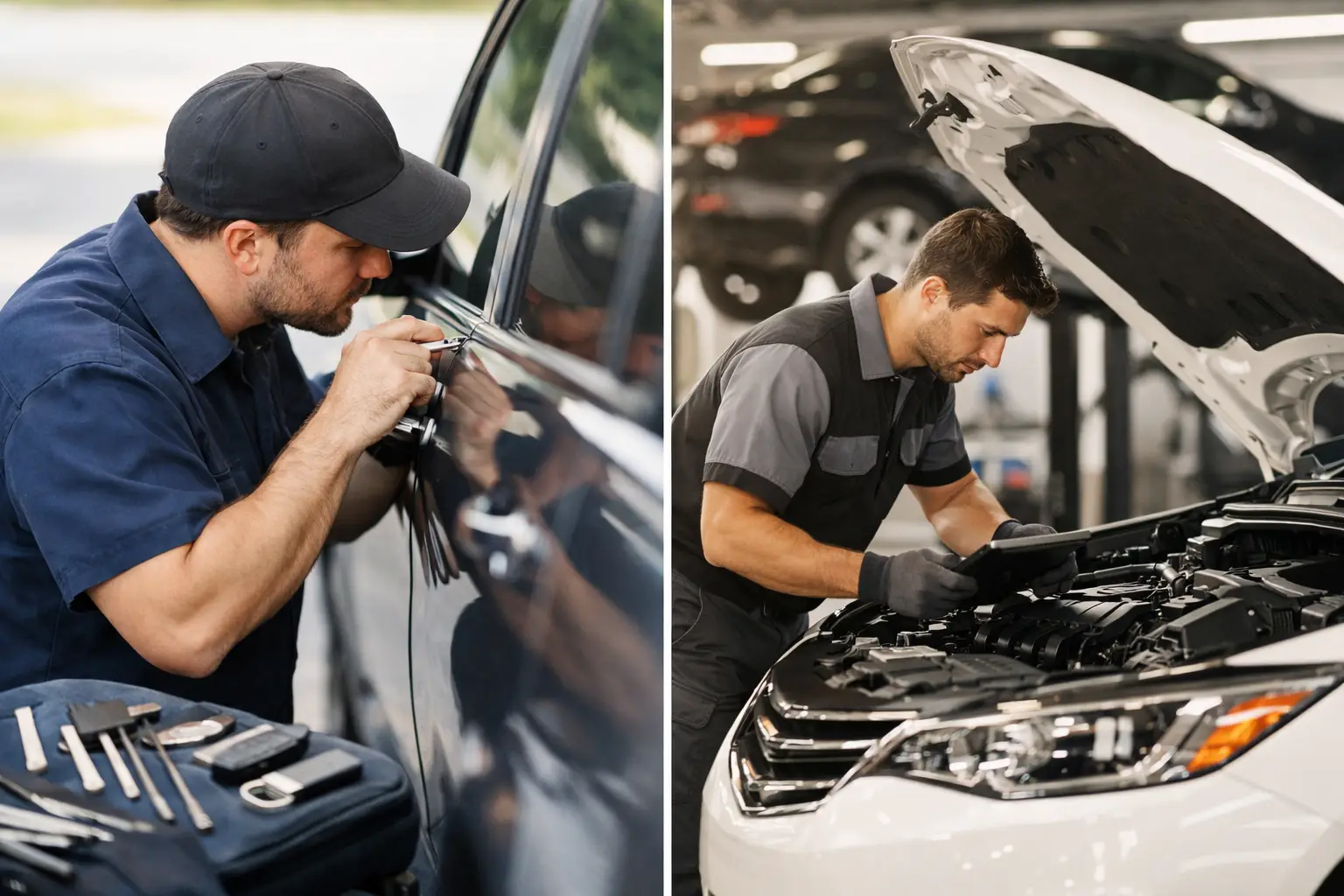
An automotive locksmith specializes in vehicle access, keys, remotes, transponders, locks, and ignitions. A mobile technician brings diagnostic equipment, key-cutting machinery, and programming tools to the vehicle. That means there is usually no need to tow a car just because the key is missing, locked inside, broken, or no longer recognized.
The practical difference is location and response. A dealer normally asks you to bring the vehicle to them and may need to order the key or part. A locksmith can assess the issue on-site, verify ownership, and work on the vehicle directly. When you are stranded at home, at work, or in a parking lot, that convenience matters.
When a Mobile Auto Locksmith Is Usually the Better Choice
For urgent key and access problems, a specialist locksmith is often the more direct option. Vehicle unlocking is a clear example. If your keys are sitting on the seat and the doors have locked, there is no reason to wait for a dealership appointment. A trained technician can use non-destructive entry methods to regain access without forcing a window or damaging the lock.
The same applies to many lost-key situations. Modern vehicle keys are not just pieces of cut metal. Most contain a transponder chip or remote electronics that must communicate with the vehicle’s immobilizer. An experienced auto locksmith can cut and program replacement keys for many makes and models at the roadside or driveway, including remote fobs and smart keys where supported.
A locksmith is also a sensible first call for a damaged key. A cracked fob case, worn key blade, weak remote buttons, or a key that only works when held at a certain angle does not always require a full dealer replacement. In some cases, the key can be repaired, recased, re-cut, or reprogrammed. That can save money and avoid turning a minor fault into a no-start situation.
Lock and ignition faults are another area where specialization counts. If a key will not turn, gets stuck, or has broken off in the ignition, replacing everything immediately is not always necessary. A technician can inspect the barrel, remove a broken key, and determine whether repair is possible. The aim should be to restore reliable operation with the least unnecessary work.
Speed matters when the car is part of your day
For commuters, parents, delivery drivers, and tradespeople, a car problem is rarely just a car problem. It can mean a missed shift, a school pickup problem, or tools and equipment stuck in a locked vehicle. A mobile service is designed around that reality.
In South London and nearby service areas, the value is not simply that a technician comes to you. It is that the diagnosis, cutting, programming, and testing can often happen in one visit. Before booking, explain the make, model, year, and exact symptoms. If you have a working spare, say so. Good information helps the technician arrive prepared and gives you a clearer idea of the likely work involved.
When the Dealer May Be the Right Call
A dealer is not automatically the expensive or slow option in every situation. There are cases where it is the sensible choice.
If your vehicle is still under a manufacturer warranty and the fault appears to be a defect in the original key, ignition, or electronic system, start by checking the warranty terms. Using a dealer may protect your position and ensure the repair is properly documented.
Some very new, uncommon, or high-end vehicles use security systems or components that require manufacturer-only access, parts, or software authorization. A dealer may be necessary if the required smart key is back-ordered through the manufacturer, if a module has failed, or if the vehicle needs a software update beyond key programming.
A dealer can also be helpful when there is a wider mechanical or electrical concern. For example, a warning light, steering lock fault, no-start issue, and key recognition problem occurring together may point to a vehicle system fault rather than a bad key alone. A locksmith can identify whether the key is communicating correctly, but a dealer or qualified repair shop may need to handle the underlying module or wiring issue.
The key point is to avoid assuming. A car that will not start is not always an ignition failure, and a remote that does not work is not always a dead key. A proper assessment prevents paying for a replacement that does not fix the real cause.
Cost: Look Beyond the Price of the Key
Dealer prices can reflect genuine manufacturer parts, model-specific ordering, workshop overhead, and programming procedures. Those costs may be worthwhile when factory-only support is required. However, the initial quote may not include the cost and time of recovering a vehicle that cannot be driven to the dealership.
A mobile locksmith quote should account for the type of key, the programming required, the vehicle’s security system, the condition of the locks or ignition, and the callout location. A basic mechanical key is very different from a proximity smart key with keyless entry and push-button start.
The cheapest quote is not always the best value. Ask what is included: the key or remote, cutting, programming, removal of lost keys from the vehicle memory when applicable, and testing. If your only key has been lost, ask whether the old key can be deleted so it no longer starts the car. This is an important security step, especially if the key was lost near your home or vehicle.
A reliable provider should explain the likely cost before work begins and tell you if the diagnosis reveals a different issue. Clear pricing matters most when you are under pressure and simply need to get back on the road.
What You Will Need Before a Key Can Be Made
Whether you choose a locksmith or a dealership, expect to prove that you are authorized to have a key made. This protects drivers from unauthorized key duplication and vehicle theft.
Have photo identification and proof that you own or are entitled to use the vehicle. The vehicle registration document is often helpful, though acceptable documents can vary depending on the situation. If the vehicle belongs to a company, lease provider, or family member, be ready to provide the relevant authorization.
It also helps to have the vehicle identification number, usually visible at the bottom of the windshield or on vehicle paperwork. If you have any remaining keys, bring them to the technician or dealer. A working key can make it easier to duplicate and program a spare before an emergency happens.
Avoid These Costly Shortcuts
Trying to force a locked door, pry open a window frame, or turn a stuck ignition with tools can create a much larger repair bill. Modern cars have delicate lock mechanisms, weather seals, side airbags, sensors, and electronic components around the doors and steering column.
Buying an inexpensive key online can be tempting, but compatibility is not guaranteed. The blade, frequency, chip type, and remote board all need to match the vehicle. Even a correct-looking fob may not be programmable, may be poor quality, or may arrive without the emergency blade needed for your model. If you want to supply your own key, check with the locksmith first so you know whether it is suitable and what part of the work can be guaranteed.
Do not wait until the last remaining key is failing. A spare key is usually simpler and less stressful to create while the vehicle is working and a valid key is still available. It is a small bit of planning that can prevent a roadside emergency later.
Make the Choice Based on the Problem, Not the Badge
Choose a dealership when warranty coverage, manufacturer-only parts, or a wider vehicle-system issue makes that route necessary. Choose a mobile automotive locksmith when you need fast access, a replacement or spare key, remote or transponder programming, key repair, broken-key extraction, or lock and ignition help at your location.
If you are unsure, describe the symptoms rather than guessing the repair. A professional can tell you whether the job is suitable for on-site locksmith work or whether dealer support is genuinely needed. When the key problem is stopping your day, the best next step is the one that gets the right specialist to the car quickly and protects it from further damage.