
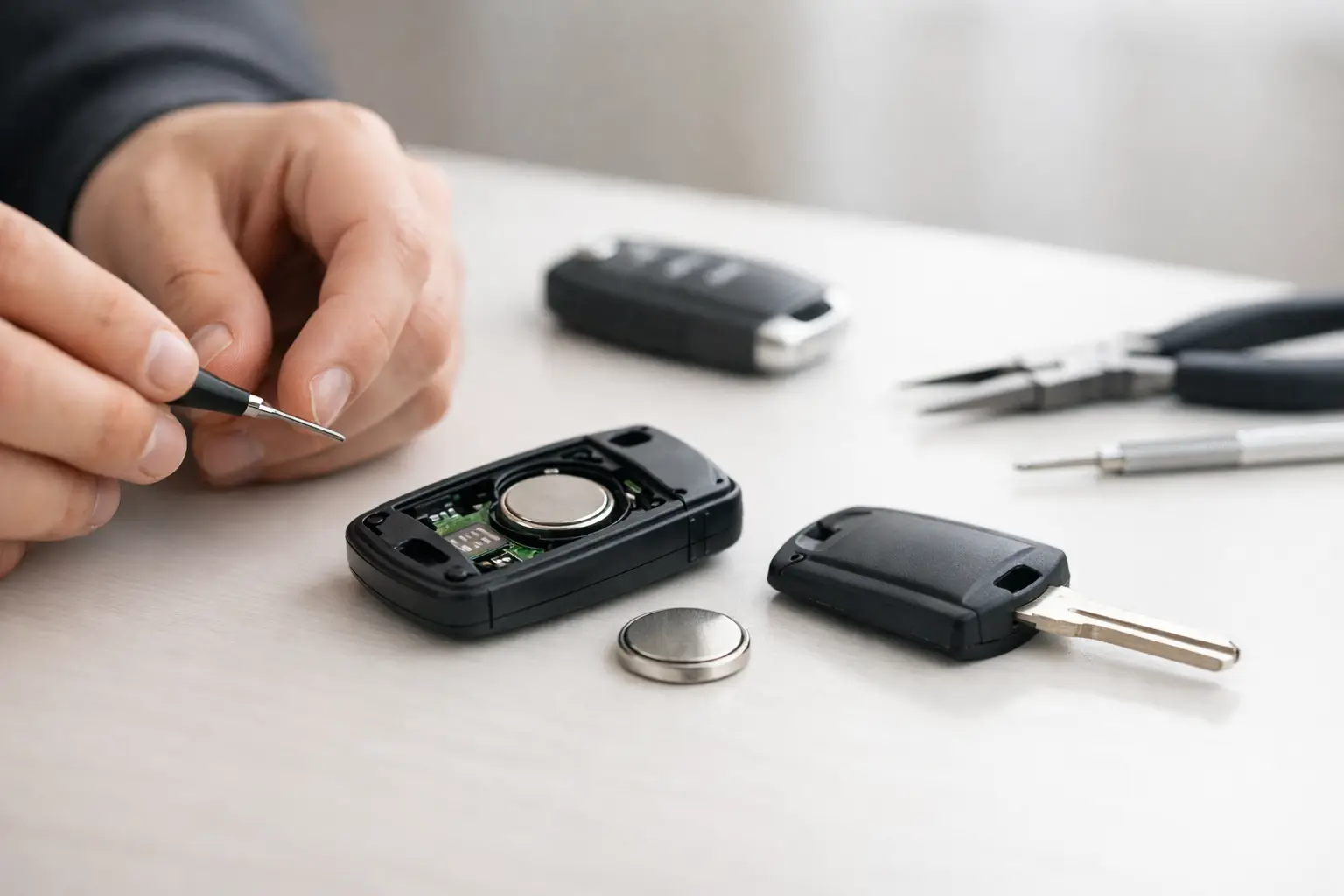
You usually notice the problem at the worst time – standing in a parking lot, juggling bags, pressing the button twice, then five more times, and getting nothing. Car fob battery replacement sounds minor, and often it is, but a weak or dead battery can quickly turn a routine trip into a lockout, a no-start issue, or a lot of wasted time.
For most drivers, the good news is that replacing a key fob battery is straightforward. The less obvious part is knowing when the battery is really the problem and when the issue is the fob itself, the programming, or the vehicle. That distinction matters, especially if you rely on your car every day and cannot afford guesswork.
When car fob battery replacement is actually needed
Most key fobs give you some warning before they stop working completely. You may notice reduced range first. You might have to stand closer to the car, press the buttons more than once, or hold the fob in a certain position before it responds. Some vehicles also show a dashboard message that the key battery is low.
Those signs usually point to a simple battery change, but not always. If the buttons feel loose, the casing is cracked, or the fob has been dropped in water, a fresh battery may not fix it. The same goes for a fob that suddenly stops working right after impact. In those cases, the battery can be fine while the internal board is damaged.
Temperature can also affect performance. A fob battery that seems acceptable in warm weather may fail in the cold. That does not always mean the fob is beyond repair, but it does mean the battery is near the end of its life.
How long key fob batteries usually last
Most car fob batteries last between two and four years. Usage matters. If you use remote locking many times a day, run a remote start system, or keep the fob close to the car so it is constantly communicating, battery life can shorten.
Vehicle make and fob type also play a part. Some smart keys use more power than older basic remote fobs. That is why there is no single schedule that fits every driver. Waiting until the fob stops entirely is risky. If you are already seeing weak signal or delayed response, replacing the battery early is usually the better move.
How to do a car fob battery replacement safely
If the fob casing is intact and working normally apart from weak performance, DIY replacement is often fine. The key is to do it carefully. A rushed battery swap can damage clips, bend contacts, or leave the battery installed the wrong way around.
Start by identifying the correct battery type. Many fobs use coin batteries such as CR2032 or CR2025, but you should not guess. Check the old battery or the vehicle manual. Even batteries that look similar may not be interchangeable.
Open the fob gently. Some have a small notch for a flat tool. Others use a hidden release once the emergency key blade is removed. If the case does not separate with light pressure, stop and check the design before forcing it. Broken tabs are common when people try to pry open the wrong section.
Once open, note the battery orientation before removing it. The positive side must go back exactly as designed. Avoid touching the circuit board more than necessary, and do not use excessive force on the metal contacts. Fit the new battery securely, close the case fully, and test all buttons near the vehicle.
If the fob works again at normal range, that is a good result. If not, do not keep opening and closing it repeatedly. At that point, the issue may be wear inside the fob, poor battery contact, or a fault that needs proper repair.
The most common mistakes drivers make
The first mistake is using the wrong battery. A cheap replacement that is weak, old stock, or not the exact type can cause the same symptoms as the failing battery you just removed.
The second is damaging the casing. Modern key fobs are not all built the same way. Some are easy to open. Others have tight clips and delicate internal parts. Once the shell is cracked or the retaining tabs snap, the battery may not sit firmly, and the fob can become unreliable.
The third is assuming every non-working fob needs programming. In many cases, it does not. A standard battery replacement typically should not erase programming. If the fob stops working after a battery change, the more likely causes are poor installation, an internal fault, or an unrelated issue with the key.
The fourth is ignoring the emergency key. Many drivers do not realize their fob includes a hidden mechanical key until the battery is dead. That key can often unlock the door manually, which is useful if the battery fails away from home.
When a battery change will not solve the problem
Damaged buttons or worn contacts
If the buttons have gone soft, torn, or unresponsive, the signal may not be sent even with a new battery. Sometimes the outer rubber has worn through. Sometimes the switch on the board has failed. This is common with older high-use fobs.
Internal board damage
A dropped or wet key fob may look fine from the outside but fail internally. Corrosion, cracked solder joints, or board damage can stop the fob from transmitting properly.
Vehicle-side issues
Sometimes the car is the problem. A weak vehicle battery, receiver fault, or immobilizer issue can make it seem like the fob has failed when the fob is not the main cause.
Programming or key sync problems
This is less common than people think, but it does happen. Some vehicles are more sensitive than others after battery disconnection or repeated failed attempts. If the fob still will not operate after a correct battery replacement, specialist testing is the fastest way to avoid replacing parts that are not faulty.
DIY or call a specialist?
It depends on the type of key and the condition it is already in. If you have a basic fob, the shell is undamaged, and the only symptom is reduced range, replacing the battery yourself is usually reasonable.
If you have a smart key, a premium model key, a worn or split casing, or any sign of water damage, extra care makes sense. A specialist can confirm whether the problem is the battery, repair the fob if needed, and save you from paying for a full replacement when a smaller fix would do.
This matters even more when you only have one working key. A failed DIY attempt on your only fob can create a much bigger inconvenience than the original battery issue. For drivers who depend on their car for work, school runs, or daily commuting, speed and certainty usually matter more than saving a small amount on a coin battery.
What to expect from a professional key fob service
A proper service is not just a battery swap. A technician should check battery fitment, case condition, button function, and whether the fob is transmitting correctly. If the battery is not the root issue, they should be able to spot that quickly.
That is where an automotive locksmith has an advantage over general retail battery counters. If the problem turns out to be a damaged key, failed remote, or programming fault, the next step can often be handled without sending you elsewhere. For drivers dealing with urgent key issues, that saves time and avoids the back-and-forth that often comes with dealership routes.
In busy areas, mobile help is especially useful. If your fob fails at home, at work, or in a parking lot, on-site support can be the difference between getting on with your day and losing half of it.
A few practical ways to avoid battery trouble
You do not need to overthink key fob care, but a few habits help. Replace the battery once you notice weak range rather than waiting for complete failure. Keep the fob dry, avoid dropping it, and do not leave it in extreme heat for long periods. If the casing is loose or cracked, get it checked before the battery loses contact completely.
If you only have one key, consider dealing with battery and condition issues before they become urgent. Many drivers put it off because the fob still works sometimes. That usually ends with the same problem, just at a less convenient moment.
A small battery should be a small job. If your key fob is otherwise healthy, car fob battery replacement can take minutes. If the fob is damaged or the symptoms do not add up, getting the right help early is usually the faster, cheaper fix – and far less stressful than finding out the hard way when you are already locked out.