You are standing beside your car, keys visible on the driver’s seat or missing altogether, and one question matters: can locksmith unlock any car? In many cases, yes. A qualified automotive locksmith can gain entry to a wide range of cars, vans, and SUVs without causing damage. But no honest technician should promise that every vehicle, in every condition, can be opened in exactly the same way.
Modern vehicles vary greatly. A basic mechanical lock, a keyless-entry system, a damaged door latch, and a vehicle with a dead battery can each require a different approach. The right result depends on the car’s make, model, year, condition, and whether you can show that it belongs to you.
Can a Locksmith Unlock Any Car?
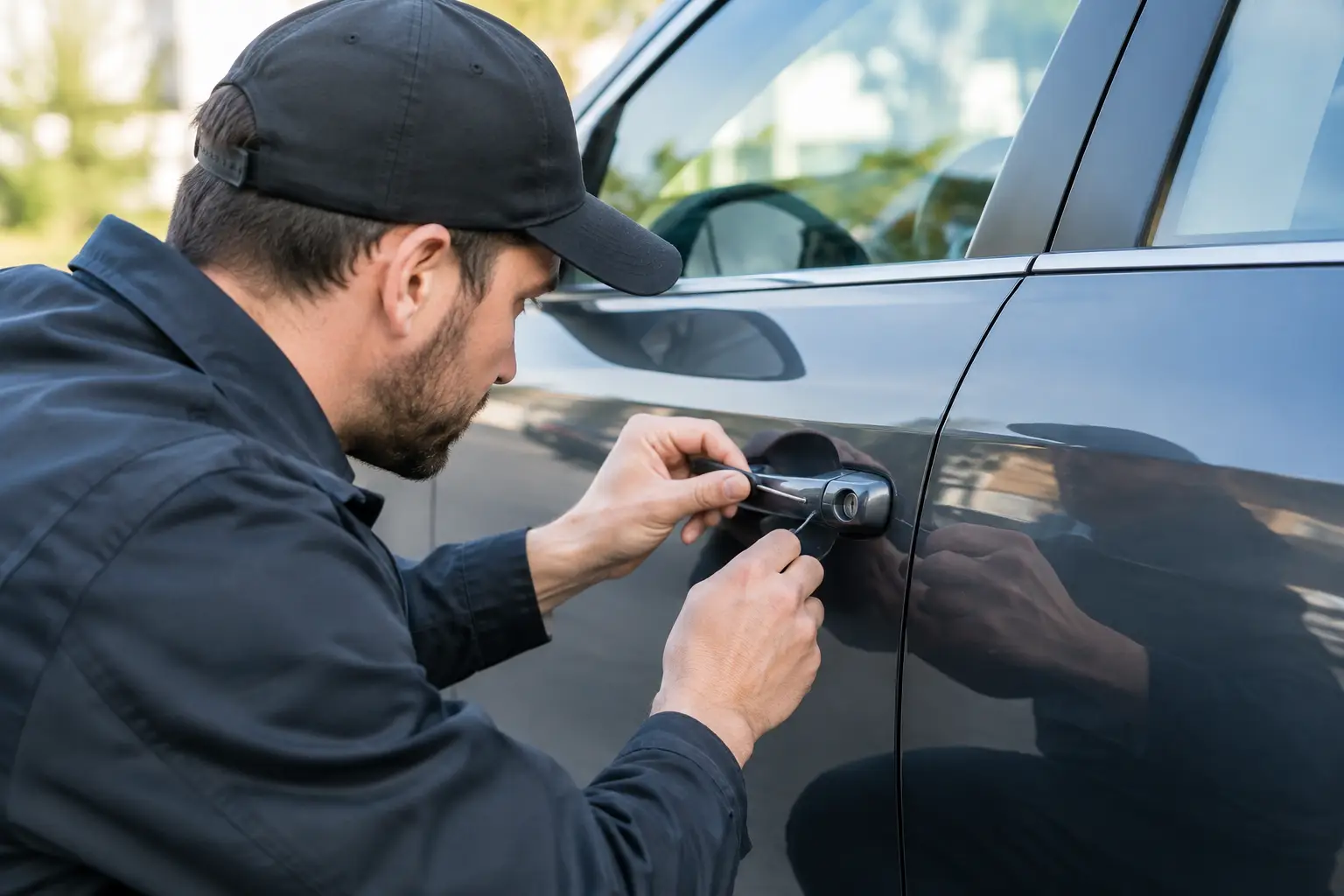
An experienced automotive locksmith can usually help with most mainstream vehicles. This includes older cars with traditional metal keys, vehicles with remote fobs, and many newer models with transponder keys or proximity systems. They use specialist vehicle-entry tools and manufacturer-specific knowledge to access the car as safely as possible.
That does not mean every job is simple. Some luxury, high-security, imported, or very new vehicles have advanced anti-theft systems and complex locking designs. A locksmith may still be able to gain entry, but the job can take longer or require additional equipment. In a small number of cases, dealer support or a manufacturer-approved process may be the best route, especially if replacement credentials or security coding are involved.
The important difference is expertise. A general locksmith may handle household locks well, while an automotive locksmith works specifically with vehicle locks, key systems, immobilizers, ignition barrels, and programming equipment. For a car lockout, that specialization matters.
What a Professional Locksmith Checks First
Before attempting entry, a reputable technician should confirm the vehicle details and establish that you are authorized to access it. This protects you, the technician, and the vehicle itself.
Proof can include your driver’s license together with registration, insurance details, a lease agreement, or other ownership documentation. If the paperwork is inside the locked car, explain that when you call. A professional can discuss practical ways to verify ownership before or after entry, depending on the circumstances.
The technician will also ask about the problem. Are the keys locked inside? Have they been lost? Is the remote not responding? Did the key snap in the door or ignition? Does the car have power? These details help them arrive with the right tools and set realistic expectations about timing and cost.
Why Some Cars Are More Difficult to Access
Vehicle access is not a one-size-fits-all service. The difficulty often comes down to the type of security system fitted to the car and the condition of its locks.
Older cars can sometimes be more straightforward because their mechanical locking systems are less complex. However, age can bring its own problems: worn locks, seized mechanisms, bent keys, and corroded parts may make careful work essential.
Newer vehicles usually have stronger physical security and electronic protections. Keyless systems, deadlocking features, shielded lock components, alarm systems, and tightly fitted door seals all affect the access method. A deadlocked car, for example, may require a different approach than a vehicle where the keys were simply left in the cabin.
Damage also changes the job. If someone has already tried to force the door, bend the frame, or pry the window, the locksmith may need to work around distorted parts. Attempting a DIY entry with coat hangers, wedges, screwdrivers, or online “tricks” can turn a quick callout into a lock, door, window, or weather-seal repair.
Entry Is Only Part of the Solution
Getting back into the vehicle solves the immediate problem, but it may not solve the reason you were locked out. If the key is lost, broken, or no longer communicating with the car, you could be stranded again as soon as you turn the engine off.
A specialist automotive locksmith can often cut and program a replacement key at your location. Depending on the vehicle, they may be able to create a remote key, transponder key, smart key, or spare key while you wait. This is often more convenient than arranging recovery to a dealership and waiting for a replacement to be ordered.
If the key is stuck or broken in the ignition, careful extraction is usually the first step. The ignition barrel may then need repair or replacement if internal components have worn or been damaged. Similarly, a door lock that has become stiff, loose, or unreliable should be inspected rather than repeatedly forced.
When a Locksmith May Need More Time or Information
Fast response does not mean rushed work. Certain situations require extra checks, tools, or coordination, and a good locksmith will explain why.
A very new model may have limited aftermarket programming coverage. An imported vehicle may use a different key profile or electronic system than the version commonly sold locally. A car with a fully flat battery may need a separate solution before central locking, windows, or trunk access can be operated. If all keys are lost, creating a working replacement is usually more involved than cutting a spare from an existing key.
There can also be security-related limits. Some manufacturers restrict access to key codes or programming information. In those cases, the locksmith may need the vehicle identification number, proof of ownership, and additional time to obtain the correct data. That is not a sign that the technician lacks skill. It is often part of responsible vehicle security.
Choosing the Right Car Locksmith
When you are stressed and late for work, it is tempting to call the first number you find. A few quick questions can help you choose a service that is equipped for the job.
Ask whether the locksmith specializes in automotive work, whether they can attend your location, and whether they handle your vehicle make. Describe the issue clearly, including any key damage, alarm behavior, or battery problem. Request a clear estimate and ask what could change the price, such as replacement key programming or lock repair.
Be cautious of anyone who offers to force entry immediately, will not ask for proof of ownership, or gives a vague price that changes dramatically on arrival. Professional vehicle access should prioritize non-destructive methods whenever the vehicle’s condition allows. The aim is to get you back into your car without creating a more expensive repair afterward.
For drivers across South London, Auto Tech Car Keys provides mobile automotive locksmith support for lockouts, lost keys, damaged keys, replacement keys, and ignition or lock problems. On-site service can save the time and disruption of towing a vehicle elsewhere, particularly when your car is needed for commuting, family plans, or work.
Preventing the Next Lockout
Many lockouts are one-off accidents, but a spare key is still one of the most practical safeguards a driver can have. Keep it somewhere secure away from the vehicle, not hidden inside it. If your remote starts becoming unreliable, replace its battery promptly and have the key checked before it fails completely.
A key that sticks in the ignition, a door lock that needs repeated attempts, or a fob that only works at close range are all early warning signs. Addressing them while the car is accessible is usually easier and less disruptive than dealing with a failure in a parking lot, outside your home, or before an important journey.
The best answer to a car lockout is not guesswork or force. It is a verified owner, an experienced automotive specialist, and a careful solution that gets you moving again without adding damage to an already frustrating day.