
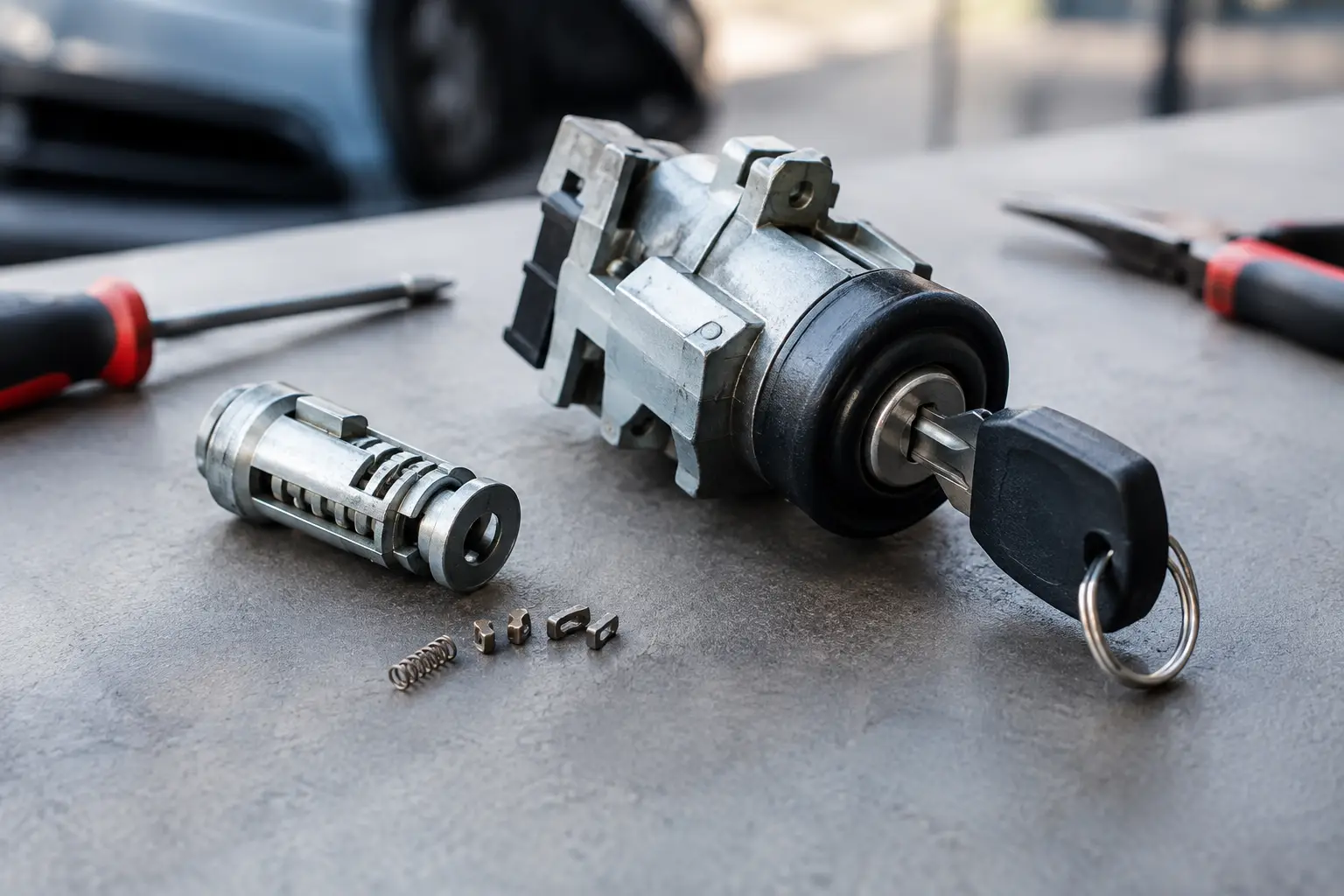
A key that suddenly will not turn can stop a normal morning in its tracks. You may be parked outside home, at work, or ready to collect the kids, but the engine will not start and forcing the key only makes the problem worse. Professional car ignition barrel repair identifies whether the fault is in the barrel itself, the key, or the vehicle’s electronic immobilizer, then deals with the right part on-site.
An ignition issue is not always a full replacement job. In many cases, a specialist can repair or rebuild the worn components inside the ignition barrel, cut a corrected key, or safely extract a damaged key. The right answer depends on the vehicle, the condition of the barrel, and how far the failure has progressed.
Signs You May Need Car Ignition Barrel Repair
The ignition barrel is the mechanical lock cylinder where you insert and turn the key. Inside are small wafers, springs, and moving parts designed to recognize the cuts on your key. After years of use, those components can wear down, stick, or break.
One of the first warning signs is a key that only turns after repeated attempts or needs to be moved slightly in the barrel. Another common sign is a key that enters normally but will not rotate to the accessory or start position. You might also find that the key turns, but the ignition does not engage properly, the steering lock remains on, or the key cannot be removed after switching off.
Do not overlook a visibly worn key. Rounded edges, cracks near the key blade, or damage caused by using the key as a tool can prevent it from lifting the barrel wafers correctly. A worn key can feel like an ignition fault, and a faulty barrel can quickly damage an otherwise usable key. A proper inspection separates the two.
A stuck steering wheel is not always a broken ignition
If the steering wheel is locked against the curb or under tension, the ignition key may feel jammed. Gently hold the wheel in the direction it has a little movement while turning the key with light pressure. If it releases, there may be no barrel damage.
If the key still will not turn, do not force it. Excess pressure can snap the blade in the ignition or break internal barrel components, turning a repairable issue into a more involved job.
What Causes an Ignition Barrel to Fail?
Wear is the usual cause. Every insertion and turn creates a small amount of friction between the key and the internal wafers. High-mileage vehicles, cars with several drivers, and work vehicles that are started many times a day tend to show ignition wear sooner.
A heavy key ring can add stress over time, particularly when it swings while driving. Dirt, moisture, old lubricant, and debris can also interfere with the mechanism. If a previous key was poorly cut or copied from an already worn key, the incorrect profile may accelerate damage inside the barrel.
Physical damage is another factor. A key can bend in a pocket, be twisted too hard when the steering lock is loaded, or break after an attempted theft. On some vehicles, the mechanical barrel may work while the electronic key transponder, ignition switch, or immobilizer system prevents the engine from starting. That is why diagnosis matters before any parts are ordered or replaced.
Repair or Replacement: Which Is the Better Option?
Car ignition barrel repair is often the sensible option when the original barrel can be restored safely. Repair may involve removing the barrel, replacing worn wafers or springs, clearing a jam, and matching the rebuilt unit to your existing key. Keeping the original barrel can mean you continue using one key for the doors and ignition, rather than carrying separate keys.
Replacement is normally recommended when the barrel housing is cracked, the internal damage is extensive, or a key has broken deep inside and the mechanism cannot be restored reliably. It may also be necessary after severe attempted theft damage. A replacement barrel needs to be fitted correctly and, depending on the vehicle, may need key cutting, transponder programming, or immobilizer work before the car will start.
There is a trade-off. Repair can preserve the original setup and may be more cost-effective, but it is only worthwhile if the barrel is structurally sound. Replacement provides a fresh component, but cheap aftermarket parts are not always the best long-term choice. An experienced automotive locksmith should explain the condition of the part and the practical options before beginning work.
Why the dealership is not your only option
A dealership can arrange ignition-related repairs, but the process may involve recovery, appointments, parts delays, and higher labor costs. A mobile automotive locksmith can often inspect the vehicle where it is parked and complete the needed mechanical and key work without moving the car.
For drivers in South London, that can make a real difference when the vehicle is blocking a driveway, stranded at work, or needed for a school run. Auto Tech Car Keys brings specialist key-cutting and programming equipment to the vehicle, so many ignition and key faults can be handled without the extra disruption of a tow.
What a Professional Ignition Repair Visit Involves
A good repair starts with confirming ownership and checking the symptoms. The technician will inspect the key blade, test how the barrel behaves, and assess whether the issue is mechanical or electronic. This avoids replacing an ignition barrel when the real fault is a damaged key or an immobilizer problem.
If the barrel needs to come out, it is removed using methods appropriate for the vehicle rather than forcing surrounding trim or components. The locksmith can then examine the wafers, springs, keyway, and ignition switch connection. A broken key may be extracted without damaging the barrel if the internal mechanism remains intact.
Once repaired or replaced, the key should turn smoothly through each position, release correctly, and start the car as expected. On vehicles with transponder keys, the new or repaired key must also communicate properly with the immobilizer. A mechanical key that turns but is not programmed correctly will not solve the problem.
Ask for a clear explanation of the fault, the repair completed, and whether your existing spare key is likely to cause the same issue. If the primary key is badly worn, creating a new key from the correct code or a restored lock can protect the repaired barrel from further damage.
Avoid These Common DIY Mistakes
When an ignition sticks, it is tempting to spray oil into the keyway, hit the key, or use pliers for extra leverage. These actions can create a larger repair bill. Thick oils attract dirt, pliers can twist or snap the key, and excessive force can damage the ignition switch behind the barrel.
Avoid pushing broken key pieces farther inside with pins, screwdrivers, or other improvised tools. It can damage the wafers and make clean extraction harder. Also be cautious with universal lubricants. A locksmith may use a suitable lock lubricant after identifying the issue, but lubrication alone will not fix worn or broken internal parts.
If the key is difficult to turn but still works, arrange an inspection before it becomes an emergency. Early attention may mean a key correction or minor barrel work rather than being left unable to start the car.
How to Reduce Future Ignition Problems
Use a light key ring and remove heavy accessories from the ignition key. Keep your key blade clean, and replace a key that is bent, cracked, or visibly worn instead of waiting for it to fail. If you have only one working key, getting a spare made is practical protection against both lockouts and ignition damage caused by relying on an aging original.
It also helps to use the correct technique when the steering lock is engaged. Relieve pressure on the wheel first, then turn the key gently. Never treat resistance as a reason to apply more force.
A stiff or unreliable ignition is a warning, not an inconvenience to ignore. Getting it checked while the car can still be started gives you more choice, less stress, and a better chance of a straightforward repair.