A car lockout can turn a normal school run, commute, or work call into a stressful delay in seconds. If you are searching for how to open locked car doors, the safest answer is usually not a DIY trick. Modern vehicles have delicate door seals, side-airbag components, electronic locks, and security systems that can be expensive to damage.
The priority is getting back into your own vehicle safely, protecting the car from avoidable harm, and keeping the situation under control. A qualified automotive locksmith can usually provide non-destructive entry at your location, then help with the underlying key issue if needed.
How to Open a Locked Car Safely
Start by taking a moment to check the simple possibilities. Try every door and the trunk or hatch if it can be opened normally. On some vehicles, one door may not have locked correctly, or the trunk may still be accessible. Do not pull aggressively on handles or force a key into a lock that is not responding.
If you have a second key nearby, a trusted person who can bring it may be the quickest solution. Many drivers also have manufacturer apps that can remotely operate locks on certain newer models. This depends on the vehicle, an active connected-services subscription, phone signal, and account access, so it is useful but not a guaranteed answer during an urgent lockout.
If neither option works, call an automotive locksmith. A vehicle locksmith is equipped to assess the make, model, locking system, and cause of the lockout before choosing the appropriate entry method. This is very different from trying to force an opening with household items. The goal is access without damaging the lock, glass, paintwork, weather stripping, wiring, or interior trim.
What to Do Before Help Arrives
Move to a safe, visible place if you can do so without leaving the vehicle vulnerable. If you are parked at the roadside, stand away from traffic and avoid waiting in an exposed position. Keep your phone charged if possible and have your vehicle details ready, including the make, model, registration, approximate location, and a clear explanation of what happened.
Proof that the vehicle is yours is also helpful. A locksmith may ask for photo identification, registration details, insurance information, or other reasonable evidence of ownership. If those documents are locked in the car, explain that when you call. An experienced technician can advise on the verification process.
If the keys are visible on a seat, resist the temptation to rush into a DIY solution. Seeing the key makes the situation feel easy to solve, but the most common home methods create the most avoidable repair bills.
If a Child, Pet, or Vulnerable Person Is Inside
Treat this as an emergency, especially in hot, cold, or poorly ventilated conditions. Contact emergency services immediately if there is any risk to the person or animal inside. Do not wait for a routine service call if their welfare could be affected.
When emergency services have been contacted, a mobile locksmith may still be able to assist with vehicle access. However, the immediate safety of the person inside always comes first.
Do Not Force the Door or Break a Window
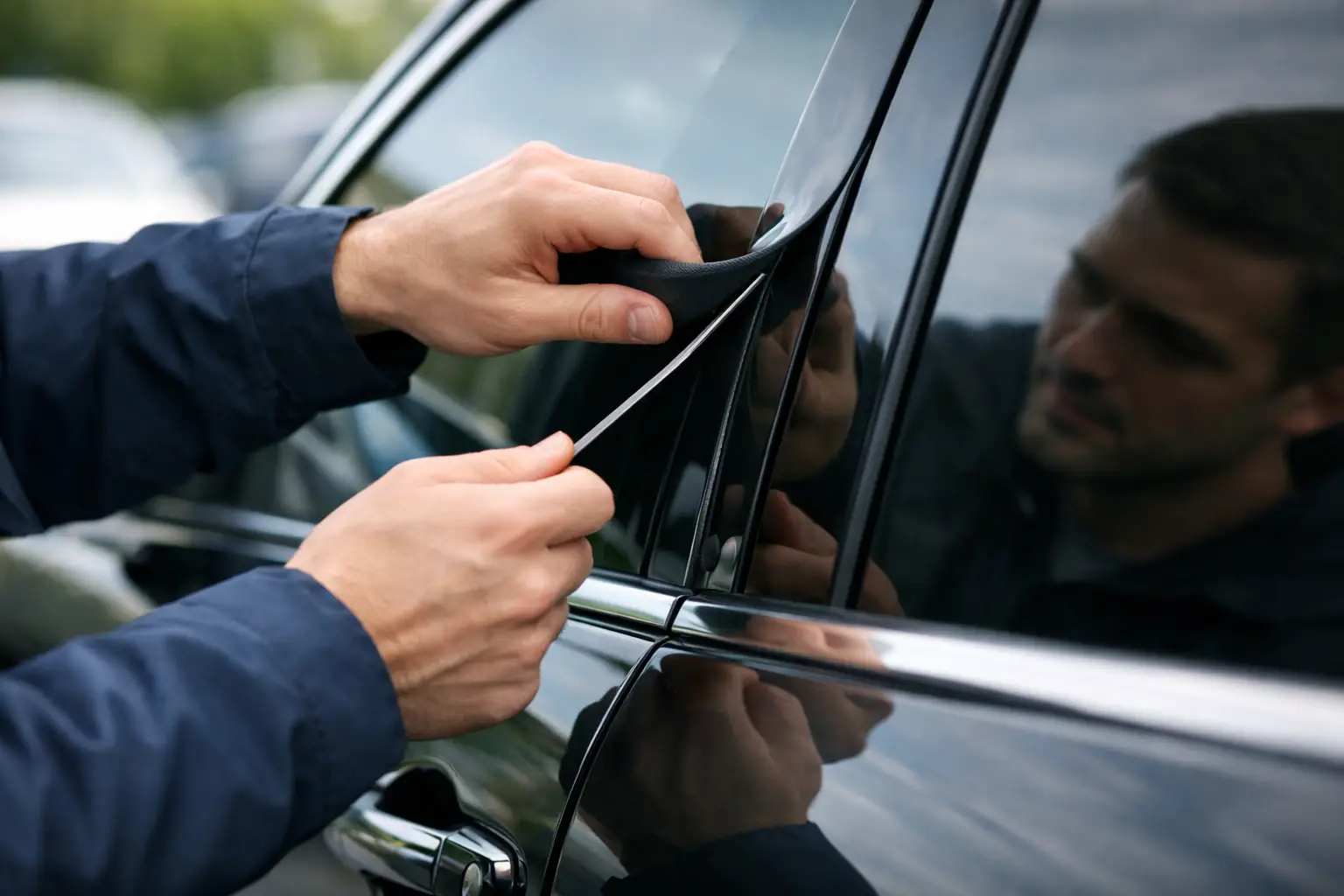
Online advice often makes car entry look simple. In reality, modern door mechanisms are tightly fitted and increasingly complex. Attempting to pry a frame, use a wire tool, insert an improvised device, or force the lock can bend the door, tear the weather seal, scratch paint, or damage internal cables and electrical components.
Breaking a window is rarely the sensible first option. Replacing automotive glass can cost far more than professional entry, and broken glass creates a safety issue for passengers and pets. There is also no guarantee that breaking a window will give safe, useful access, particularly when laminated glass or a restricted opening is involved.
Forcing a physical key is another expensive mistake. If a key is bent, sticking, cracked, or turning only partway, continuing to twist it can snap it inside the lock or ignition. At that point, the job may require key extraction and lock or ignition repair as well as entry.
Why Modern Cars Need Specialist Help
Older cars and newer cars can both be locked, but the reasons and solutions are often very different. A traditional metal key may be lost, damaged, or left inside. A remote fob can have a flat battery, a broken button, water damage, or a failed internal chip. Keyless-entry vehicles can also develop problems with the fob, vehicle battery, door lock actuator, or electronic authorization system.
A locksmith should not assume that the door is simply locked. The technician needs to establish whether the key is inside, missing, broken, electronically unresponsive, or no longer recognized by the car. Once access is restored, they can identify whether you need only entry or a replacement key, spare key, repair, programming, or lock work.
This approach can save time. Getting into the car is useful, but it does not solve much if the only key has snapped, the remote will not start the vehicle, or the ignition is damaged. A specialist automotive locksmith can often deal with both problems during the same callout.
When Roadside Assistance May Be Enough
Roadside assistance can be a good first call if it is included with your breakdown coverage and you are in a safe location with time to wait. It may be especially useful for a straightforward lockout involving an older vehicle.
However, roadside providers may have limited options when a key needs cutting, programming, extracting, or repairing. They may also arrange recovery rather than restore access on site. If you need a working key immediately or want to avoid a trip to a dealership, an automotive locksmith is usually the more direct choice.
Dealership support can be appropriate for some specialist keys and warranty situations, but it may involve booking delays, towing the vehicle, and higher costs. For many lost-key or locked-out situations, mobile service is more practical because the work is carried out where the car is parked.
Choosing a Locksmith for a Car Lockout
Ask clear questions before agreeing to a callout. A professional should be able to explain whether they cover your vehicle type, what information they need, how they confirm ownership, and whether the expected service is non-destructive. Pricing should be discussed plainly, including any callout charge, out-of-hours rate, key cost, or programming work that may be required after entry.
It also helps to choose a specialist rather than a general locksmith. Automotive entry and key work require the right equipment and current knowledge of vehicle security systems. The lowest initial quote is not always the lowest total cost if inexperienced work damages a lock, door, or electronic component.
For drivers across South London, Auto Tech Car Keys provides mobile vehicle entry and key services for common lockout problems, lost keys, damaged fobs, and key programming needs. A technician can come to the vehicle, assess the problem, and recommend the most practical next step without sending you through unnecessary dealership delays.
Preventing the Next Lockout
Once you are back in the car, consider why the lockout happened. If it was a one-off distraction, a spare key kept with a trusted person may be enough. If the remote has become unreliable, replace the battery or have the key checked before it fails completely. A cracked key shell, loose blade, intermittent button, or weak signal is easier and cheaper to address before you are stranded.
A properly programmed spare key is one of the best safeguards for households with shared cars, busy parents, commuters, and tradespeople. It can prevent a missed appointment or an unnecessary emergency callout, particularly when your vehicle is essential for work.
A locked car is frustrating, but it does not need to become a damaged-car problem. Stay safe, avoid improvised entry attempts, and get the right help for the vehicle and the situation.