
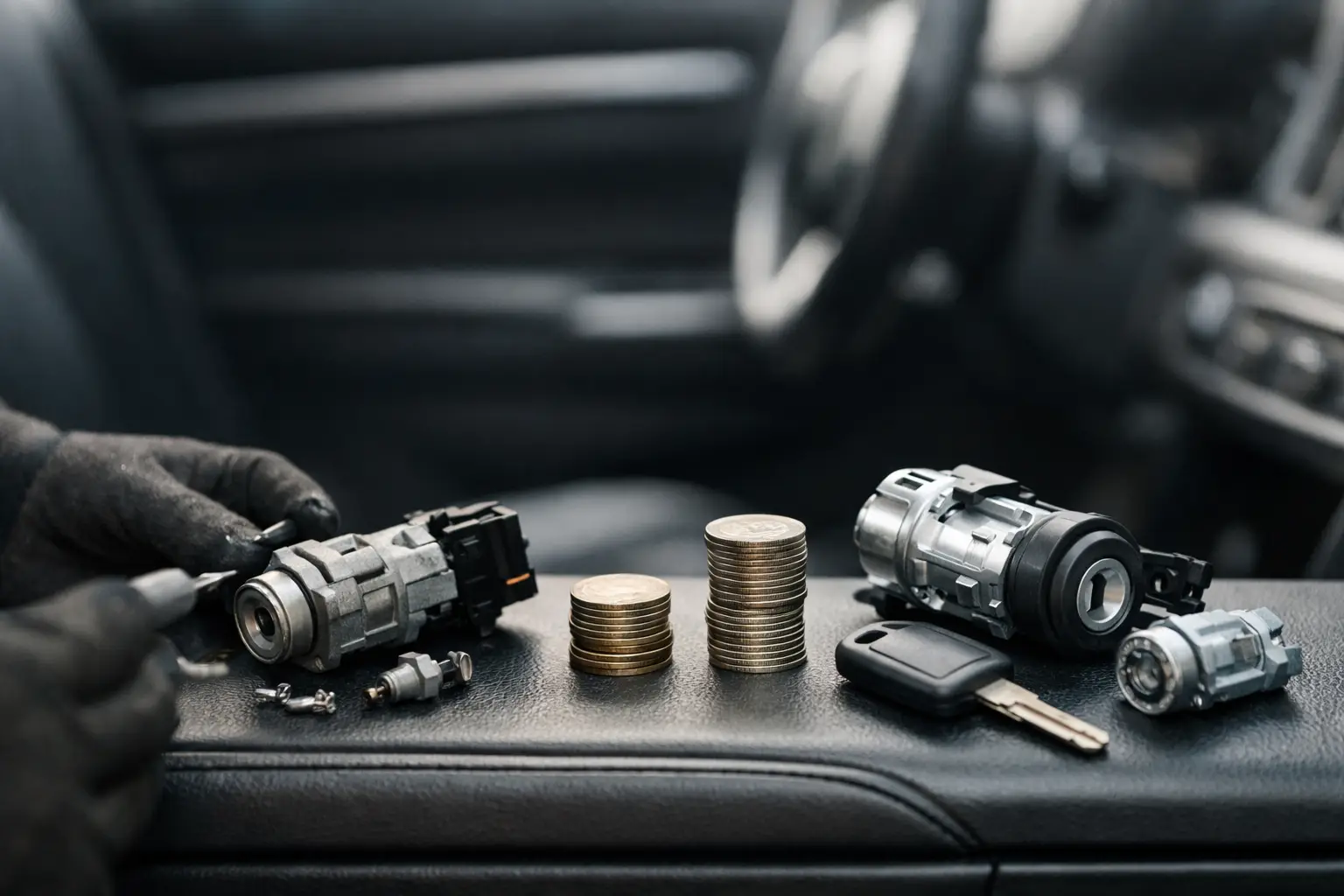
A key that will not turn can stop an otherwise reliable car in its tracks. The real question is not just the ignition repair vs replacement cost. It is whether the fault is in the key, the ignition barrel, the ignition switch, or the vehicle’s security system. Getting that diagnosis right is what prevents paying for a full replacement when a targeted repair would do.
For drivers who rely on their car for work, school runs, or the daily commute, the cheapest option is rarely the one with the lowest first quote. A repair that restores reliable starting, keeps your existing keys working, and avoids a tow can be the better value. On the other hand, a badly worn or damaged ignition may need replacement to prevent another breakdown a week later.
What is included in ignition repair vs replacement cost?
“Ignition” can mean several connected parts, and each has a different repair route. The mechanical ignition barrel is the part your key enters and turns. Inside are small pins and springs that match the cuts on the key. The ignition switch is the electrical component that sends power to the dashboard, starter, and other systems once the key is turned. On many modern vehicles, the immobilizer and transponder chip must also recognize the key before the engine will start.
An ignition repair usually means correcting a fault while retaining the existing assembly where practical. This could involve removing a broken key, cleaning and rebuilding a worn barrel, replacing damaged internal components, or repairing a key that is no longer operating the barrel correctly. If the barrel can be rebuilt to work with your current key, you may avoid the cost and inconvenience of carrying a separate key for the door and ignition.
An ignition replacement means fitting a new or replacement barrel, switch, or complete housing. Depending on the vehicle, the replacement may need to be matched to your existing key, supplied with new keys, programmed to the immobilizer, or coded alongside the vehicle’s locks. That extra work is why replacement prices can vary widely.
Typical factors that affect the price
There is no honest one-price answer for an ignition fault. A basic mechanical issue on an older vehicle is usually more straightforward than a fault on a newer push-button or transponder-equipped car. The vehicle make, model, year, and available parts all matter.
The biggest cost factors are the exact failed component, the amount of damage, and whether the work can be completed on-site. A key snapped off in a barrel may only require careful extraction and a replacement key. If someone has forced the key, attempted a DIY repair, or continued driving with a sticking ignition, the barrel housing or steering-lock mechanism may be damaged as well.
Programming can also change the quote. Many modern keys contain a chip that communicates with the car’s immobilizer. A new key or replacement ignition component may require diagnostic equipment and programming so the vehicle recognizes it correctly. Luxury models, keyless systems, and vehicles with security-related steering locks often involve more labor and specialist equipment.
Timing matters, too. Emergency attendance outside regular hours may cost more than a planned daytime appointment. However, a mobile automotive locksmith can often save money overall by coming to the vehicle, avoiding a tow, and resolving the key, barrel, and programming work in one visit.
When repair is usually the better option
Repair is worth considering when the ignition barrel is worn but not severely broken, the key still turns intermittently, or the issue is clearly caused by a damaged key. It can be particularly sensible when you want to preserve one key for the doors and ignition rather than replacing multiple locks.
A technician may be able to rebuild or rekey a serviceable barrel so it works smoothly with your existing key. This is often a practical route when the car has no electrical fault and the barrel can be removed without damage. Repair can also be the faster solution when replacement parts are not immediately available.
That said, a barrel that has already failed repeatedly should not be treated as a minor inconvenience. If it sticks, requires jiggling, or only turns when the steering wheel is held in a certain position, arrange an inspection before it locks completely. Waiting until the key will not turn at all can turn a planned repair into an emergency callout.
Signs the problem may be the key, not the ignition
Look closely at the key before assuming the ignition itself has failed. A worn key blade may no longer lift the internal pins accurately, even if it still opens the door. A bent key, a key with chipped edges, or a copy made from an already worn key can all cause trouble.
Try a spare key if you have one. If the spare turns normally, the likely answer is key repair or a new correctly cut key, not a new ignition. Do not force the faulty key. It can snap inside the barrel, damage the internal pins, and increase the eventual cost.
When replacement makes more sense
Replacement is normally the safer choice when the barrel has been forced, the internal mechanism is badly worn, the steering lock is damaged, or the ignition switch has failed electrically. It may also be necessary if a broken key cannot be extracted without harming the barrel or if the unit has seized completely.
An electrical ignition switch problem can feel different from a mechanical barrel issue. The key may turn normally, but dashboard lights may fail to come on, accessories may cut out, or the vehicle may not crank. Those symptoms need proper testing. Replacing the barrel alone will not solve a failed switch, wiring fault, battery issue, starter problem, or immobilizer error.
A full replacement costs more upfront when it includes parts, keys, coding, and labor. But it can be the right long-term decision when repair would only delay another failure. The key is replacing only the parts that are genuinely faulty, rather than treating every no-start issue as a complete ignition replacement.
Why a proper diagnosis saves money
Many ignition problems look alike from the driver’s seat. A dead battery, a worn transponder key, a steering-wheel lock under pressure, and a damaged barrel can all leave you unable to start the car. A rushed diagnosis can lead to unnecessary parts and wasted time.
An experienced automotive locksmith will first check how the key operates, whether the barrel turns, whether the steering lock is binding, and whether a spare key changes the result. Where relevant, they can assess the transponder and programming side of the problem. This approach identifies whether you need a new key, a barrel repair, an ignition replacement, or a different type of vehicle repair altogether.
Be cautious about quotes that promise a fixed low price before anyone knows the vehicle details or the fault. A clear quote should explain the callout, labor, parts, key cutting, and any programming required. Ask whether the proposed work keeps your current key, whether new keys are included, and what happens if further damage is found after the barrel is removed.
Avoid making the damage worse
Never use pliers, screwdrivers, lubricant sprays, or excessive force to turn a stuck ignition. The wrong lubricant attracts dirt, while forcing the key can damage the barrel and steering-lock components. Avoid repeatedly wiggling a key with a heavy keychain attached, as the extra weight can worsen wear over time.
If the steering wheel is locked, gently relieve pressure by moving the wheel slightly left and right while turning the key normally. If it still will not move, stop before the key bends or breaks. Keep the vehicle safe, have proof of ownership available, and arrange specialist help.
For drivers across South London, Auto Tech Car Keys can assess ignition barrel and car key faults at your location, helping you avoid the delay of a dealership appointment or recovery trip. The best next step is simple: act when the ignition first starts sticking, not when your car is blocking the driveway or leaving you stranded after work.