Losing your only car key tends to happen at the worst possible time – before work, during school pickup, or when you are already running late. If you need a replacement key without original access to the old key, the good news is that it is usually possible. The part that matters is getting the right help fast, especially if your vehicle uses a transponder, remote fob, push-button start system, or a laser-cut key.
A lot of drivers assume they need to tow the car to a dealership and wait days for a solution. That is sometimes one option, but it is not the only one. In many cases, an automotive locksmith can make and program a new key on-site, which saves time, avoids towing, and gets you back on the road sooner.
Can you get a replacement key without original?
Yes, in most cases you can. A skilled automotive locksmith does not always need the original key in hand to create a working replacement. Instead, the new key is usually made using your vehicle information, the lock or ignition data, and specialized cutting and programming equipment.
The exact process depends on the make, model, year, and type of key system your car uses. An older mechanical key is usually simpler. A modern smart key or proximity fob often requires more steps because the new key has to be electronically matched to the vehicle.
That is why there is no one-price-fits-all answer and no one-method-fits-all answer either. Some jobs are straightforward roadside callouts. Others involve advanced diagnostics, immobilizer programming, or deleting lost keys from the car’s memory for security.
How the process works
When there is no original key, the first step is confirming ownership and identifying the vehicle correctly. A professional locksmith will typically ask for your ID, registration, and the vehicle details. This protects both you and the vehicle.
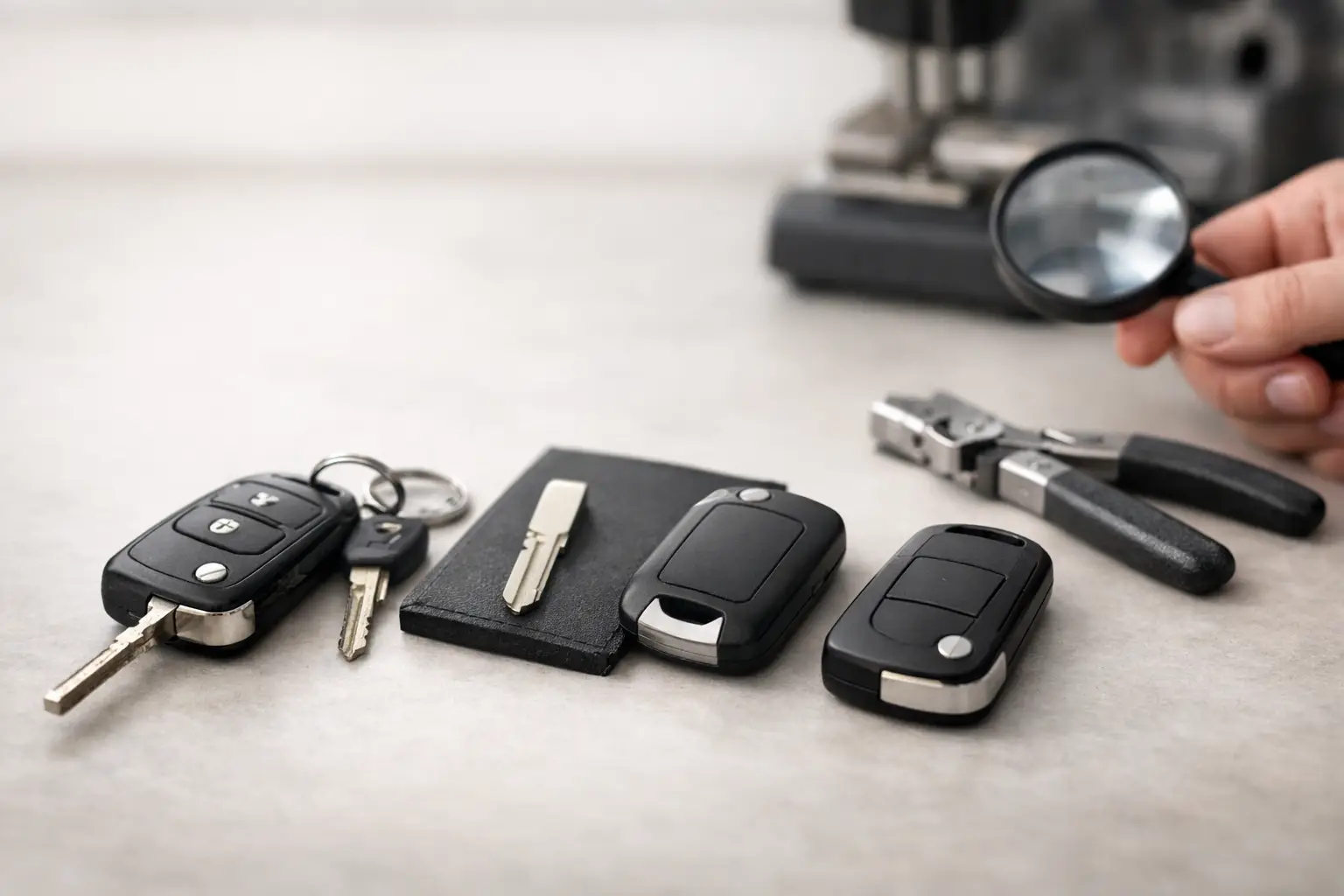
After that, the technician needs to determine what kind of key your car uses. There are usually four broad possibilities: a basic metal key, a transponder key with a chip, a remote key, or a smart key for keyless entry and push-to-start vehicles. Each one requires a different approach.
For a basic key, the locksmith may decode the lock and cut a new blade to match. For transponder and remote keys, the blade may need to be cut and then the chip or remote programmed to the car. For smart keys, the process is more electronic and often takes longer, but it is still commonly done on-site with the right equipment.
In many cases, the lost key can also be removed from the system. That matters if you are worried someone might find the old key and try to use it later. Not every vehicle handles this the same way, but it is an important question to ask.
What a locksmith needs from you
If you are trying to arrange a replacement key without original access, having the right information ready helps speed things up. The vehicle make, model, year, and your exact location matter. If you know whether the key had buttons, remote start, a flip blade, or push-button ignition, that is useful too.
A photo of the vehicle and the VIN can help confirm the setup before the technician arrives. If the car is in a garage, underground lot, or a tight parking space, mention that early. Access conditions can affect how quickly the job can be completed.
This is also the point where good service stands out. A reliable locksmith should explain what is likely involved, what documents are required, and whether the new key will be cut, programmed, or both. Clear expectations reduce stress, especially when you are already dealing with a lost-key situation.
Why modern keys are more complicated
Years ago, replacing a lost car key was mostly a cutting job. Modern vehicles are different. Most use anti-theft systems that require the key and the car to recognize each other electronically. If that pairing does not happen, the engine may crank but not start, or the vehicle may not respond at all.
That added security is good for theft prevention, but it means key replacement now requires more than a key machine and a blank. It calls for diagnostic tools, programming software, and experience with different manufacturers.
This is where many drivers get stuck. They search for the cheapest option, only to find that not every key-cutting service can handle automotive programming. A house locksmith or shoe-repair kiosk might cut some blades, but that does not mean the key will start the car. With newer vehicles, the electronics are often the critical part.
Dealer or mobile locksmith?
It depends on the vehicle and the urgency. A dealership may be able to supply a factory key, but that often means paperwork, parts ordering, and sometimes towing the car if it cannot be driven. If time is not a problem and your vehicle has a very restricted key system, the dealer may make sense.
A mobile automotive locksmith is often the faster option. For many common makes and models, the key can be cut and programmed at your location. That is especially useful when the car is stranded at home, at work, or in a parking lot.
The other advantage is practical support. If the issue turns out not to be the missing key alone, a specialist may also be able to help with a jammed lock, damaged ignition, broken key extraction, or a dead remote housing. That can save you from arranging multiple appointments.
What affects the cost?
The biggest factor is the type of key. A standard mechanical key is usually the lowest-cost job. A transponder key costs more because of the chip programming. Remote keys and smart keys are typically the most expensive because the parts and programming process are more involved.
Vehicle make and model matter too. Some brands are more straightforward, while others use tighter security systems, dealer-style coding, or less common key profiles. Availability of blanks and programming compatibility can also change the price.
Timing can play a role. Emergency callouts, after-hours service, and difficult access situations may cost more than a scheduled appointment. That said, even when the upfront price seems higher than a basic key copy, a mobile solution can still work out better than paying for towing, waiting on parts, and losing time.
If you are comparing quotes, make sure you are comparing the full job. Ask whether the price includes the callout, the key blank, cutting, programming, and testing. A low initial quote can become expensive if key steps are added later.
When speed matters most
A lost key is not always an emergency, but very often it is. If your car is blocking access, you are stuck away from home, or you need to get back to work quickly, response time matters as much as price.
This is why mobile service is so useful. Instead of organizing recovery or waiting for a dealership schedule, the technician comes to the vehicle. In a busy area, especially around South London, that convenience can make the difference between a same-day fix and a long disruption.
Fast service should still be careful service. The key needs to be cut accurately, programmed correctly, and fully tested. Rushing the job without checking remote functions, immobilizer response, and door operation just creates a second problem.
How to avoid the same problem again
Once you have replaced a lost key, the smartest next step is getting a spare made while everything is still straightforward. It is almost always easier and more affordable to duplicate a working key than to start from scratch after the only key has gone missing.
It is also worth checking the condition of your remaining locks and key shell. If the old key was worn, cracked, or unreliable before it was lost, that may have been a sign of bigger wear issues. A good locksmith will usually tell you if the blade, buttons, or ignition feel like they are close to failing.
Keeping a spare in a sensible place helps, but avoid leaving it inside the vehicle. If you share the car, make sure both drivers know where the spare is stored. Small habits like that prevent expensive last-minute callouts.
Choosing the right help
If you need a replacement key without original access, experience matters more than broad promises. You want someone who works specifically with vehicle keys, understands programming systems, and can tell you clearly what is possible for your car.
Look for straightforward communication, proof of ownership checks, and pricing that is explained before the work starts. Those are signs you are dealing with a serious automotive locksmith, not someone guessing their way through the job.
At Auto Tech Car Keys, the focus is simple: fast response, fair pricing, and on-site solutions that get drivers moving again without unnecessary delays. If your only key is gone, the right specialist can usually turn a stressful day into a solvable problem faster than you might expect.
The best next move is not to wait and hope the key turns up. Get the vehicle details together, speak to a specialist, and deal with it while the situation is still one problem instead of three.