
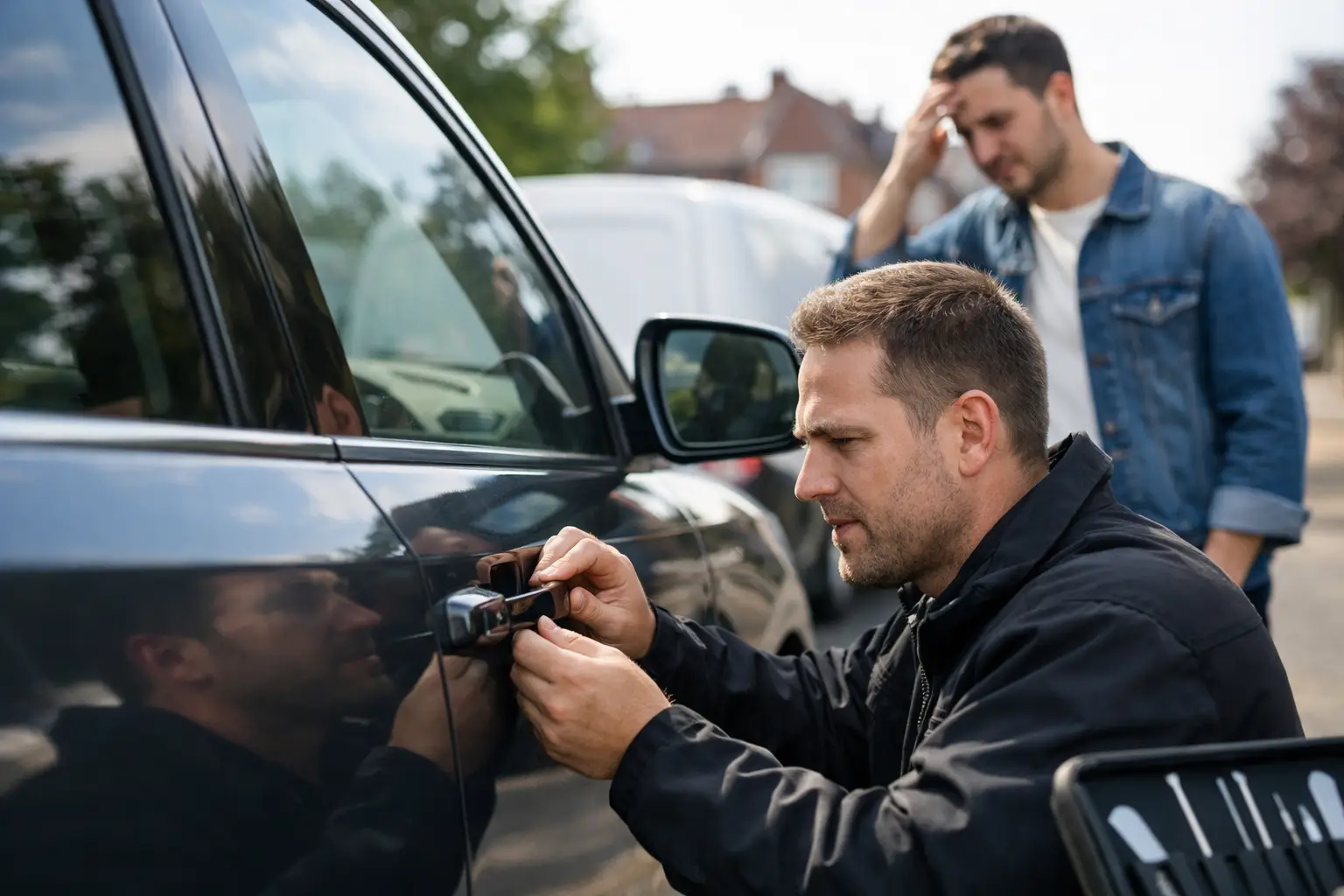
Keys sitting on the driver’s seat while the doors are locked is a problem that needs a calm, practical response. For vehicle unlocking South London drivers can rely on, the priority is getting you back into your car without turning a lockout into damaged glass, a bent door frame, or an expensive repair.
A car lockout can happen outside your home, at work, on a school run, or when you are parked somewhere you do not want to be after dark. Modern vehicles are designed to resist forced entry, which is good for security but frustrating when the key is inside, the fob has stopped responding, or the key has been lost. A specialist automotive locksmith can assess the vehicle, confirm ownership, and use the right non-destructive entry method for its make, model, and locking system.
What to do when you cannot get into your car
First, take a moment to check the simple possibilities. Try every door and the trunk, if it is safe to do so. A partially closed door, an overlooked spare key, or a fob battery issue can sometimes explain the situation. If a child, vulnerable passenger, or pet is trapped in a vehicle and there is any risk from heat, cold, or distress, contact emergency services immediately.
For a standard lockout, avoid trying to force a window, pry open the top of a door, or use improvised tools. Online tricks involving coat hangers, wedges, or wire can damage weather seals, electronic locks, side airbags, and paintwork. They can also leave you with a car that is still inaccessible, plus a repair bill.
A mobile automotive locksmith is usually the more sensible next step. They come to the vehicle rather than requiring a tow to a dealership or garage, which matters when you are stuck in a parking lot, on a residential street, or away from home.
Why non-destructive vehicle entry matters
Not every car is opened in the same way. Older cars may use a relatively straightforward mechanical lock, while newer vehicles can have deadlocks, shielded lock mechanisms, keyless entry systems, and security features intended to prevent theft. The right approach depends on the vehicle and the reason access is needed.
A trained technician uses specialist tools and vehicle-specific knowledge to gain entry with as little disruption as possible. The goal is to open the car, not to defeat or damage its security system. Before work begins, expect to be asked for identification and proof that you own or are authorized to use the vehicle. That is a vital safeguard for both the driver and the technician.
Non-destructive entry can also protect the value of your vehicle. Replacing broken glass, correcting water leaks from damaged seals, or repairing a distorted door can cost far more than a professional lockout callout. On vehicles with electronic locking, a forced attempt can create faults that need diagnostic work afterward.
Locked keys inside the car
This is one of the most common callouts. It often happens when loading shopping, handling children’s bags, or setting down keys while clearing out the vehicle. If the keys are visible but inaccessible, it can be tempting to break a small window. In most cases, that is unnecessary and creates a bigger problem than the original lockout.
Once access has been gained, it may be worth arranging a spare key. A second working key kept safely at home can prevent a repeat emergency and reduce disruption the next time a busy day takes an unexpected turn.
Lost car keys or a missing key fob
If your only key has been lost, gaining access is only part of the job. You may also need a replacement key cut and programmed so the vehicle can be driven again. The process varies by manufacturer, model year, and key type. A basic mechanical key is different from a transponder key, remote fob, or smart proximity key.
Where appropriate, a specialist can help remove the missing key from the vehicle’s system so it can no longer start the car. This is particularly valuable if the key was lost in a public place or may have been taken with information that identifies your vehicle.
A fob that will not open the doors
A flat battery is a common cause of a remote fob failing to operate. Some vehicles have a hidden mechanical key inside the fob and a concealed door lock cover, allowing manual entry. Others may need a different approach, especially if the mechanical lock has not been used for years and has become stiff.
If the vehicle starts only when the fob is held close to a designated area, check the owner’s manual for the emergency starting procedure. Do not keep forcing buttons or repeatedly turning a stiff key. The fault may be a worn fob, damaged key blade, failed battery contact, lock issue, or a separate vehicle electrical problem.
When a lockout is really a key or lock problem
Sometimes the car is not simply locked. A key may have snapped in the door or ignition, the lock barrel may be worn, or the ignition may not turn. These problems need careful handling because forcing the key can push broken pieces deeper into the mechanism or damage the ignition barrel.
A car key extraction service is designed to remove a broken piece without harming the lock where possible. Afterward, the remaining key should be inspected. If the blade is worn, cracked, or loose in the fob housing, repairing or replacing it before it fails completely is usually less stressful than waiting for another roadside problem.
Similarly, if the central locking works intermittently, the issue may not be the key at all. It could relate to a vehicle battery, door actuator, wiring, or control module. An experienced automotive locksmith can identify whether the problem is key-related and explain when an auto electrician or garage may be needed. Clear advice is better than paying for the wrong repair.
Vehicle unlocking in South London: what affects response and cost
When you need vehicle unlocking in South London, the practical details matter. Your exact location, time of day, vehicle type, and the nature of the lockout all affect how quickly a technician can reach you and what work is required. Access in a busy area may involve traffic, parking restrictions, or a vehicle located in an underground garage with limited signal or clearance.
Be ready to provide the vehicle make, model, year if known, registration number, and your location. Explain whether the keys are locked inside, missing, broken, or not responding. Mention any immediate safety concern, such as a child locked in the vehicle. Accurate information helps the locksmith arrive with suitable equipment and avoids wasted time.
Pricing should be explained clearly before work starts. A straightforward daytime lockout is not the same as an out-of-hours emergency involving a lost smart key and programming. Ask what the quoted price covers, whether there is a callout charge, and whether any additional work may be needed if the underlying issue is a damaged key or lock.
Auto Tech Car Keys provides mobile support across South London for drivers who need prompt access, replacement keys, key repair, and related vehicle lock services. The aim is simple: practical help at your location, with the right tools and a clear explanation of the work required.
Choosing the right automotive locksmith
A general locksmith may be highly skilled with home and commercial locks, but vehicles have their own security systems and programming requirements. Choose a provider that works specifically with car keys, vehicle locks, transponders, remotes, and modern entry systems.
Look for a technician who asks for proof of ownership, gives a straightforward estimate, and explains the likely route before starting. They should avoid promising that every fault has one quick answer. For example, gaining entry may be fast, but producing and programming a replacement key can depend on the vehicle’s system and the condition of its locks or ignition.
It is also worth asking whether the technician can handle the next step if needed. If a key is inside the car, entry may be all you need. If it is lost or broken, having key cutting, programming, repair, and extraction capability available can save you from arranging multiple services.
Reduce the chance of the next lockout
Most lockouts are accidental, not careless. A small routine can still make them less likely. Keep a spare key in a secure place away from the car, replace a weakening fob battery early, and avoid attaching heavy keychains that put strain on an ignition key. If your key starts sticking, the remote works only occasionally, or the fob casing is splitting, arrange a repair before it becomes an emergency.
When you are locked out, protect yourself first, avoid damaging the vehicle, and get help from a qualified automotive specialist. The fastest solution is usually the one that gets you back on the road without leaving another problem behind.