
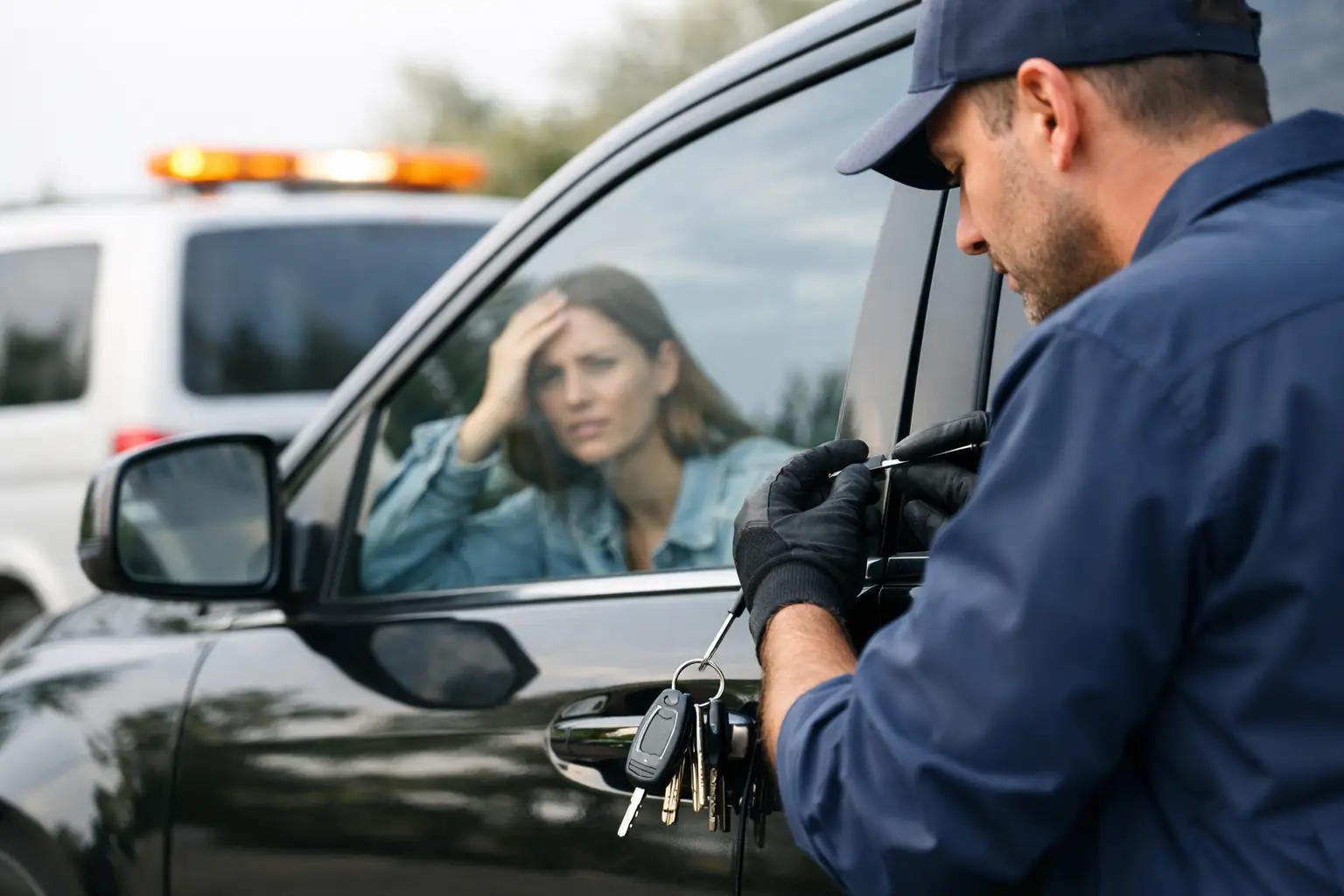
A lockout rarely happens at a convenient time. It happens outside the station before work, in a supermarket parking lot with children in the back seat, or at the end of a long shift when your key suddenly will not turn. The best emergency car locksmith tips start with one priority: keep yourself safe, then get the right help without making an expensive problem worse.
Trying to force a door, pry a window, or keep turning a damaged key may feel like the fastest answer. On modern vehicles, it can damage weather seals, locking mechanisms, glass, or the ignition barrel. A professional automotive locksmith can usually deal with the issue on-site, using the correct tools and methods for the vehicle.
Best Emergency Car Locksmith Tips Before You Call
Take a moment to check the simple possibilities first. Look through every pocket and bag, check the ground around the vehicle, and confirm whether another door or the trunk is accessible. If you have a keyless vehicle, move a few steps away and try again. A weak key fob battery can sometimes cause an intermittent response, although it will not explain every no-start or access issue.
If a child, vulnerable passenger, or pet is locked in the vehicle, or there is an immediate medical risk, contact emergency services first. Tell them the exact location, vehicle description, and whether the engine is running. Do not wait for a routine service call when someone could be in danger.
For a standard lockout, move to a safe, well-lit place if you can do so without leaving the vehicle unattended in an unsafe position. Switch on your hazard lights if the car is blocking traffic or stopped on a roadside. If you are on a fast road, stay well away from moving traffic and follow local road-safety guidance.
It also helps to have the right details ready before you call. A locksmith can give clearer advice and arrive prepared when they know the make, model, year, location, and the exact symptom. “Keys locked in a 2018 Ford,” “remote not working,” and “key snapped in the ignition” are three different jobs that may require different equipment.
Do Not Turn a Small Key Problem Into a Bigger Repair
A key that is stuck, bent, cracked, or turning roughly is a warning sign. Stop using force. A worn mechanical blade can break in a door lock or ignition, while repeated twisting can damage internal lock components. If the key has already snapped, avoid pushing the remaining piece farther in with tweezers, wire, glue, or another key.
The same applies to a fob that has stopped working after being dropped or exposed to water. The issue may be a flat battery, damaged circuit board, broken key blade, or a programming fault. Replacing a battery is reasonable when the fob casing opens normally and the battery type is clear. But if the fob is swollen, corroded, or physically damaged, a specialist assessment is safer than guesswork.
Be cautious with online “emergency entry” tricks. Methods designed for older cars do not necessarily work on newer models, and improvised tools can damage airbags, wiring, window frames, paint, or the lock itself. Any money saved on a callout can disappear quickly once bodywork or an ignition barrel needs repair.
How to Choose an Emergency Automotive Locksmith
When you are stressed, the first number that appears in a search result can be tempting. Take two minutes to confirm you are calling a genuine automotive specialist. Cars with transponder chips, remote fobs, smart keys, and push-button start systems often need more than basic door-entry equipment.
Ask whether the technician can handle your specific vehicle and whether they can cut and program a replacement key on-site if needed. This matters if the key is lost, not merely locked inside. A locksmith who can gain access but cannot create or program a working key may leave you needing a second appointment.
A trustworthy provider should also be clear about pricing. Ask for the callout charge, expected labor cost, and any likely additional charges for key cutting, programming, extraction, or out-of-hours work. The final price can depend on the vehicle, key type, damage, and location, so no one can responsibly promise a precise figure before assessing every case. But you should receive a straightforward explanation of what is included and approval before extra work begins.
You should expect to show proof that the vehicle is yours or that you are authorized to access it. This may include photo identification, registration documents, insurance paperwork, or evidence connecting you to the vehicle. Verification protects vehicle owners and is a sign that the locksmith is operating responsibly.
For drivers across South London, a mobile automotive locksmith is often the practical option. It avoids arranging a tow to a dealership and may resolve access, replacement-key, or damaged-key issues where the vehicle is parked. Auto Tech Car Keys focuses on this kind of on-site assistance, including vehicle access, replacement keys, programming, and ignition or lock repairs.
Best Emergency Car Locksmith Tips for Lost Keys
A lost key deserves a different response from a key locked inside the car. First, retrace your last few stops only if it is safe and realistic. Call businesses you visited, check lost-property desks, and look in locations where keys commonly fall, such as between car seats, near payment terminals, or beside the front door at home.
If the key cannot be found, consider the security risk. A key lost near your home, workplace, or vehicle could potentially be linked to the car. A qualified automotive locksmith can explain whether your vehicle allows missing keys to be removed from its system and whether a new key needs programming. The right solution depends on the make, model, and security system.
Do not assume a dealership is the only route. Dealerships can be appropriate for some vehicles and warranty situations, but they may require the car to be transported to them and can involve longer wait times. A mobile specialist may be able to create and program a replacement at the vehicle, which is particularly useful when you cannot drive it anywhere.
Keep any remaining key separate from the vehicle while you arrange help. If you have a spare at home, do not leave it in a predictable hiding place outside. A spare works best when it is securely stored with a trusted person or in a safe location away from the car.
While You Wait for Help
Stay alert to your surroundings, particularly after dark or in unfamiliar areas. If you feel unsafe, wait inside a nearby business, station, or other public place where possible, and tell the locksmith exactly where the vehicle is parked. Keep your phone charged and listen for calls, since the technician may need to confirm the vehicle location or access conditions.
If your vehicle is in a controlled parking area, let the attendant or security team know what has happened. They may be able to confirm that the vehicle can remain in place while help arrives. Avoid leaving it in a loading zone, bus lane, or access route if there is a safe way to address the situation.
Before work starts, confirm the vehicle details with the technician and explain everything that has happened. Mention a recent battery change, a key that was already sticking, a warning light, water damage, or a previous repair. Small details can point the technician toward the actual fault and prevent unnecessary work.
Prevent the Next Emergency
The most useful emergency preparation happens before there is an emergency. Have a tested spare key made and keep it separate from your daily key. For many drivers, a spare is cheaper and less disruptive than an urgent lost-key replacement, especially if the original is the only programmed key.
Check your main key occasionally. Replace a weak fob battery before it fails completely, repair loose casings before the circuit board is exposed, and do not use a damaged key blade. If your ignition feels stiff or the key must be wiggled to work, arrange an inspection before it becomes a roadside problem.
Finally, save a reputable local automotive locksmith number in your phone now, not while standing in the rain beside a locked car. The right help should leave you with a working vehicle, a clear explanation of the repair, and one less thing to worry about on the next journey.