A lost key at a worksite, a remote that stops responding in a grocery store parking lot, or a key snapped in the ignition creates the same immediate question: should you call the dealer or an automotive locksmith? This dealer locksmith comparison looks at the differences that matter when you need your vehicle back on the road without unnecessary delay or cost.
The right choice depends on your vehicle, the type of key, and whether the issue is urgent. A dealership can be the right route in some cases. But for many key, lockout, ignition, and programming jobs, a qualified mobile automotive locksmith can provide the same practical result at your location, often much sooner.
Dealer Locksmith Comparison: What You Are Actually Comparing
A dealership is connected to a specific vehicle manufacturer. It can order original equipment keys, check certain manufacturer records, and handle work that may need to be completed under a factory warranty or recall. The trade-off is that dealers usually work by appointment, during set business hours, and expect the vehicle to be brought to them.
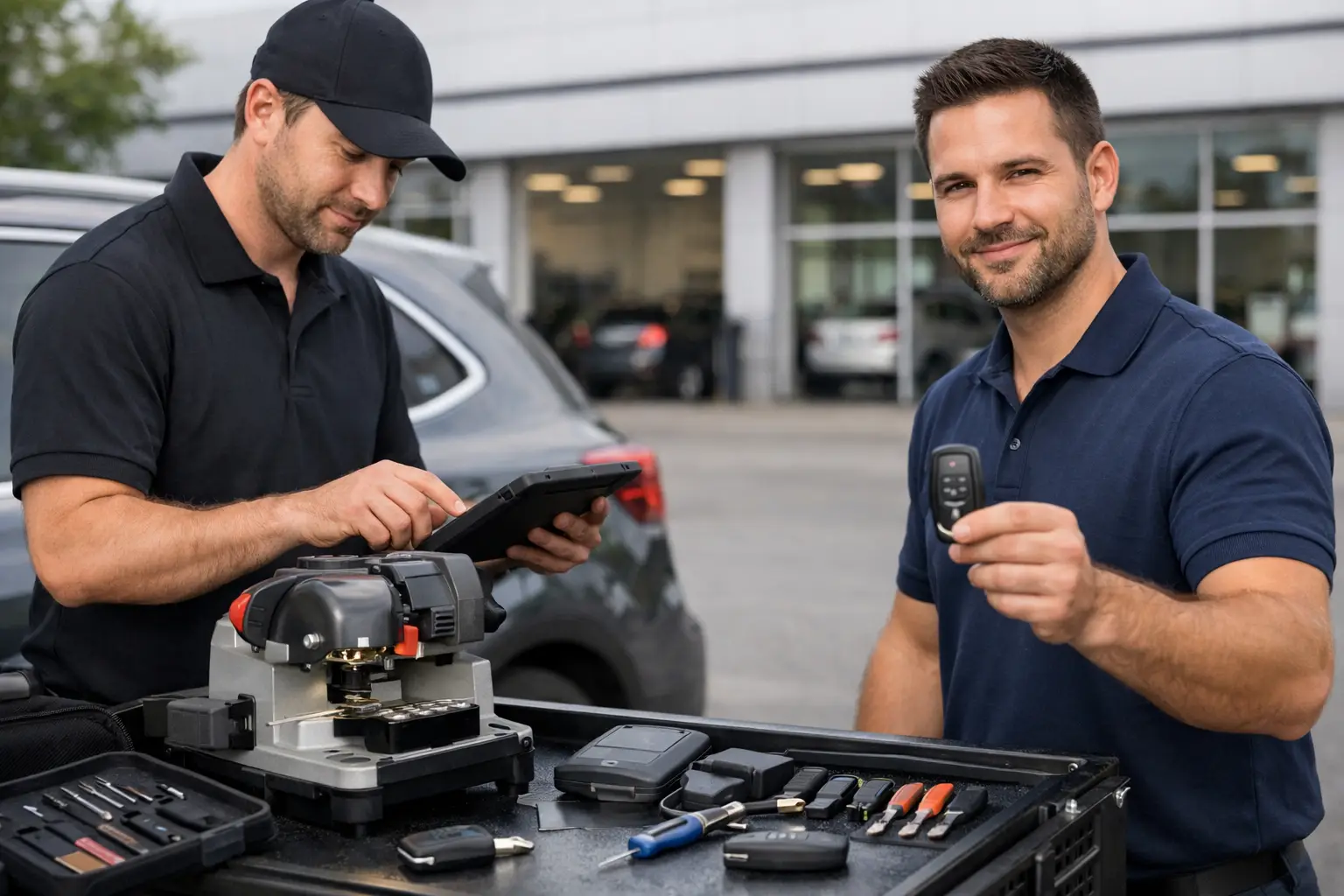
An automotive locksmith specializes in vehicle access systems across makes and models. The job is not simply cutting metal keys. Modern vehicles may use transponder chips, remote fobs, smart proximity keys, immobilizer systems, electronic steering locks, and ignition components. A properly equipped locksmith can cut, program, repair, or replace many of these items on-site.
The practical difference is often convenience. If the car will not start because every key is lost, transporting it to a dealer may mean arranging recovery first. A mobile locksmith can come to the vehicle, confirm ownership, assess the system, and tell you what can be done before work begins.
Cost: Look Beyond the Price of the Key
Dealers often supply an OEM key, which can be a good option for drivers who specifically want a manufacturer-branded replacement. The final cost, however, may include the key, programming, diagnostic time, and in some cases the expense of getting a non-running vehicle to the dealership.
A locksmith may offer OEM, aftermarket, or compatible replacement options depending on the vehicle and key type. Aftermarket does not automatically mean poor quality, but quality varies. Ask what type of key or remote is being supplied, whether it is new, and whether its buttons, emergency blade, and remote functions will be tested before the technician leaves.
For a straightforward spare key, a mobile locksmith is often the more cost-effective choice because the service comes to you and avoids the dealership process. For an all-keys-lost situation, the saving can be even more significant when it prevents a tow. That said, the cheapest quote is not always the best quote. A very low price that excludes programming, call-out fees, taxes, or a working remote can become more expensive once the job is underway.
Ask for a clear breakdown before approving the work. A useful quote should explain whether it covers the call-out, key cutting, programming, remote functions, and any extra labor if a lock, ignition, or key blade is damaged. The exact price should depend on the make, model, year, key technology, and condition of the vehicle.
When dealer pricing can make sense
There are situations where a dealer may be worth considering. If a very new model has restricted key data, if a manufacturer-specific campaign applies, or if you need a particular OEM key configuration, the dealer may be the more direct option. The same can apply where factory warranty terms require work through an authorized dealer.
That does not mean you need to start there for every key issue. A reputable automotive locksmith can tell you honestly if a particular vehicle or security system needs dealer involvement rather than taking on work outside their capability.
Speed and Convenience When the Car Cannot Move
For a driver stranded away from home, speed is usually the deciding factor. Dealership service departments are not generally set up for roadside lockouts or urgent all-keys-lost callouts. You may need to wait for an appointment, arrange transport, and leave the vehicle with them while the key is ordered or programmed.
A mobile locksmith works at the vehicle’s location. That can make a major difference for commuters, parents on the school run, delivery drivers, and tradespeople whose tools are inside the vehicle. It also helps when a damaged key will turn in the door but not start the engine, or when the key is locked inside.
Mobile service is not a promise that every job will take the same amount of time. A basic vehicle entry job is very different from generating and programming a smart key with no original present. Weather, access to the vehicle, key availability, and the vehicle’s security system can all affect the job. Still, removing the need for a tow and dealership drop-off is often the fastest route back to driving.
For South London drivers, local coverage also matters. A nearby specialist can reach a vehicle in areas such as SE, SW, CR, SM, BR, and TW postcodes far more practically than a dealership located across the city. When calling, give the exact location, vehicle registration details if available, and a clear description of the issue so the technician can arrive with the right equipment.
Programming, Keys, and Technical Capability
The main concern many drivers have is whether a locksmith can program a modern car key correctly. The answer is often yes, provided the locksmith has the right diagnostic tools, key stock, software access, and experience for that particular make and model.
A professional automotive locksmith can commonly help with transponder key programming, remote fob replacement, spare smart keys, damaged key repair, broken key extraction, non-destructive vehicle entry, and lock or ignition barrel faults. Auto Tech Car Keys uses modern key-cutting and programming equipment to handle these jobs at the vehicle where possible.
Capability still varies by vehicle. Some manufacturers use systems that require dealer-only processes, specialist authorization, or a key ordered by vehicle identification details. Others can be serviced effectively by an independent locksmith. A good technician will not give a blanket promise without checking the vehicle details first.
There is also a difference between making a key that starts the car and providing a complete working replacement. If your original remote had lock, trunk, panic, or proximity functions, confirm that those features are included. If the ignition has become stiff or the key has a cracked blade, discuss the underlying fault rather than replacing only the remote. A new key cannot correct worn lock wafers, a failing ignition barrel, or a damaged key reader.
How to Choose Between a Dealer and Locksmith
The best decision starts with a few direct questions. First, is the vehicle driveable? If not, a mobile locksmith is usually the practical first call. Next, determine whether you need a spare, a replacement for a lost key, emergency entry, or a repair to the key, lock, or ignition.
Then ask about the exact vehicle. Have the make, model, year, and key type ready. If you have a working key, a photo can help identify whether it is a standard remote, flip key, or smart fob. If every key is lost, be prepared to show proof of ownership and identification. This protects you, the technician, and the vehicle.
Before booking either service, confirm the expected turnaround, what is included in the quote, and what happens if the key must be ordered. Ask whether the work is guaranteed and whether all functions will be tested. These are reasonable questions, not extra demands.
Choose a dealer when you need a manufacturer-specific solution, a warranty requirement points you there, or the vehicle has a restricted system that an independent specialist cannot access. Choose a qualified mobile locksmith when you need urgent help, on-site service, a spare key, vehicle entry, key programming, or practical repair work without the delay of transporting the car.
Do Not Wait Until You Have No Key
The least stressful key job is the spare key you arrange while your original still works. A spare can usually be copied and programmed with less complication than an all-keys-lost replacement. Keep it somewhere secure away from the vehicle, and make sure it is tested before you rely on it.
If your current key is intermittently working, has a loose case, needs repeated button presses, or is becoming difficult to turn, deal with it early. Those small warnings can turn into a lockout or a no-start at the worst possible time.
When you need car key help, choose the service based on the job in front of you, not just the logo on the key. Clear pricing, proven vehicle knowledge, proper ownership checks, and a realistic response time will get you much closer to a straightforward fix.