
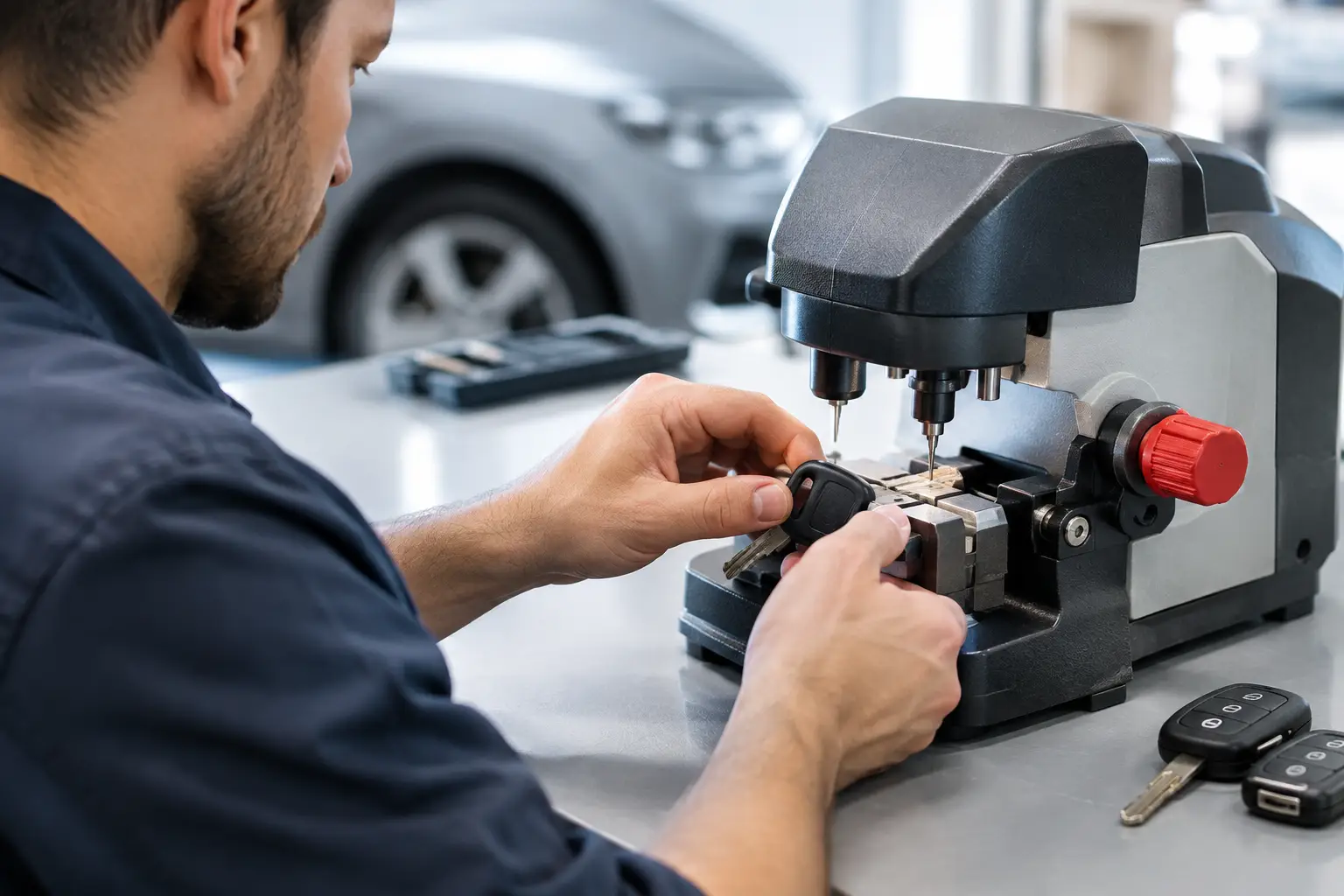
A missing car key can stop a normal day quickly. You may be outside your home before work, parked at a job site, or stuck after a school run with no usable way to start the vehicle. So, can locksmiths cut car keys? In most cases, yes. A specialist automotive locksmith can cut a replacement key and, for many modern vehicles, program it to communicate with the car as well.
The exact solution depends on your vehicle, the key type, and whether you still have a working key. A basic mechanical key is usually straightforward. A remote fob, transponder key, smart key, or keyless start system requires more equipment and technical work. That is why an automotive specialist is often a better fit than a general locksmith or a hardware store.
Can Locksmiths Cut Car Keys for Any Vehicle?
Automotive locksmiths can cut keys for a wide range of makes and models, including older vehicles with traditional metal blades and newer vehicles with electronically coded keys. However, no honest locksmith should promise that every key can be made without first checking the vehicle details.
The vehicle make, model, year, and sometimes the VIN help identify the correct key blank, remote, chip, and programming method. Some cars use common systems that can be handled quickly with professional cutting and diagnostic equipment. Others use dealer-restricted components, newer security systems, or keys that must be ordered before work can begin.
For most everyday cars on the road, a properly equipped mobile automotive locksmith can provide a replacement at your location. This avoids arranging a tow or waiting for a dealership appointment when the car cannot be driven.
Mechanical Keys
A mechanical key has a metal blade cut to match the locks and ignition. Older vehicles may use only this type of key, with no electronic chip inside. Once the correct key blank and cutting information are available, the locksmith cuts the blade and tests it in the door and ignition.
Even with a simple-looking key, accuracy matters. A poorly cut key may turn stiffly, fail to operate the lock, or put unnecessary wear on an aging ignition barrel. Professional key-cutting machines produce a precise cut rather than relying on a rough copy.
Transponder Keys
Many vehicles built from the late 1990s onward use a transponder chip. The blade must be cut correctly, but that alone will not start the engine. The chip must also be programmed or matched to the vehicle’s immobilizer system.
This is a common reason a copied key from a shop may open the door but fail when you try to start the car. The key has the right shape, but the vehicle does not recognize its electronic code. An automotive locksmith can cut the blade and program the transponder as part of the same job when the system is supported.
Remote Fobs and Smart Keys
Remote fobs combine a key blade or emergency key with buttons for locking and other vehicle functions. Smart keys are used in keyless-entry and push-button-start vehicles. These systems often need both physical key work and electronic programming.
The job can involve pairing the remote functions, programming the immobilizer chip, and confirming that the vehicle starts normally. For certain models, the emergency blade inside the remote also needs cutting. The process is more involved than cutting a standard house key, but it is routine work for an experienced car key technician with the right tools.
What a Locksmith Needs to Cut a Replacement Car Key
The fastest way to get an accurate answer is to have the vehicle information ready when you call. The make, model, year, registration number, and your location allow the locksmith to check likely key options before traveling to you.
You should also be ready to show proof that you own or are authorized to use the vehicle. This may include photo identification and vehicle registration documents. A professional locksmith will not create a working key for a vehicle without taking reasonable steps to confirm authority. This protects vehicle owners and keeps the service secure.
If you still have one working key, tell the technician. Making a spare from an existing key is often simpler and can reduce the chance of a stressful all-keys-lost situation later. If all keys are lost, the locksmith may need to retrieve key-cutting data, access the vehicle’s security system, and erase lost keys from memory where appropriate.
Cutting a Key Is Not Always the Whole Repair
It is easy to assume the key is the problem when the car will not start. Sometimes it is. Other times, the fault is a worn ignition barrel, damaged door lock, weak key fob battery, broken key blade, or internal remote failure.
If a key has snapped in the ignition or door lock, do not force the remaining piece deeper with a screwdriver or another key. That can damage the lock and turn a key extraction job into a lock repair. A specialist can remove the broken piece carefully, inspect the lock, and cut or program a replacement if needed.
Likewise, a key that only works after several attempts may not need replacement right away. The blade could be worn, the transponder could be damaged, or the ignition barrel may be failing. A proper diagnosis helps avoid paying for a new key when the underlying issue is elsewhere.
Mobile Locksmith or Dealership: Which Is Better?
A dealership can often supply replacement keys, especially for very new vehicles or systems with tightly controlled parts. But the process may require booking ahead, bringing documents to the dealer, arranging transport for a non-running vehicle, and waiting for the key to arrive.
A mobile automotive locksmith is generally the more practical choice when you are locked out, your key is lost, or the vehicle is stranded. The technician comes to the car with cutting machines, programming equipment, key stock, and diagnostic tools. For many vehicles, the key can be made and tested during the visit.
Cost also depends on the key and vehicle rather than simply who does the job. A basic mechanical spare costs far less than a smart proximity key for a newer vehicle. All-keys-lost work usually costs more than copying an existing key because it involves additional security and programming steps. Ask for a clear quote based on your vehicle details and the type of service required.
When to Get a Spare Car Key
The best time to arrange a spare is when you still have a working key. There is no emergency callout pressure, and the original can often be used to confirm cutting and programming quickly.
A spare key is especially worthwhile if your only key has a cracked case, intermittent buttons, a worn blade, or a loose transponder chip. Those are warning signs that it may fail at the worst possible time. Drivers who share a vehicle, travel for work, or rely on their car daily also benefit from keeping a tested spare in a safe place away from the vehicle.
Do not keep the only backup key in the glove box or trunk. It does not help if the keys are locked inside or the vehicle cannot be accessed. Keep it at home or with someone you trust.
Fast Help for Lost, Broken, or Damaged Keys
When a car key problem happens, avoid trying to bypass the ignition, forcing the lock, or buying an unprogrammed key online and hoping it will work. The wrong key, incorrect programming, or forced lock can create a larger repair bill.
For drivers in South London, Auto Tech Car Keys provides mobile car key cutting, replacement, programming, repair, key extraction, and vehicle entry services. An experienced technician can assess the key type, check what the vehicle needs, and explain the available options before work starts.
A car key issue is frustrating, but it does not always mean a tow truck or a long dealership wait. With the right information and a qualified automotive locksmith, most drivers can get back to using their vehicle with far less disruption.