
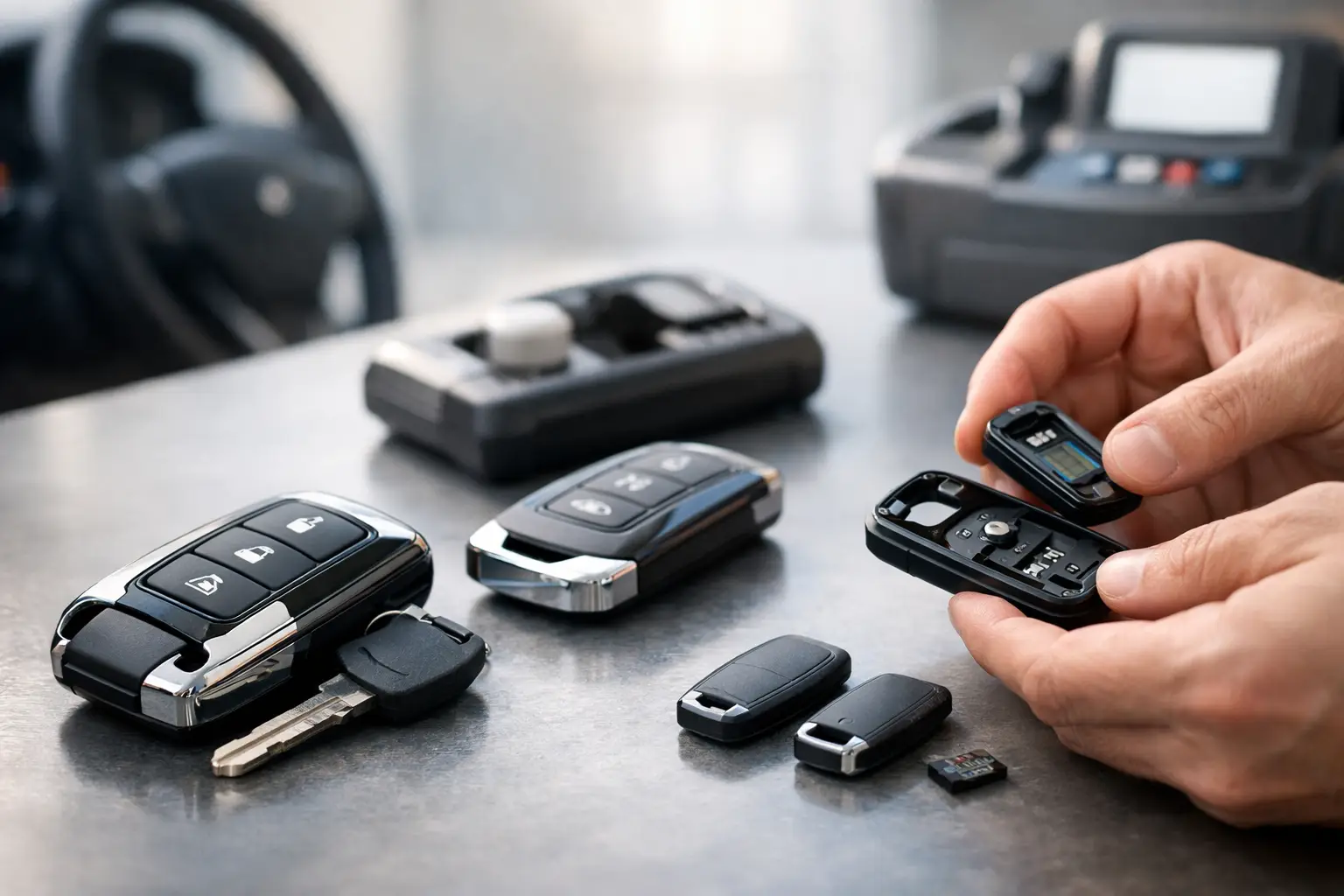
Losing a proximity key usually happens at the worst possible time – outside work, in a grocery store parking lot, or when you are already late. That is why understanding smart key replacement options before you need one can save time, money, and a lot of stress. The right solution depends on your vehicle, how the key was lost or damaged, and how quickly you need to get back on the road.
What smart key replacement options actually mean
A smart key is more than a cut piece of metal. In most modern vehicles, it includes a transponder chip, remote locking functions, and in many cases keyless entry and push-button start. Replacing one is not just about cutting a blade. It often means programming the new key to your vehicle so the car recognizes it and blocks unauthorized keys.
That is why smart key replacement options vary more than many drivers expect. Some vehicles can accept a newly programmed key quickly. Others require diagnostic access, security code procedures, or manufacturer-specific equipment. The make, model, and year matter, and so does whether you still have a working key.
The main smart key replacement options
For most drivers, there are three realistic routes: a dealership, an automotive locksmith, or in limited cases, an aftermarket replacement key. Each has its place. The best choice depends on urgency, budget, and the level of technical work required.
Dealership replacement
A dealership is the option many drivers think of first. In some cases, it is the right call, especially for very new vehicles, high-security systems, or brands with tightly controlled programming procedures. Dealerships can order manufacturer-approved keys and match them to your vehicle record.
The trade-off is usually time and cost. If the key is not in stock, you may wait days for it to arrive. You may also need to arrange transport if the car cannot be driven. For someone dealing with a lost key in the middle of the week, that delay can be a real problem.
Automotive locksmith replacement
A specialist automotive locksmith is often the faster and more practical option, especially when service is mobile. A properly equipped technician can usually come to the vehicle, cut the emergency blade if needed, program the smart key, and test locking and starting functions on-site.
This route makes the most sense when speed matters, when the car is stranded, or when you want to avoid towing and dealership scheduling. It is also often more affordable. The important point is to use a locksmith who specifically handles automotive smart keys, not a general lock service with limited vehicle programming capability.
Aftermarket smart key replacement
Aftermarket keys can reduce cost, but they are not a one-size-fits-all fix. Quality varies. Some work well when paired with proper programming. Others have poor signal range, weak casing, or compatibility issues that cause repeat problems.
This option can work if the replacement shell and electronics are good quality and the programming is done correctly. It is less ideal if you are buying the cheapest key online and hoping it will pair without issues. On paper it looks cheaper. In practice, a bad key can mean paying twice.
When replacement is needed and when repair might do the job
Not every failed smart key needs full replacement. Sometimes the issue is a dead battery, damaged buttons, water exposure, a broken shell, or a worn emergency blade. If the internal board is still functioning, repair may be possible.
That matters because repair is usually quicker and less expensive than full replacement. If the vehicle still detects the key but the casing is cracked or the buttons have stopped working, a rebuild or shell swap may be enough. If the transponder has failed, the key is lost, or the car no longer recognizes it, replacement is more likely.
A good technician will tell you which side of that line you are on instead of pushing the more expensive job by default.
How programming affects your choices
Programming is the part many drivers do not see, but it is what separates a basic key copy from a true smart key replacement. The new key has to be introduced to the vehicle security system, and in many cases old lost keys should be removed from memory.
That last point is especially important if the key was stolen rather than misplaced. If a missing key is still active in the system, there is a risk it could still unlock or start the vehicle. Proper replacement should include checking how many keys are registered and disabling missing ones where the system allows it.
Some makes are straightforward. Others are far more restrictive. There are also cars where all keys lost jobs take longer than adding a spare because the technician has to rebuild access from scratch. This is one reason quotes can vary so much from one vehicle to another.
Cost depends on more than the key itself
Drivers often ask one fair question first: how much will it cost? There is no universal answer because the price is shaped by several factors. The vehicle brand, model year, type of smart key, whether all keys are lost, and whether emergency callout service is needed all affect the total.
A replacement for an older vehicle with a simple transponder setup will usually cost less than a late-model push-start key with encrypted programming. If you still have one working key, adding another is often cheaper than replacing all lost keys. If the car is immobilized and needs urgent on-site service, convenience becomes part of the value.
The cheapest quote is not always the best value. If the key is poor quality, partially programmed, or not tested properly, you can end up with unreliable locking, start failures, or battery drain issues. A clear quote and proper testing matter more than a bargain headline number.
Speed matters when the car is your day-to-day lifeline
For commuters, parents, delivery drivers, and tradespeople, being without a working key can throw off an entire day. That is where mobile service has a practical edge. Instead of arranging towing, waiting in line, and returning later, the work can often be done where the vehicle is parked.
This is especially useful across busy parts of South London where losing half a day dealing with a key problem is not realistic. Fast response is not just a convenience. For many drivers, it is the difference between missing work and getting moving again.
How to choose the right replacement service
Look for someone who works on vehicle keys every day, not as a side service. Ask whether they can cut and program smart keys for your make and model, whether they handle all keys lost situations, and whether they test every function before leaving. That includes lock, unlock, trunk access, remote start if fitted, and push-button ignition.
It also helps to ask what kind of key you are getting. Original, OEM-style, and aftermarket are not always the same thing. A professional should explain the difference in plain language and tell you what is being priced.
If you are calling during an emergency, transparency matters even more. You want a real estimate, a realistic arrival window, and confirmation that the technician has the equipment for your vehicle before they come out.
Why getting a spare is often the smartest option
Many of the worst replacement jobs happen after the last working key is gone. At that stage, programming is usually more involved, and the cost is often higher. Getting a spare while you still have one working smart key is usually the simplest and least expensive way to avoid a bigger problem later.
It is easy to put off until you need it, but that delay is what turns a manageable job into an urgent one. If your household shares a vehicle, or if the car is essential for work, a spare key is less of a luxury and more of a backup plan.
For drivers who want straightforward help without dealership delays, a specialist mobile service like Auto Tech Car Keys can often handle smart key replacement, spare keys, and programming on-site. The real benefit is not just replacing the key. It is getting the right fix, at the right time, without making the situation harder than it already is.
If your smart key is damaged, missing, or starting to fail, the best move is to deal with it before it becomes a full lockout. A little planning now usually costs less than an emergency later.