
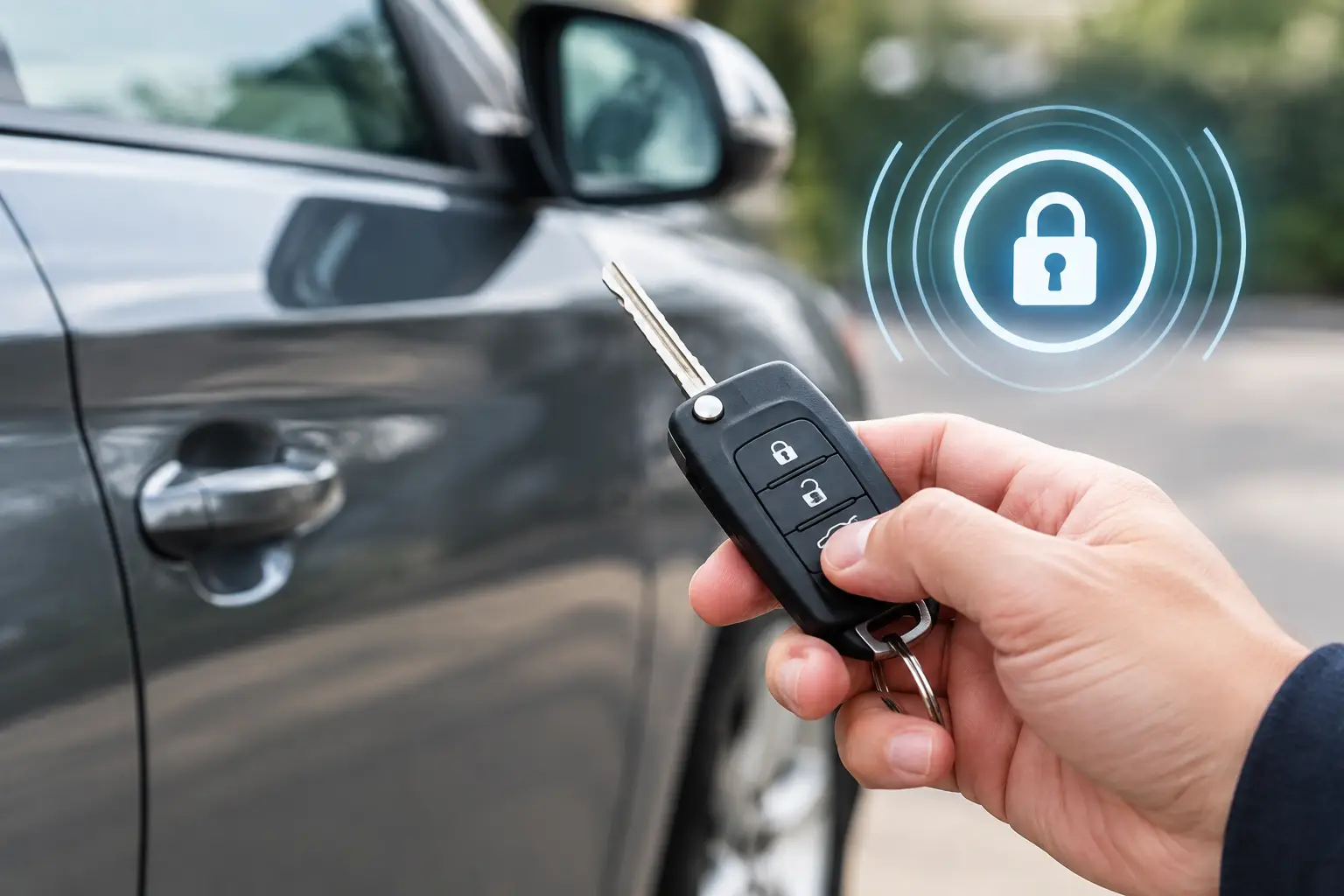
A key that turns but will not start the engine is a particularly frustrating fault. Vehicle immobiliser key issues often appear without much warning: the dashboard security light stays on, the engine cranks briefly and dies, or the car does nothing when you press the start button. The key may still open the doors, which makes the problem even more confusing.
An immobiliser is designed to stop the vehicle starting unless it recognizes the correct coded key or fob. It is an effective theft deterrent, but it also means a damaged, unprogrammed, or poorly communicating key can leave you stuck at home, at work, or on the roadside. The good news is that many causes can be identified quickly, and not every no-start fault means an expensive dealer visit.
What an immobiliser actually checks
Most modern vehicle keys contain a transponder chip. When you turn the ignition or bring a keyless fob into the vehicle, the car reads that chip and compares its code with the codes stored in its immobiliser system. If the match is correct, the engine is authorized to start.
The metal blade and the electronic chip perform different jobs. A blade can be cut perfectly and still fail to start the car if its transponder has not been programmed. Equally, a fob with working buttons can still have an immobiliser fault. Remote locking and starting authorization are related on some models, but they are not always the same system.
This is why a basic copy from a general key cutter may open the door but not solve a lost-key or spare-key problem. Automotive keys need the right chip, correct cutting where applicable, and model-specific programming.
Common vehicle immobiliser key issues
The symptom matters. A vehicle that will not crank at all can have a different cause from one that cranks normally but will not fire. An experienced automotive locksmith will check the key and vehicle communication before assuming the key needs replacing.
A worn, damaged, or water-exposed key
Dropped keys, split fob cases, bent blades, and water damage can all affect reliability. On a traditional ignition key, wear may prevent the blade from operating the ignition barrel smoothly. Inside a remote fob, impact can damage the transponder chip, circuit board, or battery contacts.
Do not keep forcing a damaged key into the ignition. A broken blade or jammed barrel turns a straightforward key problem into a recovery and repair job. If the key feels loose, needs repeated turning, or has visible cracks, arrange a repair or replacement before it fails completely.
A dead fob battery
A weak remote battery commonly stops the lock and trunk buttons from working. It does not always stop the immobiliser chip from being recognized, because many transponder chips are passive and do not use the fob battery to authorize starting.
There are exceptions. Some proximity and push-button-start systems rely more heavily on fob power and may require the fob to be held in a designated backup position to start the car. Your owner’s manual may show that position. Replacing the battery is a sensible first check, but do not assume it will cure every immobiliser warning.
The key has lost programming or was never programmed
A replacement key bought online can look identical to the original and still be unusable. The frequency, chip type, key profile, and security data must match the vehicle. Some keys can be programmed with diagnostic equipment, while others require specialist procedures, security codes, or access through the vehicle’s onboard system.
Programming can also be affected after a poor-quality previous repair, an incorrect key cloning attempt, or a vehicle module issue. In these cases, simply pairing the remote buttons may not restore starting authorization.
A problem with the ignition reader or antenna ring
On vehicles with a keyed ignition, a reader coil or antenna ring around the ignition barrel detects the transponder. If that reader is faulty, the car may not recognize even a known-good key. A dashboard immobiliser light that remains illuminated while using both available keys is a useful clue.
The fault may be in the reader, wiring, ignition barrel, or immobiliser control unit rather than the key itself. Replacing keys without testing can waste time and money. Proper diagnosis is especially valuable when a spare key behaves exactly like the main one.
Low vehicle battery voltage or electrical faults
A weak car battery can cause odd electrical behavior, warning lights, and communication faults between modules. If interior lights are dim, the starter is sluggish, or several dashboard warnings appear together, check the vehicle battery condition first.
However, a healthy battery does not rule out an immobiliser fault. A blown fuse, damaged wiring, or control-module problem can also interrupt communication. The right fix depends on the vehicle and the fault codes present.
Safe checks before calling for help
A few calm checks can help narrow down the issue without risking damage. First, try your spare key if you have one. If the spare starts the vehicle, stop using the faulty key and have it repaired, copied, or replaced while you are not under pressure.
Next, look at the dashboard. A flashing or solid security, key, or immobiliser symbol is useful information for a technician. Note whether the engine cranks, starts and cuts out, or does not respond at all. These details make diagnosis faster.
If the fob buttons are weak or unresponsive, fit the correct battery carefully and check that the contacts are clean. For a push-button-start vehicle, use the manufacturer’s backup starting position if the manual specifies one. Also check the car battery if you have signs of low voltage.
Avoid repeated forced starting attempts, random online programming sequences, or disconnecting vehicle modules in the hope of resetting the system. Modern cars can store fault information, and incorrect procedures can create additional problems. Never attempt to bypass or disable the immobiliser. It is a security system, and a legitimate repair should keep that protection working correctly.
When the key needs repair, replacement, or programming
Key repair may be enough when the case is broken, the buttons have failed, the blade is worn, or the internal components can be transferred and tested safely. It is often the most cost-effective option when the transponder is still working.
Replacement is normally the better route if the key is lost, heavily damaged, snapped, water-damaged, or no longer recognized by the car. A proper replacement service should confirm the right key type, cut the blade if required, program the transponder, and test starting and remote functions before the job is complete.
If all keys are lost, the process is more involved but still manageable. The vehicle may need to be accessed, key data retrieved or generated, and a new key programmed to the immobiliser system. Requirements vary by make, model, year, and security system. Proof of ownership and identification should be expected before work starts.
Why mobile diagnosis can save time
A dealership can be appropriate for certain manufacturer-only faults, recalls, or complex module repairs. But it can also involve towing the vehicle, booking delays, and higher overhead. For many key-related immobiliser faults, a specialist mobile automotive locksmith can inspect the car where it is parked and provide the right key service on-site.
That is especially useful when the car cannot be driven. A technician can test whether the issue lies with the key, transponder programming, ignition reader, lock, or another part of the starting system. If the evidence points to a deeper electrical or engine-management fault, you can then arrange the correct next repair instead of paying for a key that was never the problem.
For drivers across South London, Auto Tech Car Keys can provide practical support for lost, damaged, or non-working vehicle keys, including cutting, programming, repairs, and ignition-related work. The goal is straightforward: get clear answers, protect your vehicle’s security, and avoid unnecessary delay.
Preventing the next key emergency
The simplest protection is a tested spare key. Keep it somewhere secure away from the vehicle, rather than inside it, and start the car with it occasionally so you know it works. A spare made and programmed while the original is available is usually quicker and less disruptive than replacing every key after one is lost.
Use a protective case if your fob is regularly dropped, and do not leave keys exposed to water, extreme heat, or heavy items in a bag. If you notice intermittent recognition, a damaged casing, or a key that sticks in the ignition, deal with it early. Small vehicle immobiliser key issues rarely improve through repeated use, but prompt attention can keep a stressful no-start morning from becoming a full day without your car.